


Topical Steroid Withdrawal (TSW): Symptoms, Causes, and Prevention
Topical steroid withdrawal (TSW), also known as red skin syndrome, is a rare reaction that may occur after stopping topical steroid medications.
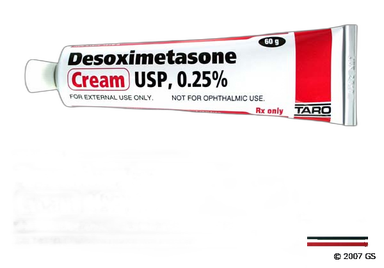
Desoximetasone, also known by its brand name, Topicort, is a topical corticosteroid that's used to treat inflammatory skin conditions. It works by lowering certain chemicals in your body that cause inflammation. Desoximetasone (Topicort) comes as a brand-name and generic cream, ointment, gel, and spray. It's applied to the affected area(s) of the skin twice per day. Side effects aren't common but can include skin irritation and burning.

Desoximetasone (Topicort) is a topical corticosteroid, or also known as a topical steroid. It lowers the amount of certain chemicals in the body that cause inflammation (swelling, redness, and itchiness) in your skin. This helps treat flare-ups of skin conditions, such as plaque psoriasis.
| Common Brands | Topicort |
|---|---|
| Drug Class | Corticosteroid |
| Controlled Substance Classification | Not a controlled medication |
| Generic Status | Lower-cost generic available |
| Availability | Prescription only |

The following side effects may get better over time as your body gets used to the medication. Let your healthcare provider know immediately if you continue to experience these symptoms or if they worsen over time.
Along with its needed effects, a medicine may cause some unwanted effects. Although not all of these side effects may occur, if they do occur they may need medical attention.
Check with your doctor immediately if any of the following side effects occur:
Rare
Flushing or redness of the skin
redness, blistering, peeling, or loosening of the skin
unusually warm skin
Incidence not known
Blistering, burning, crusting, dryness, or flaking of the skin
irritation
itching, scaling, severe redness, soreness, or swelling of the skin
redness and scaling around the mouth
thinning of the skin with easy bruising, especially when used on the face or where the skin folds together (eg, between the fingers)
thinning, weakness, or wasting away of the skin
Some side effects may occur that usually do not need medical attention. These side effects may go away during treatment as your body adjusts to the medicine. Also, your health care professional may be able to tell you about ways to prevent or reduce some of these side effects. Check with your health care professional if any of the following side effects continue or are bothersome or if you have any questions about them:
Incidence not known
burning and itching of the skin with pinhead-sized red blisters
increased hair growth on the forehead, back, arms, and legs
lightening of normal skin color
lightening of treated areas of dark skin
reddish purple lines on the arms, face, legs, trunk, or groin
softening of the skin
Other side effects not listed may also occur in some patients. If you notice any other effects, check with your healthcare professional.
Call your doctor for medical advice about side effects. You may report side effects to the FDA at 1-800-FDA-1088.




Desoximetasone (Topicort) can cause some serious health issues. This risk may be even higher for certain groups. If this worries you, talk to your doctor or pharmacist about other options.
It's possible for your body to absorb too much desoximetasone (Topicort) through the skin in certain situations. This includes applying the medication to larger areas of skin over longer periods of time and covering the treated area with tight bandages. Having too much desoximetasone (Topicort) in your body can cause your body to make less stress hormones (e.g., cortisol). This can affect many important bodily functions and lead to symptoms such as tiredness, nausea, and muscle aches. This problem usually goes away after you stop using desoximetasone (Topicort), but you might need additional treatment if it's severe.
Apply desoximetasone (Topicort) only as directed. Don't apply too much medication and don't use it for a longer period of time than prescribed. Also don't cover the medicated area with bandages or dressings unless your prescriber tells you to. If your prescriber thinks that desoximetasone (Topicort) is affecting your body's hormone production, they might recommend that you apply it less often or switch you to a different medication.
Though rare, desoximetasone (Topicort) can raise your risk of developing vision problems, like cataracts and glaucoma. Make sure your prescriber knows if you have any issues with your vision or eyes before you start using this medication. Tell your healthcare team or eye specialist if you start noticing vision problems while you're using desoximetasone (Topicort).
The topical spray version of desoximetasone is flammable, which means that it can catch on fire. Be sure to keep the spray bottle away from heat or open flames.

 Bottle of spray
| Dosage | Quantity | Price as low as | Price per unit |
|---|---|---|---|
| 100ml of 0.25% | 1 bottle | $51.78 | $51.78 |
 Tube of cream
| Dosage | Quantity | Price as low as | Price per unit |
|---|---|---|---|
| 60g of 0.05% | 1 tube | $86.53 | $86.53 |
| 100g of 0.05% | 1 tube | $125.82 | $125.82 |
| 15g of 0.05% | 1 tube | $25.99 | $25.99 |
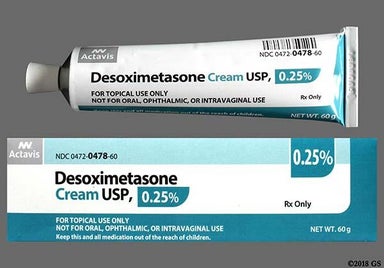
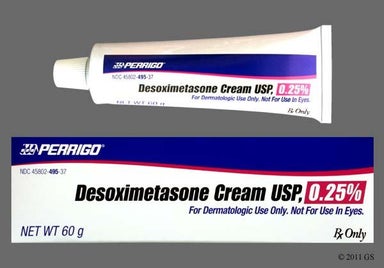
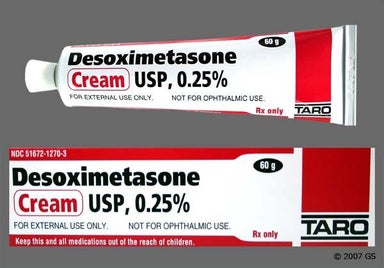
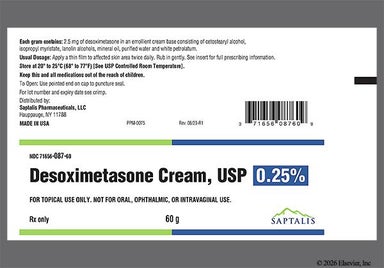
| 60g of 0.25% | 1 tube | $31.34 | $31.34 |
| 100g of 0.25% | 1 tube | $48.05 | $48.05 |
| 15g of 0.25% | 1 tube | $16.98 | $16.98 |

Although certain medicines should not be used together at all, in other cases two different medicines may be used together even if an interaction might occur. In these cases, your doctor may want to change the dose, or other precautions may be necessary. Tell your healthcare professional if you are taking any other prescription or nonprescription (over-the-counter [OTC]) medicine.


Prescription savings
Stop paying too much for your prescriptions. Compare prices, get pharmacy coupons, and save up to 80%. Find expert answers to your health questions so you can make the best decisions for yourself and your family.
Health conditions
Medications & treatment
Access & affordability
Medication discounts


Yes, Desoximetasone is a topical steroid. It's used to lower symptoms of skin inflammation, such as redness, itching, and swelling. Desoximetasone is a medium-to-high potency topical steroid; whether it's medium or high in strength depends on which form of the medication you have.
No, Desoximetasone isn't an antifungal; it's a topical steroid. Topical steroids only help lessen skin inflammation. They don't work to get rid of fungal infections on the skin like topical antifungals do. Don't use an antifungal with Desoximetasone without talking to a healthcare professional first to make sure it's safe and it will work to treat your skin condition.
You can use the cream, gel, and ointment forms of Desoximetasone on the face if your prescriber specifically instructed you to do so to properly treat your condition. Be sure to avoid getting the medication near or in your eyes, nostrils, or mouth. But you shouldn't use the spray form that's for plaque psoriasis on the face.
No, Desoximetasone doesn't treat ringworm. Ringworm is a fungal infection, so it needs to be treated with topical antifungals like clotrimazole. Don't use a topical steroid like Desoximetasone if you have a fungal skin infection without talking to your prescriber first. It's possible for topical steroids to weaken your immune system, which can affect how quickly you recover from a fungal infection.
No, Desoximetasone doesn't treat a yeast infection. In fact, it's possible for steroids like Desoximetasone to raise the risk for yeast infections on the skin, especially if you use the medication for a long time or if you cover the treated area with a tight bandage. Don't apply Desoximetasone into the vagina.
No, Desoximetasone is only available by prescription from a healthcare professional. The only topical steroids available over the counter are hydrocortisone 0.5% and 1%, which aren't as strong as Desoximetasone.
Both Desoximetasone and hydrocortisone are topical steroids that are used to treat inflammation and itching from many skin conditions. The biggest difference is the potency (strength) of each medication. Some forms of hydrocortisone are the least potent among the topical steroids, and other forms of hydrocortisone are considered to have "medium" potency. On the other hand, different forms of Desoximetasone have a potency that's considered "medium" or "high." Another difference is that some forms of hydrocortisone are available over the counter but Desoximetasone is only available by prescription. Speak with a healthcare professional to help you compare between desoximetasone and hydrocortisone.
Yes, Desoximetasone can expire. There should be an expiration date that's written on the medication box for the cream, ointment, and gel. Throw away the topical spray version of Desoximetasone 30 days after you get it from the pharmacy; the pharmacist might've written this expiration date on the bottle. Don't use Desoximetasone past the written expiration date because it might not work well to treat your skin condition.
