Thyrogen
Thyrogen (thyrotropin alfa) is a prescription injection used to help manage a certain type of thyroid cancer. It’s FDA approved to detect cancer that’s come back or spread during testing or imaging, and to prepare your body for radioactive iodine treatment without needing to stop thyroid hormone therapy. You’ll get two doses over two days as injections into the buttock muscle. Common side effects include nausea and headache.


What is Thyrogen (thyrotropin alfa)?
What is Thyrogen (thyrotropin alfa) used for?
- Detect well-differentiated thyroid cancer
- Treat well-differentiated thyroid cancer, used along with radioactive iodine
How Thyrogen (thyrotropin alfa) works
Thyrogen (thyrotropin alfa) is a lab-made form of thyroid stimulating hormone (TSH), a natural hormone in your body. It works by acting like TSH and attaching to thyroid cells, which tells them to take in more iodine and release a protein called thyroglobulin (Tg).
This makes thyroid cancer easier to see during scans. It also prepares your body so radioactive iodine can better target and destroy thyroid cancer cells, all without stopping your thyroid hormone medication.
Drug facts
| Common Brands | Thyrogen |
|---|---|
| Drug Class | Thyroid stimulating hormone |
| Controlled Substance Classification | Not a controlled medication |
| Generic Status | No lower-cost generic available |
| Availability | Prescription only |

Side effects of Thyrogen (thyrotropin alfa)
The following side effects may get better over time as your body gets used to the medication. Let your healthcare provider know immediately if you continue to experience these symptoms or if they worsen over time.
Common Side Effects
- Nausea (11%)
- Headache (6%)
Less Common Side Effects
- Tiredness
- Vomiting
- Dizziness
- Weakness
- Injection-site reactions
Thyrogen (thyrotropin alfa) serious side effects
Contact your healthcare provider immediately if you experience any of the following.
- High thyroid hormone levels: fast or irregular heartbeat, feeling suddenly nervous, feeling warm, sweating, weight loss
- Stroke: sudden and severe headache, weakness on one side of the body, difficulty speaking
- Sudden tumor growth: sudden weakness or paralysis on one side of the, sudden vision loss, swelling in the throat, pain at the cancer site, or trouble breathing
The following Thyrogen (thyrotropin alfa) side effects have also been reported
Along with its needed effects, a medicine may cause some unwanted effects. Although not all of these side effects may occur, if they do occur they may need medical attention.
Check with your doctor or nurse immediately if any of the following side effects occur:
More common
Inability to move the legs or arms
paralysis of one side of the body
Rare
Faintness
feeling of warmth
skin rash, hives, welts, itching, or redness
itching, redness, or swelling at the injection site
loss of vision
redness of the face, neck, arms, and occasionally, upper chest
tightness of the throat
Incidence not known
Chills
confusion
difficult or labored breathing
difficulty with speaking
difficulty with swallowing
dizziness
double vision
fast, slow, or irregular heartbeat
headache
hoarseness
inability to move the facial muscles
muscle or joint pain
voice changes
Get emergency help immediately if any of the following symptoms of overdose occur:
Symptoms of overdose
Blurred vision
dizziness, faintness, or lightheadedness when getting up suddenly from a lying or sitting position
fast or irregular heartbeat
increased sweating
irritability
nervousness
sweating
Some side effects may occur that usually do not need medical attention. These side effects may go away during treatment as your body adjusts to the medicine. Also, your health care professional may be able to tell you about ways to prevent or reduce some of these side effects. Check with your health care professional if any of the following side effects continue or are bothersome or if you have any questions about them:
More common
Frequent urge to urinate
stomach discomfort
Less common
Burning, crawling, itching, numbness, prickling, "pins and needles", or tingling feelings
lack or loss of strength
stuffy or runny nose
trouble sleeping
unusual tiredness or weakness
vomiting
Other side effects not listed may also occur in some patients. If you notice any other effects, check with your healthcare professional.
Call your doctor for medical advice about side effects. You may report side effects to the FDA at 1-800-FDA-1088.

Pros and cons of Thyrogen (thyrotropin alfa)
Pros
- Don’t have to stop your thyroid hormone medications
- Requires only two injections
- Generally well tolerated
Cons
- Given as an injection in the buttock
- Might cause high thyroid hormone levels
- Some people have experienced a stroke

Pharmacist tips for Thyrogen (thyrotropin alfa)

- You will get two doses of Thyrogen (thyrotropin alfa) as injections, given 24 hours apart.
- Thyrogen (thyrotropin alfa) is injected into your buttock. Sometimes, this can cause pain, soreness, and swelling around the injection site. If it becomes bothersome, talk to your care team about how to manage it.
- If you are having a scan, you will get radioactive iodine 24 hours after your second Thyrogen (thyrotropin alfa) injection. You will then return for the scan 48 hours after the radioactive iodine dose.
- If your oncologist is checking thyroglobulin (Tg) levels, your blood will be drawn 72 hours or later after your second Thyrogen (thyrotropin alfa) injection.
- Thyrogen (thyrotropin alfa) has been linked to stroke. Let your care team know right away if you have symptoms such as sudden weakness, trouble speaking, or vision changes. Be sure to drink plenty of fluids before your injections.
- If you’re taking Thyrogen (thyrotropin alfa) with radioactive iodine, don’t get pregnant or breastfeed during treatment. This is because it can harm an unborn or nursing baby.

Risks and warnings for Thyrogen (thyrotropin alfa)
Thyrogen (thyrotropin alfa) can cause some serious health issues. This risk may be even higher for certain groups. If this worries you, talk to your doctor or pharmacist about other options.
High thyroid hormone levels
- Risk factors: People who still have a lot of thyroid tissue after surgery | People with thyroid cancer that’s spread to other parts of the body | Older adult | Heart problems
If you still have a lot of thyroid tissue or thyroid cancer that’s spread to other parts of the body, Thyrogen (thyrotropin alfa) can cause a sharp rise in thyroid hormone levels for about 1 to 2 weeks. In rare cases, serious problems have happened within 24 hours of the injection. Your risk could be higher if you’re older or have heart problems. For safety, your oncologist might want to give the injection in the hospital and monitor you afterward.
Stroke
- Risk factors: Young women taking birth control pills | Smoking | History of migraine headaches
Though rare, some people have had a stroke after getting Thyrogen (thyrotropin alfa). These events happened within 20 minutes to 3 days after the injections, mostly in younger women taking birth control pills or in people with other stroke risks like smoking or migraine headaches. It isn’t clear if Thyrogen (thyrotropin alfa) directly causes stroke, but it’s important to drink plenty of fluids before your treatment to lower your risk.
Get medical help right away if you have stroke symptoms such as weakness or numbness on one side of the body, trouble speaking, or a sudden severe headache.
Sudden tumor growth
- Risk factors: Thyroid tissue remaining after surgery | Thyroid cancer that’s spread to other parts of the body
In rare cases, thyroid tissue or cancer that’s spread to other parts of the body can suddenly grow larger, quickly, and painfully after Thyrogen (thyrotropin alfa) treatment. Symptoms depend on where the tumor is located and can include sudden weakness or paralysis on one side of the body, loss of vision, swelling in the throat, pain at the cancer site, or trouble breathing. These problems usually happen within 1 to 3 days of the injection. In some instances, your oncologist might prescribe a corticosteroid for you to take before Thyrogen (thyrotropin alfa) to help lower the risk.
Risks with radioiodine treatment
When Thyrogen (thyrotropin alfa) is used to treat thyroid cancer, it is given along with radioactive iodine. Be sure to talk with your oncologist about the possible risks of radioactive iodine before starting treatment.

Thyrogen (thyrotropin alfa) dosage
Typical dosage for Thyrogen (thyrotropin alfa)
The typical dose is 0.9 mg injected into the buttock muscle. A second dose of 0.9 mg is injected 24 hours later.

Interactions between Thyrogen (thyrotropin alfa) and other drugs
Although certain medicines should not be used together at all, in other cases two different medicines may be used together even if an interaction might occur. In these cases, your doctor may want to change the dose, or other precautions may be necessary. Tell your healthcare professional if you are taking any other prescription or nonprescription (over-the-counter [OTC]) medicine.

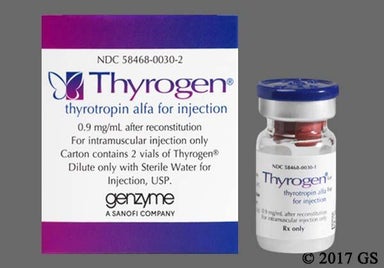
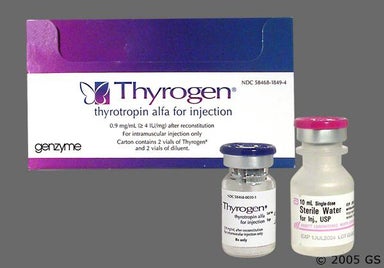
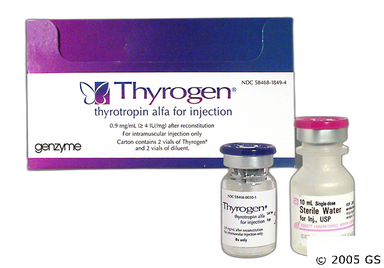
Thyrogen (thyrotropin alfa) images