butorphanol
Butorphanol is an opioid medication used to relieve pain that hasn't responded well to other non-opioid pain medications. It's available as a generic nasal spray and as a generic injection. Brand name Stadol has been discontinued. Butorphanol is thought to have a lower risk of misuse compared to some other opioids and is classified as a Schedule IV controlled substance. Common side effects of the butorphanol nasal spray include drowsiness, dizziness, nausea, and vomiting.


What is Butorphanol?
What is Butorphanol used for?
- Pain that's not relieved by non-opioid medications
- Anesthesia - injection only
- Premedication prior to procedure or surgery - injection only
How Butorphanol works
Butorphanol is an opioid agonist and antagonist. This means it activates some opioid receptors (signaling proteins) in your body and blocks others. It works on opioid receptors in your brain to lower your perception of pain.
Drug facts
| Common Brands | Stadol |
|---|---|
| Drug Class | Opioid agonist / Opioid antagonist |
| Controlled Substance Classification | Schedule IV |
| Generic Status | Lower-cost generic available |
| Availability | Prescription only |

Risks and warnings for Butorphanol
Butorphanol can cause some serious health issues. This risk may be even higher for certain groups. If this worries you, talk to your doctor or pharmacist about other options.
Potentially life-threatening slowed breathing (respiratory depression)
- Risk factors: Age 65 years or older | People who are very weak or ill | Medical conditions that can cause breathing problems | Medications that can slow breathing | Alcohol use
 Butorphanol can cause extremely slowed breathing that can be life-threatening. This can happen at any time, even when the medication is used as recommended by your provider. But generally, the risk is highest when you first start the medication or after your dose is raised. Don't take butorphanol with alcohol or other medications that can slow your body down (e.g., benzodiazepines, muscle relaxants). Doing so can slow down your breathing even more. If you or a loved one notices that you have trouble breathing or have bluish-colored lips, fingers, or toes, get medical help right away. If you're concerned with the risk of overdosing with this medication, discuss with your provider about getting naloxone (Narcan). Naloxone (Narcan) can help to reverse the effects of opioids and possibly save your life.
Potential for addiction and misuse
- Risk factors: Personal or family history of substance or alcohol use disorder | History of mental health conditions
Butorphanol has a risk of addiction and misuse. Addiction can develop even at recommended doses as prescribed or if butorphanol is used for reasons other than prescribed (misuse). Sometimes, addiction and misuse can lead to life-threatening overdose. To lower the risk of addiction and misuse, your healthcare provider will prescribe the lowest amount of butorphanol that's necessary for you for the shortest period of time possible.
 Because of the high risk of addiction and misuse, the FDA requires a Risk Evaluation and Mitigation Strategy (REMS) program for butorphanol. Under the Opioid Analgesic REMS program, your provider will discuss with you about how to take butorphanol safely, its risks, and safe storage and disposal. These steps help keep you and your loved ones safe. If you have concerns about taking butorphanol, talk to your provider about other treatment options for pain.
Risk of accidental overdose
- Risk factors: History of opioid use disorder | Previous opioid overdose | Taking medications that can slow the body down | Alcohol use | Taking high opioid doses | Taking more opioids than prescribed | Age 65 years or older | Age 18 years or younger
It's possible to accidentally take too much butorphanol at recommended doses of the medication. Overdoses can also happen if it's accidentally taken by a child or a loved one. Overdoses can be life-threatening if it's not recognized or treated in time. Your healthcare provider might recommend that you carry a reversal agent called naloxone (Narcan, Evzio) with you at all times to quickly treat an overdose if it happens. Make sure you and your caregiver know how to use naloxone (Narcan, Evzio) in case there's an accidental overdose. Opioid overdose symptoms include extremely slowed breathing, slow heartbeat, extreme sleepiness, cold or clammy skin, and not responding to sound or touch. Call 911 right away if you think an overdose has happened.
Harm to newborn babies when taken during pregnancy
- Risk factors: Long-term use during pregnancy
During pregnancy, opioids can be passed from you to your unborn baby through the placenta and umbilical cord. If you take butorphanol for a long period of time during pregnancy, there's a risk that your unborn baby can become dependent on the medication. Once your baby is born, they can develop a condition called neonatal opioid withdrawal syndrome and experience withdrawal symptoms. Withdrawal symptoms in your newborn can include high-pitched crying, poor feeding and sucking behavior, trembling, irritability, and sometimes seizures. This condition can be life-threatening if not recognized and treated in time. Let your healthcare provider know if you've used butorphanol during pregnancy or if you notice these symptoms in your baby.
Dangerous interactions with other medications and alcohol
Butorphanol can interact with other medications, which can change how it affects your body and pain overall. Some medications can increase the levels of butorphanol in your body and cause fatal respiratory depression (slowed breathing). Other medications can lower the levels in your body and lead to inadequate control of your pain. Some examples of medications that might interact with butorphanol include certain antibiotics, antifungals, and medications used for anxiety or depression. It's also very important to avoid alcohol while taking this medication, because the combination can lead to serious side effects, such as slowed breathing, low blood pressure, and extreme sedation. While taking butorphanol, don't start any new prescription or over-the-counter medications until confirming with your provider or pharmacist that it is safe to do so.
Low hormone levels
- Risk factors: Using butorphanol for more than one month
Some people taking opioids like butorphanol experienced a drop in their hormone levels. This is more likely to happen if you take the medication for more than a month. Symptoms of very low hormone levels include nausea, vomiting, loss of appetite, tiredness, dizziness, and weakness. Let your healthcare provider know right away if you experience these symptoms.
Changes in blood pressure
- Risk factors: History of heart problems
Butorphanol can cause high or low blood pressure. Low blood pressure has happened to people during the first hour of taking butorphanol and has caused fainting. If you experience dizziness, headache, or vision changes, let your provider know.
Higher risk of seizures in people with seizure conditions
- Risk factors: History of seizure conditions
Opioids, such as butorphanol, can cause more frequent seizures to happen in people who've had seizures in the past. The medication might also raise the risk of seizure in other situations where seizures can occur. Let your healthcare provider know if you have seizures more often while taking butorphanol.
Excessive drowsiness and slowed reaction time
Butorphanol can make you feel very drowsy and affect your abilities to think, focus, and react. Be careful driving, operating machinery, or doing any dangerous activities until you know how this medication affects you.
Physical dependence and withdrawal
- Risk factors: Long-term use of butorphanol
Butorphanol is meant for short-term use. If you take butorphanol regularly for a long time, you can become physically dependent on the medication. This means your body starts to rely on the medication to function. When you're physically dependent on butorphanol, you might experience withdrawal if you lower your dose or stop taking the medication suddenly. Withdrawal symptoms can include restlessness, muscle pain, runny nose, yawning, sweating, chills, anxiety, and uncontrolled pain. Don't lower your dose or stop taking the medication suddenly without talking to your healthcare provider. To prevent withdrawal symptoms from happening, you'll need to follow your provider's instructions carefully to slowly lower your dose. If you have concerns about taking the medication because of this risk, talk to your healthcare provider about alternative pain medications.

Side effects of Butorphanol
The following side effects may get better over time as your body gets used to the medication. Let your healthcare provider know immediately if you continue to experience these symptoms or if they worsen over time.
Common Side Effects
Injection and nasal spray:
- Drowsiness (49%)
- Dizziness (23%)
- Nausea or vomiting (8%)
Nasal spray only:
- Stuffy nose (13%)
- Trouble sleeping (11%)
Less Common Side Effects
- Headache
- Weakness
- Constipation
- Dry mouth
- Tremor or shakiness
- Confusion
- Anxiety
- Sweating
- Itching
Butorphanol serious side effects
Contact your healthcare provider immediately if you experience any of the following.
- Severe allergic reaction: hives, trouble breathing, swelling in your lips, tongue, throat, or face
- Slowed breathing
- Accidentally taking too much (overdose): slowed breathing, extreme sleepiness, stiff muscles, feeling cold and sweaty
- Opioid withdrawal: restlessness, muscle or joint pain, runny nose, yawning or sweating more than usual, chills, irritability, anxiety
- Seizures
- Dangerously low blood pressure: dizziness, fainting
The following Butorphanol side effects have also been reported
Along with its needed effects, a medicine may cause some unwanted effects. Although not all of these side effects may occur, if they do occur they may need medical attention.
Check with your doctor immediately if any of the following side effects occur:
Less common
Bloody nose
body aches or pain
burning, crawling, itching, numbness, prickling, "pins and needles", or tingling feelings
chills
cough producing mucus
difficult or labored breathing
ear congestion
fast, irregular, pounding, or racing heartbeat or pulse
feeling faint, dizzy, or lightheaded
feeling of warmth or heat
flushing or redness of the skin, especially on the face and neck
headache
loss of voice
shakiness in the legs, arms, hands, or feet
sweating
tightness in the chest
trembling or shaking of the hands or feet
unusual tiredness or weakness
Rare
Blurred vision
confusion
dizziness, faintness, or lightheadedness when getting up suddenly from a lying or sitting position
fainting
shallow breathing
Incidence not known
Agitation
bluish lips or skin
confusion
darkening of the skin
difficulty swallowing
loss of appetite
mental depression
not breathing
overactive reflexes
poor coordination
puffiness or swelling of the eyelids or around the eyes, face, lips, or tongue
restlessness
seizures
shivering
sweating
talking or acting with excitement you cannot control
tightness in the chest
twitching
vomiting
Get emergency help immediately if any of the following symptoms of overdose occur:
Symptoms of overdose
Change in consciousness
choking
cold and clammy skin
constricted, pinpoint, or small pupils (black part of the eye)
coughing that sometimes produces a pink frothy sputum
decreased awareness or responsiveness
difficult, fast, or noisy breathing
extremely shallow or slow breathing
increased sweating
loss of consciousness
no muscle tone or movement
pale skin
severe sleepiness
slow heartbeat
swelling in the legs and ankles
Some side effects may occur that usually do not need medical attention. These side effects may go away during treatment as your body adjusts to the medicine. Also, your health care professional may be able to tell you about ways to prevent or reduce some of these side effects. Check with your health care professional if any of the following side effects continue or are bothersome or if you have any questions about them:
More common
Sleepiness or unusual drowsiness
trouble sleeping
Less common
Bad or unusual or unpleasant (after) taste
continuing ringing or buzzing or other unexplained noise in the ears
difficulty having a bowel movement
ear pain
false or unusual sense of well-being
fear or nervousness
floating feeling
hearing loss
lack or loss of strength
pain or tenderness around the eyes and cheekbones
stomach pain
tender, swollen glands in the neck
trouble with swallowing
unusual drowsiness, dullness, tiredness, weakness, or feeling of sluggishness
voice changes
Incidence not known
False beliefs that cannot be changed by facts
feeling of constant movement of self or surroundings
sensation of spinning
Other side effects not listed may also occur in some patients. If you notice any other effects, check with your healthcare professional.
Call your doctor for medical advice about side effects. You may report side effects to the FDA at 1-800-FDA-1088.

Pros and cons of Butorphanol
Pros
- Might be a good option if you have trouble swallowing pills
- Works quickly (within 15 minutes) to relieve pain
- Might have less potential for misuse compared to other opioids, like morphine (MS Contin, Kadian)
- Available as a lower-cost generic
Cons
- Risk of overdose and life-threatening breathing problems
- Interacts with many medications and alcohol, which can put you at risk for serious side effects
- Can cause low blood pressure and even fainting within the first hour of dosing
- Can cause withdrawal symptoms if you stop taking suddenly

Pharmacist tips for Butorphanol

- Before using butorphanol nasal spray, read the instructions and Medication Guide. Make sure you understand your dose and how to safely use the nasal spray. If you have questions, follow up with your provider.
- Butorphanol can cause drowsiness and dizziness. Avoid driving or using machinery that requires you to be alert until you know how it affects you.
- Avoid combining butorphanol with alcohol or other medications that also cause drowsiness.
- Stop using butorphanol if you experience difficulty breathing and call for emergency medical help right away.
- Since there's a risk for overdose with the use of butorphanol, it's a good idea to have easy access to naloxone (Narcan) to reverse the effects of butorphanol and treat the overdose. If overdosing is a concern for you, ask your pharmacist about getting naloxone over the counter or behind the counter at the pharmacy.
- If you have been taking opioids for a long period of time, don't stop taking them suddenly. You might need to cut back gradually over the course of a few days or weeks to avoid withdrawal symptoms.
More tips for using the butorphanol nasal spray:
- If it's your first time using butorphanol nasal spray, you'll need to "prime" it to ensure you get the correct dose. Remove the cap and hold the spray bottle with your thumb on the bottom of the bottle and your index and middle fingers on the two flaps on the side of the pump. Push down with your fingers and keep pumping until you see a fine spray come out from the tip of the bottle.
- When you're ready to use butorphanol nasal spray, blow your nose gently to make sure your nostrils are clear.
- Put the tip of the spray bottle into one nostril. Close the other nostril with your finger and lean your head slightly forward. With your mouth closed, sniff gently while quickly and firmly spraying 1 spray into your nostril.
- Once you've administered your spray, remove the spray bottle from your nose, tilt your head back slightly and sniff gently a few more times.
- If you haven't used the open butorphanol nasal spray for 2 days or longer, prime it again with one or two strokes. Aim the nozzle away from yourself and others when priming.
- It's very important to keep the butorphanol nasal spray in a safe and secure place away from children and other people. This helps prevent accidental exposure and overdose.
- If you're no longer using the nasal spray, make sure you safely dispose of it. One way of disposing butorphanol nasal spray is to unscrew the cap, rinse the bottle and all its parts with water, and dispose them in a waste container. You can also ask your local pharmacist about other ways to dispose of your medication safely.

Butorphanol dosage
 Nasal spray
| Dosage | Quantity | Price as low as | Price per unit |
|---|---|---|---|
| 2.5ml of 10mg/ml | 1 nasal spray | $27.77 | $27.77 |

Interactions between Butorphanol and other drugs
Although certain medicines should not be used together at all, in other cases two different medicines may be used together even if an interaction might occur. In these cases, your doctor may want to change the dose, or other precautions may be necessary. When you are taking this medicine, it is especially important that your healthcare professional know if you are taking any of the medicines listed below. The following interactions have been selected on the basis of their potential significance and are not necessarily all-inclusive.
Using this medicine with any of the following medicines is not recommended. Your doctor may decide not to treat you with this medication or change some of the other medicines you take.
- Nalmefene
- Naltrexone
- Safinamide
Using this medicine with any of the following medicines is usually not recommended, but may be required in some cases. If both medicines are prescribed together, your doctor may change the dose or how often you use one or both of the medicines.
- Acepromazine
- Alfentanil
- Almotriptan
- Alprazolam
- Amifampridine
- Amineptine
- Amitriptyline
- Amitriptylinoxide
- Amobarbital
- Amoxapine
- Amphetamine
- Aripiprazole
- Asenapine
- Baclofen
- Benperidol
- Benzhydrocodone
- Benzphetamine
- Bromazepam
- Bromopride
- Brompheniramine
- Buprenorphine
- Buspirone
- Butabarbital
- Calcium Oxybate
- Cannabidiol
- Carbamazepine
- Carbinoxamine
- Carisoprodol
- Carphenazine
- Cetirizine
- Chloral Hydrate
- Chlordiazepoxide
- Chlorpheniramine
- Chlorpromazine
- Chlorzoxazone
- Citalopram
- Clobazam
- Clomipramine
- Clonazepam
- Clopidogrel
- Clorazepate
- Clozapine
- Cocaine
- Codeine
- Desipramine
- Desmopressin
- Desvenlafaxine
- Dexmedetomidine
- Dextroamphetamine
- Dextromethorphan
- Dezocine
- Diazepam
- Dibenzepin
- Dichloralphenazone
- Difenoxin
- Diphenhydramine
- Diphenoxylate
- Dolasetron
- Donepezil
- Doxepin
- Droperidol
- Duloxetine
- Eletriptan
- Enflurane
- Escitalopram
- Esketamine
- Estazolam
- Eszopiclone
- Ethchlorvynol
- Ethopropazine
- Ethylmorphine
- Fenfluramine
- Fentanyl
- Flibanserin
- Fluoxetine
- Fluphenazine
- Flurazepam
- Fluspirilene
- Fluvoxamine
- Fospropofol
- Frovatriptan
- Furazolidone
- Gabapentin
- Gabapentin Enacarbil
- Granisetron
- Halazepam
- Haloperidol
- Halothane
- Hexobarbital
- Hydrocodone
- Hydromorphone
- Hydroxytryptophan
- Hydroxyzine
- Iproniazid
- Isocarboxazid
- Isoflurane
- Ketamine
- Ketazolam
- Ketobemidone
- Lasmiditan
- Lemborexant
- Levocetirizine
- Levomilnacipran
- Levorphanol
- Linezolid
- Lisdexamfetamine
- Lithium
- Lofepramine
- Lofexidine
- Lorazepam
- Lorcaserin
- Loxapine
- Magnesium Oxybate
- Meclizine
- Melitracen
- Melperone
- Meperidine
- Mephobarbital
- Meprobamate
- Meptazinol
- Mesoridazine
- Metaxalone
- Methadone
- Methamphetamine
- Methdilazine
- Methocarbamol
- Methohexital
- Methotrimeprazine
- Methylene Blue
- Metoclopramide
- Midazolam
- Milnacipran
- Mirtazapine
- Moclobemide
- Molindone
- Moricizine
- Morphine
- Nalbuphine
- Naratriptan
- Nefazodone
- Nialamide
- Nicomorphine
- Nitrazepam
- Nitrous Oxide
- Nortriptyline
- Olanzapine
- Ondansetron
- Opipramol
- Opium
- Opium Alkaloids
- Orphenadrine
- Oxazepam
- Oxycodone
- Oxymorphone
- Ozanimod
- Palonosetron
- Papaveretum
- Paregoric
- Paroxetine
- Pentazocine
- Pentobarbital
- Perampanel
- Perazine
- Periciazine
- Perphenazine
- Phenelzine
- Phenobarbital
- Pimozide
- Piperacetazine
- Pipotiazine
- Piritramide
- Potassium Oxybate
- Prazepam
- Pregabalin
- Primidone
- Procarbazine
- Prochlorperazine
- Promazine
- Promethazine
- Propofol
- Protriptyline
- Quazepam
- Quetiapine
- Ramelteon
- Rasagiline
- Remifentanil
- Remimazolam
- Remoxipride
- Rizatriptan
- Scopolamine
- Secobarbital
- Selegiline
- Sertindole
- Sertraline
- Sibutramine
- Sodium Oxybate
- St John's Wort
- Sufentanil
- Sulpiride
- Sumatriptan
- Suvorexant
- Tapentadol
- Temazepam
- Thiethylperazine
- Thiopental
- Thiopropazate
- Thioridazine
- Tianeptine
- Tilidine
- Tizanidine
- Tolonium Chloride
- Topiramate
- Tramadol
- Tranylcypromine
- Trazodone
- Triazolam
- Trifluoperazine
- Trifluperidol
- Triflupromazine
- Trimeprazine
- Trimipramine
- Tryptophan
- Venlafaxine
- Vilazodone
- Vortioxetine
- Zaleplon
- Ziprasidone
- Zolpidem
- Zopiclone
- Zotepine

How much does Butorphanol cost?
$27.77

Butorphanol contraindications
Contraindications are specific health conditions or situations in which a person should not take a medication due to safety concerns. If you have any of the following conditions or if any of the following apply to you, let your healthcare provider know because Butorphanol will not be safe for you to take.
- Severely slowed breathing (respiratory depression)
- Severe asthma
- Conditions that cause blockage of the gut passageway
- Allergy to benzethonium chloride (a preservative)

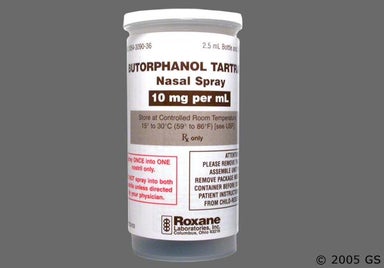
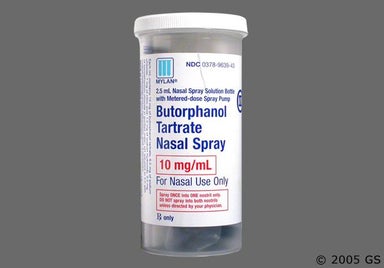
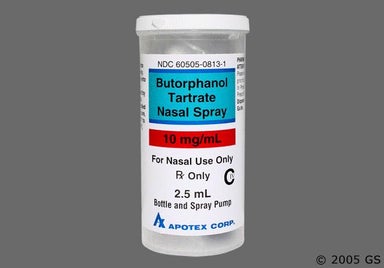
Butorphanol images