sodium polystyrene sulfonate
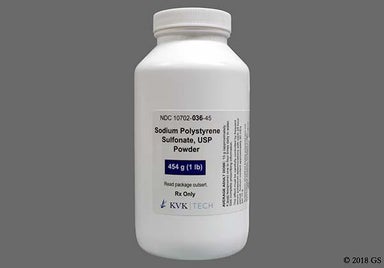
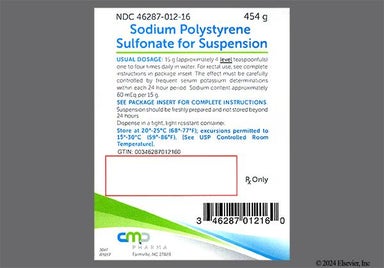
Sodium polystyrene sulfonate (more commonly known by its brand name, Kayexalate) is a medication used to treat high potassium levels (hyperkalemia). Sodium polystyrene sulfonate (SPS) is available as a liquid suspension that's given orally (by mouth) or as an enema. It also comes as a powder that needs to be mixed into a suspension. Sodium polystyrene sulfonate (SPS) is typically taken 1 to 4 times a day, but make sure to follow your provider's instructions. This medication can cause low appetite and stomach-related side effects (e.g., nausea, vomiting, constipation or diarrhea).


What is Sodium polystyrene sulfonate (SPS)?
What is Sodium polystyrene sulfonate (SPS) used for?
- High potassium levels (hyperkalemia)
How Sodium polystyrene sulfonate (SPS) works
Sodium polystyrene sulfonate (SPS) is a potassium binder. It works by binding (attaching) to potassium in your stomach and intestines (gut) so that your body can't absorb it. It's then passed through your stool, which lowers the levels of potassium in your blood.
Drug facts
| Common Brands | Kayexalate, Kionex, SPS (branded generics) |
|---|---|
| Drug Class | Potassium binder |
| Controlled Substance Classification | Not a controlled medication |
| Generic Status | Lower-cost generic available |
| Availability | Prescription only |

Side effects of Sodium polystyrene sulfonate (SPS)
The following side effects may get better over time as your body gets used to the medication. Let your healthcare provider know immediately if you continue to experience these symptoms or if they worsen over time.
Common Side Effects
- Low appetite
- Nausea
- Vomiting
- Constipation
- Diarrhea
Less Common Side Effects
- Gut irritations
- Blockage in the gut
Sodium polystyrene sulfonate (SPS) serious side effects
Contact your healthcare provider immediately if you experience any of the following.
- Intestinal necrosis (low blood flow to the stomach and intestines): bleeding in stool, nausea, vomiting, constipation or diarrhea, fever, stomach pain
- Low electrolyte levels: muscle cramps, muscle pain, numbness or tingling, nausea, vomiting, weakness, shortness of breath, or confusion
The following Sodium polystyrene sulfonate (SPS) side effects have also been reported
Along with its needed effects, a medicine may cause some unwanted effects. Although not all of these side effects may occur, if they do occur they may need medical attention.
Check with your doctor or nurse immediately if any of the following side effects occur:
Rare
Bloody vomit
cough producing mucus
difficulty with breathing
fever or chills
severe stomach pain
tightness in the chest
troubled breathing
Incidence not known
Confusion
decrease in the amount of urine
increased thirst
irregular heartbeat
loss of appetite
muscle cramps in the hands, arms, feet, legs, or face
nausea or vomiting
noisy, rattling breathing
numbness and tingling around the mouth, fingertips, or feet
seizures
severe constipation
swelling of the fingers, hands, feet, or lower legs
stomach cramps or pain
troubled breathing at rest
unusual tiredness or weakness
Get emergency help immediately if any of the following symptoms of overdose occur:
Symptoms of overdose
Dizziness
drowsiness
fainting
fast, slow, or irregular heartbeat
lightheadedness
muscle spasms (tetany) or twitching
pounding or rapid pulse
trembling
Other side effects not listed may also occur in some patients. If you notice any other effects, check with your healthcare professional.
Call your doctor for medical advice about side effects. You may report side effects to the FDA at 1-800-FDA-1088.

Get your GoodRx coupon

Pros and cons of Sodium polystyrene sulfonate (SPS)
Pros
- Option for taking by mouth or as an enema
- Powder form can be stored at room temperature
- Available in a lower-cost, generic form
Cons
- Not a first-choice option for lowering potassium levels
- Must space out at least 3 hours from other oral (by mouth) medications
- Not a good choice for people with gut-movement problems

Pharmacist tips for Sodium polystyrene sulfonate (SPS)

- Make sure to tell your provider about all of the medications you're taking before starting sodium polystyrene sulfonate (SPS), especially if you're taking medications that can change your potassium levels, certain laxatives, or antacids. Don't start any new medications while taking sodium polystyrene sulfonate (SPS) without speaking to your provider or pharmacist.
- It's important to follow a low-sodium diet while taking sodium polystyrene sulfonate (SPS) to avoid swelling. This is because this medication contains sodium. If you get swelling or puffiness in your arms or legs, shortness of breath, need to sleep with multiple pillows, or have gained a lot of weight in a short amount of time, contact your provider.
- Let your provider know if you feel sick (e.g., diarrhea, lower appetite) because this might put you at high risk for low potassium levels. Your provider might need to adjust your dose of sodium polystyrene sulfonate (SPS) during this time.
- Make sure to take other oral medications at least 3 hours before or 3 hours after you take your sodium polystyrene sulfonate (SPS) dose. This is because it can lower how much your body absorbs other medications, which can affect how well they work. Additionally, if you have a condition called gastroparesis (slow digestion), you might have to separate your medications from sodium polystyrene sulfonate (SPS) by at least 6 hours.
- Take sodium polystyrene sulfonate (SPS) while sitting in an upright position to prevent choking. Don't heat sodium polystyrene sulfonate (SPS) before taking it.
- You can mix sodium polystyrene sulfonate (SPS) into food or juice to improve the taste. But don't mix it with food or drinks that contain potassium, such as bananas and orange juice, because sodium polystyrene sulfonate (SPS) is trying to lower your potassium level.
- If your provider prescribed sodium polystyrene sulfonate (SPS) as an enema, make sure you know how to give yourself the medication correctly. Ask your provider or pharmacist if you have any questions.
More tips for sodium polystyrene sulfonate (SPS) oral suspension:
- Each 60 mL contains 15 g of sodium polystyrene sulfonate (SPS). Make sure you know what your dose is so that you're taking the correct amount of medication.
- Shake the bottle well before measuring out each dose. Make sure to only use an oral dosing syringe from the pharmacy to measure out your dose. Don't use household spoons because they aren't accurate and might cause you to take the wrong dose.
- Storage of sodium polystyrene sulfonate (SPS) suspension will depend on how it's dispensed to you from the pharmacy. Check the medication label carefully to see if you need to store it in the refrigerator for up to 14 days or at room temperature. Throw away the bottle after the expiration date, even if there's still some medication left.
More tips for sodium polystyrene sulfonate (SPS) powder:
- Each level teaspoon of sodium polystyrene sulfonate (SPS) powder contains about 3.5 g of sodium polystyrene sulfonate (SPS). Each gram of sodium polystyrene sulfonate (SPS) powder should be mixed with about 3 to 4 mL (about one and a half teaspoonfuls) of water. Make sure you know your dose of sodium polystyrene sulfonate (SPS) so you mix and take the correct amount of powder.
- After mixing the sodium polystyrene sulfonate (SPS) powder with water, store it at room temperature and take it within 24 hours of mixing it.

Risks and warnings for Sodium polystyrene sulfonate (SPS)
Sodium polystyrene sulfonate (SPS) can cause some serious health issues. This risk may be even higher for certain groups. If this worries you, talk to your doctor or pharmacist about other options.
Serious stomach and intestinal side effects (intestinal necrosis)
- Risk factors: Using sorbitol | Premature birth | History of intestine problems or surgery | Low blood volume (hypovolemia) | Kidney problems | Constipation
Although rare, there have been cases of a serious stomach and intestinal problem called bowel or intestinal necrosis. This happens when blood isn't flowing through your gut and it can cause potentially life-threatening damage. Taking sodium polystyrene sulfonate (SPS) at the same time as sorbitol (a sweetener that's also used as a laxative) can raise your risk of these side effects. Avoid using sorbitol when taking sodium polystyrene sulfonate (SPS). Only take this medication if you have normal bowel movements. Talk to your healthcare provider if you notice blood in your stool, nausea, vomiting, constipation or diarrhea, fever, or stomach pain, while taking sodium polystyrene sulfonate (SPS), because they might have you stop the medication.
Low potassium, magnesium, and calcium levels
- Risk factors: Stomach symptoms (e.g., vomiting, diarrhea) | Low appetite | People on hemodialysis | Taking medications that lower potassium, magnesium, or calcium
Taking sodium polystyrene sulfonate (SPS) raises your risk for low electrolyte (e.g., potassium, magnesium, calcium) levels. Your provider might monitor your electrolytes regularly throughout treatment. Make sure to tell your provider about all of your medications before starting sodium polystyrene sulfonate (SPS). Don't start any new medications while taking sodium polystyrene sulfonate (SPS) without talking to your provider first. Some medications (e.g., loop diuretics) can also lower your electrolyte levels. If you get sick (e.g., vomiting, diarrhea) and aren't eating as much while taking sodium polystyrene sulfonate (SPS), contact your provider because they might lower your dose of sodium polystyrene sulfonate (SPS) or get lab work to check your potassium level. Let your provider know if you feel any muscle cramps, muscle pain, numbness or tingling, nausea, vomiting, weakness, shortness of breath, or confusion. These might be signs that certain electrolytes are low.
Swelling
- Risk factors: Heart failure | Kidney problems | Eating or drinking too much sodium | Taking high doses of sodium polystyrene sulfonate (SPS)
Taking sodium polystyrene sulfonate (SPS) can lead to swelling in your arms, legs, or other places in your body. This is because this medication contains salt, which causes your body to hold on to more water. While the swelling is typically mild or moderate, it can be dangerous for people who have medical conditions, such as heart failure and kidney problems, who need to limit how much salt they take in. If you get any swelling or puffiness in your arms or legs, feel short of breath, need to sleep with multiple pillows, or have gained a lot of weight in a short amount of time, contact your provider.
Separate from other medications
Sodium polystyrene sulfonate (SPS) can lower how much your body absorbs other medications, which can cause them to not work as well for you. Make sure to take other oral medications at least 3 hours before or 3 hours after you take sodium polystyrene sulfonate (SPS). If you have a condition called gastroparesis (slow digestion), you might have to separate your medications from sodium polystyrene sulfonate (SPS) by at least 6 hours.
Choking risk
- Risk factors: Impaired gag reflex | People who aren't conscious | People who are prone to spitting up
Some people have reported choking after inhaling the sodium polystyrene sulfonate (SPS) powder. You'll want to make sure you mix sodium polystyrene sulfonate (SPS) well in water, and only take it while sitting in an upright position to prevent choking.

Sodium polystyrene sulfonate (SPS) dosage


Interactions between Sodium polystyrene sulfonate (SPS) and other drugs
Although certain medicines should not be used together at all, in other cases two different medicines may be used together even if an interaction might occur. In these cases, your doctor may want to change the dose, or other precautions may be necessary. When you are receiving this medicine, it is especially important that your healthcare professional know if you are taking any of the medicines listed below. The following interactions have been selected on the basis of their potential significance and are not necessarily all-inclusive.
Using this medicine with any of the following medicines is usually not recommended, but may be required in some cases. If both medicines are prescribed together, your doctor may change the dose or how often you use one or both of the medicines.
- Meloxicam
- Sorbitol
Using this medicine with any of the following medicines may cause an increased risk of certain side effects, but using both drugs may be the best treatment for you. If both medicines are prescribed together, your doctor may change the dose or how often you use one or both of the medicines.

How much does Sodium polystyrene sulfonate (SPS) cost?
$13.91

Sodium polystyrene sulfonate (SPS) contraindications
Contraindications are specific health conditions or situations in which a person should not take a medication due to safety concerns. If you have any of the following conditions or if any of the following apply to you, let your healthcare provider know because Sodium polystyrene sulfonate (SPS) will not be safe for you to take.
- Low potassium
- Conditions where your bowel is blocked
- Newborns with gut-movement problems

What are alternatives to Sodium polystyrene sulfonate (SPS)?

Sodium polystyrene sulfonate (SPS) images