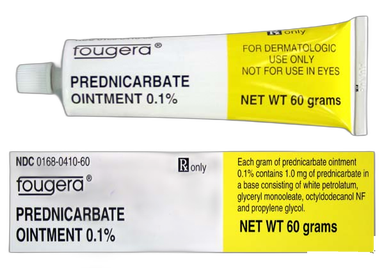
prednicarbate
Prednicarbate is one of many available topical steroids used to treat itching, redness, and inflammation (swelling) of several skin conditions. It's a steroid medication that has medium potency (strength) and available as an ointment.


What is Prednicarbate?
What is Prednicarbate used for?
- Skin inflammation conditions
How Prednicarbate works
Prednicarbate is a topical corticosteroid that is like cortisol, a natural hormone your body makes. It lowers certain chemicals in your body that cause inflammation (swelling, redness, and itchiness) in your skin.
Drug facts
| Common Brands | Dermatop |
|---|---|
| Drug Class | Corticosteroid |
| Controlled Substance Classification | Not a controlled medication |
| Generic Status | Lower-cost generic available |
| Availability | Prescription only |

Side effects of Prednicarbate
The following side effects may get better over time as your body gets used to the medication. Let your healthcare provider know immediately if you continue to experience these symptoms or if they worsen over time.
Common Side Effects
- Skin irritation
- Burning
- Itchy skin
- Dry skin
- Scaly skin
- Cracking skin
- Pain
Less Common Side Effects
- Skin thinning
- Inflamed hair follicles
- Acne
- Patches of light skin color
- Hives
- Rash
- Heat rash
- Infection
Prednicarbate serious side effects
Contact your healthcare provider immediately if you experience any of the following.
- Altered stress hormone levels
The following Prednicarbate side effects have also been reported
Along with its needed effects, a medicine may cause some unwanted effects. Although not all of these side effects may occur, if they do occur they may need medical attention.
Check with your doctor immediately if any of the following side effects occur:
Less common
Burning, itching, drying, scaling, or cracking of the skin
irritation of the skin
raised, dark red, or wart-like spots on the skin, especially when used on the face
shininess or thinness of the skin
thinning of the skin with easy bruising, especially when used on the face or where the skin folds together (e.g., between the fingers)
Rare
Blistering, burning, crusting, dryness, or flaking of the skin
burning, crawling, itching, numbness, prickling, "pins and needles", or tingling feelings
hives or welts
itching, scaling, severe redness, soreness, or swelling of the skin
skin rash
Incidence not known
Irritation of the skin around the mouth
redness and scaling around the mouth
Some side effects may occur that usually do not need medical attention. These side effects may go away during treatment as your body adjusts to the medicine. Also, your health care professional may be able to tell you about ways to prevent or reduce some of these side effects. Check with your health care professional if any of the following side effects continue or are bothersome or if you have any questions about them:
Incidence not known
burning and itching of the skin with pinhead-sized red blisters
burning, itching, and pain in hairy areas, or pus at the root of the hair
increased hair growth on the forehead, back, arms, and legs
lightening of normal skin color
lightening of the treated areas of dark skin
reddish purple lines on the arms, face, legs, trunk, or groin
Other side effects not listed may also occur in some patients. If you notice any other effects, check with your healthcare professional.
Call your doctor for medical advice about side effects. You may report side effects to the FDA at 1-800-FDA-1088.

Get your GoodRx coupon

Pros and cons of Prednicarbate
Pros
- Good option for mild-to-moderate skin conditions
- Available as a lower-cost generic form
Cons
- Not the best option for severe skin conditions since it's a medium potency steroid
- Need to be used twice per day
- Shouldn't be used for a long time

Pharmacist tips for Prednicarbate

- Before using prednicarbate, wash and dry the affected areas of your skin well. Make sure to rub in the medication gently and then wash your hands well after using.
- Only use the least amount of medication possible for the shortest amount of time to avoid side effects, such as skin thinning and irritation.
- Only use prednicarbate as prescribed by your provider. Don't wrap the affected area of your skin with tight clothing or bandages unless your provider specifically told you to do so.
- Only apply prednicarbate onto your skin. Don't use it on broken skin or near your eyes, face, underarms, and groin. Applying prednicarbate to these sensitive areas can cause pain and more medication to be absorbed into your body, which can raise your risk of side effects. If you accidentally get the medication in your eyes, rinse your eyes out with water.
- If you notice pus, red sores, or tenderness in the area you're using prednicarbate, contact your provider because this can be a sign of a skin infection. You might need to treat the infection with a topical antibiotic or antifungal medication while you use prednicarbate. Don't wrap the infected area with bandages or tight clothing. If the infection doesn't improve, you'll likely have to stop using prednicarbate until it goes away.
- If you experience any skin irritation or if your condition doesn't improve within a couple weeks, stop using prednicarbate and let your provider know, since you might need a different medication.

Risks and warnings for Prednicarbate
Prednicarbate can cause some serious health issues. This risk may be even higher for certain groups. If this worries you, talk to your doctor or pharmacist about other options.
Altered stress hormone levels
- Risk factors: Applying prednicarbate to large areas of the body | Using prednicarbate for a long time | Covering the medicated area | Using excessive amounts of prednicarbate | Children
Applying prednicarbate to large areas, using it for long periods of time, covering the medicated area with tight clothing or dressings, or using too much of the medication can cause more medication to be absorbed into the body. Children are also more likely to absorb more prednicarbate through the skin. This can cause your body to make less of certain stress hormones that are important for many bodily functions. This problem usually goes away after you stop using prednicarbate, but you might need additional medical treatment if it is severe. Use prednicarbate only as directed. Don't apply too much of the medication and don't use for a longer period of time than prescribed. Don't cover the medicated area with bandages or dressings unless your provider tells you to do so.

Prednicarbate dosage


Interactions between Prednicarbate and other drugs
Although certain medicines should not be used together at all, in other cases two different medicines may be used together even if an interaction might occur. In these cases, your doctor may want to change the dose, or other precautions may be necessary. Tell your healthcare professional if you are taking any other prescription or nonprescription (over-the-counter [OTC]) medicine.

How much does Prednicarbate cost?
$9.42




