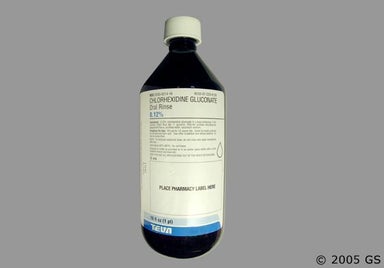
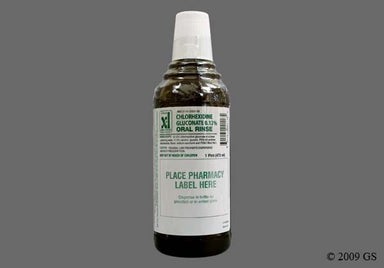
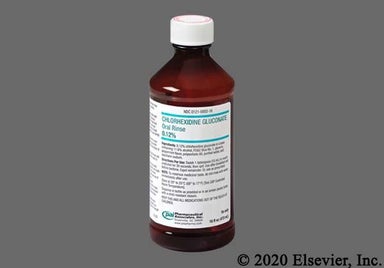
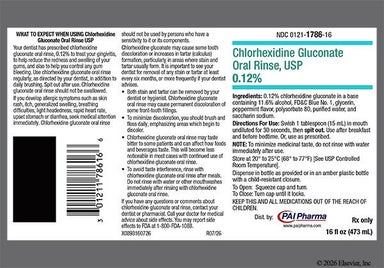
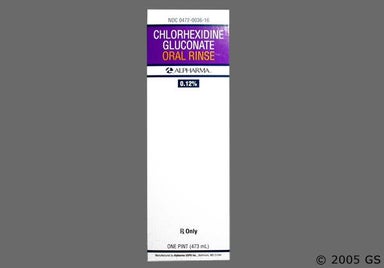
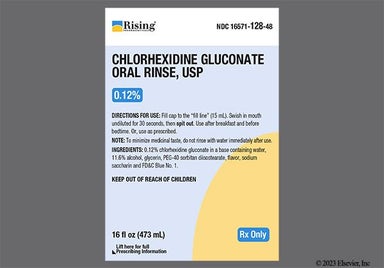
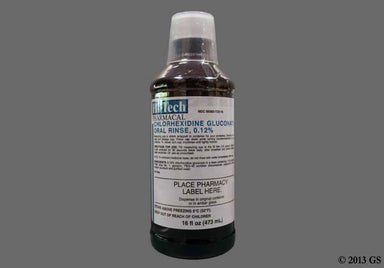
Chlorhexidine (Peridex) is an antiseptic mouthwash that's used to treat gingivitis (gum inflammation) in adults. Your dentist might prescribed it for you after a dental checkup if they think you need it. Typically, you rinse with chlorhexidine (Peridex) by mouth twice daily after you've brushed your teeth. Some common side effects of chlorhexidine (Peridex) include staining of the teeth, changes in taste, and hardening of dental tartar.
Chlorhexidine (Peridex) is an antiseptic mouthwash that kills certain germs (e.g., bacteria, fungi, viruses) in your mouth. It destroys their protective coverings so these germs can't survive. As a result, chlorhexidine (Peridex) can be used to prevent dental plaque, which helps to treat gingivitis and relieve symptoms of gum bleeding and swelling.
The following side effects may get better over time as your body gets used to the medication. Let your healthcare provider know immediately if you continue to experience these symptoms or if they worsen over time.
Contact your healthcare provider immediately if you experience any of the following.
Along with its needed effects, a medicine may cause some unwanted effects. Although not all of these side effects may occur, if they do occur they may need medical attention.
Check with your doctor immediately if any of the following side effects occur:
Some side effects may occur that usually do not need medical attention. These side effects may go away during treatment as your body adjusts to the medicine. Also, your health care professional may be able to tell you about ways to prevent or reduce some of these side effects. Check with your health care professional if any of the following side effects continue or are bothersome or if you have any questions about them:
More common
Tooth, gum, or mouth pain, tenderness, aching, throbbing, soreness, discomfort, or sensitivity (mild to moderate)
Other side effects not listed may also occur in some patients. If you notice any other effects, check with your healthcare professional.
Call your doctor for medical advice about side effects. You may report side effects to the FDA at 1-800-FDA-1088.
Yes, the typical dosing for chlorhexidine (Peridex) is to rinse with this mouthwash twice a day, after you've brushed your teeth. Your dentist will let you know how long you need to use it after your dental appointment, but it's usually used short-term (for up to 6 months at a time).
Ask your dentist how long you should be using chlorhexidine (Peridex) after your dental appointment. Typically, chlorhexidine (Peridex) shouldn't be used for longer than 6 months at a time unless directed by your dentist. Using chlorhexidine (Peridex) long-term can raise your risk of side effects, such as staining of your teeth, bacterial resistance to the mouthwash, and severe allergic reactions.
In most cases, chlorhexidine (Peridex) stains aren't permanent and can be prevented with regular teeth brushing and flossing. Because staining is more noticeable in people with plaque buildup, having good dental hygiene can help to lower the risk of stains. Additionally, in clinical studies, only 15% of people experience heavy staining. Keep in mind that chlorhexidine (Peridex) stains are harmless. So even if regular brushing can't remove these stains, it won't affect your dental health in any way. Most chlorhexidine (Peridex) stains can be taken care of by professional cleaning. Schedule an appointment with your dentist if you have concerns about stains on your teeth.
Chlorhexidine (Peridex) can cause brown staining of your teeth, dental fillings, and tongue. The risk is higher if you have a lot of plaque buildup on your teeth or gum. To lower your risk of staining, make sure to brush your teeth twice a day and floss once a day to prevent plaque buildup. If your stain doesn't go away with regular brushing and flossing, you can also get your teeth professionally cleaned at the dental office.
Chlorhexidine (Peridex) can cause some serious health issues. This risk may be even higher for certain groups. If this worries you, talk to your doctor or pharmacist about other options.
Chlorhexidine (Peridex) can stain your teeth, dental fillings, and your tongue. The stains are harmless and usually form where there is a lot of plaque. Typically, these stains either go away by themselves or they can be removed by your dentist. Make sure to brush, floss, and see your dentist regularly for cleanings.
During treatment with chlorhexidine (Peridex), your taste buds might change temporarily. In particular, you might have a more difficult time tasting salty and bitter flavors. In addition, chlorhexidine (Peridex) itself also has a bitter aftertaste. If your taste buds haven't recovered after stopping chlorhexidine (Peridex), talk to your dentist.
Some people using chlorhexidine (Peridex) may have more plaque buildup on their teeth. This can lead to gum diseases, which can cause gum bleeding and swelling. Make sure to brush your teeth twice a day and floss once a day. You should also see your dentist at least every 6 months for teeth cleanings and checkups so the plaque can be removed. If you have a serious gum infection or severe gum disease, your dentist might need to give you further treatments in addition to chlorhexidine (Peridex).
Although rare, chlorhexidine (Peridex) can cause severe and sometimes deadly allergic reactions. If you experience symptoms such as a rash, itchy skin, hives, difficulty breathing, swelling of your face or throat, stomach upset, or diarrhea while using chlorhexidine (Peridex), stop this medication and get medical attention right away.
GoodRx has partnered with to provide reviews on the different aspects of Chlorhexidine (Peridex).
Learn more about the effectiveness of Chlorhexidine (Peridex) based on real life experiences.
Based on 1 people taking this medication
5
5.0
Severity of side effects
Based on 7 people taking this medication
0%
50%
100%
Tooth discoloration
29%
Reasons people stopped taking Chlorhexidine (Peridex)
Based on 13 people who have taken this medication
Course of treatment ended
100%
How long people take Chlorhexidine (Peridex)
Based on 13 people who have taken this medication
0%
50%
100%
Although certain medicines should not be used together at all, in other cases two different medicines may be used together even if an interaction might occur. In these cases, your doctor may want to change the dose, or other precautions may be necessary. Tell your healthcare professional if you are taking any other prescription or nonprescription (over-the-counter [OTC]) medicine.