Key takeaways:
Ozempic (semaglutide) is an injectable medication that treats Type 2 diabetes in adults. Given its popularity, counterfeit Ozempic pens have hit the market.
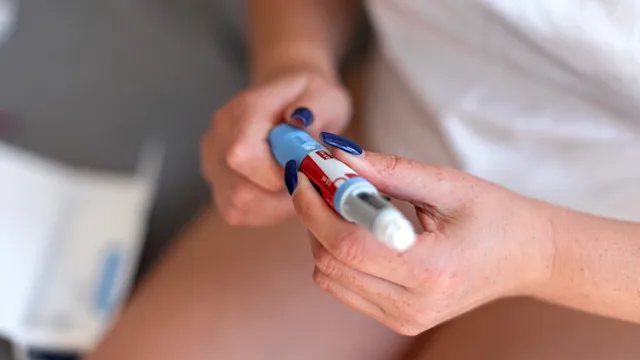
Real Ozempic comes in FlexTouch pens that have one of three colors on the label: red, blue, or yellow. They have a gray dose button that doesn’t extend as you dial your dose.
Fake Ozempic pens and their packaging will often look different from real Ozempic. Look for different colors and designs, missing numbers or details, and anything else that doesn’t look the same.
The best place to get legitimate Ozempic is from your local pharmacy. But if you use an online pharmacy or another source, there are specific risks to consider.
Save on related medications
Imagine eagerly opening your prescription package, finding what appears to be an Ozempic (semaglutide) pen. But as you examine it more closely, something feels off.
The colors aren’t quite right, the font is slightly askew, and the overall presentation just doesn’t have the authenticity you expect. You compare it to the Ozempic pen you previously received from your local pharmacy, and there’s no denying it — this one is a fake.
The truth is that counterfeit medications aren’t just confined to back-alley deals. They can find their way to you through seemingly reliable sources. But knowing what Ozempic is supposed to look like and how to spot fakes can help you tell the difference.
Search and compare options
Good to know: Ozempic also comes as an oral pill. Learn what real Ozempic pills look like in this article.
What do Ozempic pens look like?
Ozempic is available in FlexTouch pens. If you use insulin products such as Tresiba (insulin degludec) that also come in FlexTouch pens, your Ozempic pen will be a different color. FlexTouch pens with insulin are dark blue, while Ozempic pens are light blue.
There are three different Ozempic pens available. Each pen has one of three colors on its label — red, blue, or yellow — which correspond with specific dose options. Every Ozempic pen comes packaged in a carton with a certain number of NovoFine Plus pen needles.
Both the Ozempic pen and carton will have a National Drug Code (NDC) on it, which is a specific number that identifies the product. If your product has an NDC that’s different from those listed below, contact the manufacturer at 1-800-727-6500 to confirm.
Red-label Ozempic pen
The red-label Ozempic pen contains 0.25 mg and 0.5 mg doses. Unlike the other Ozempic pens, this pen has two dose options to choose from. The dose counter will show -0-, 0.25 and 0.5 options when dialing up a dose.
The red-label Ozempic pen comes in a carton with six NovoFine Plus pen needles. The NDC on the red-label Ozempic pen should be 0169-4181-03, and the carton NDC should be 0169-4181-13.

Note: It’s possible that your Ozempic carton may have a different NDC: 0169-4132-12. This product contains a smaller amount of medication and is no longer being made. But some pharmacies may still have this specific version in stock before it expires.
Blue-label Ozempic pen
The blue-label Ozempic pen contains 1 mg doses. It comes in a carton that also contains four NovoFine Plus pen needles. The NDC on the blue-label Ozempic pen should be 0169-4130-01, and the carton NDC should be 0169-4130-13. The dose counter will show -0- and 1 when dialing up a dose.

Yellow-label Ozempic pen
The yellow-label Ozempic pen contains 2 mg doses — the highest Ozempic dose available. It comes in a carton with four NovoFine Plus pen needles. The NDC on the yellow-label Ozempic pen should be 0169-4772-11, and the carton NDC should be 0169-4772-12. The dose counter will show -0- and 2 when dialing up a dose.

How to spot fake Ozempic
With counterfeit Ozempic pens on the market, it’s important to make sure that the product you’re using is actually Ozempic. If you’re not sure how to tell the difference between real and fake Ozempic, here are a few red flags that suggest yours might be fake:
Check the carton. Fake Ozempic cartons may have different coloring or designs compared with the original, as well as typos. And the dose amount on fake cartons is often located in large lettering to the right of the name “Ozempic.” Real Ozempic cartons have the dose amounts on the upper left-hand corner of the carton.
Check the NDC. Real Ozempic pens and cartons have specific NDCs identifying the product, as covered above. Fake Ozempic pens and cartons may not have an NDC, or they may have a different number altogether.
Check the dose button. Some fake Ozempic pens have a purple dose button that extends outward when setting a dose. These fake Ozempic pens look just like Semglee, a type of insulin. Real Ozempic has a gray dose button that doesn’t extend as you select a dose.
Check the dose counter. Depending on the pen, real Ozempic pen dose counters range from -0- to 2. Fake Ozempic pens, especially those that look like Semglee pens, may show doses up to 80.
Check the pen’s label. The label on a fake Ozempic pen may not stick to the pen very well, or it might appear to be of low quality.
Still not sure if your Ozempic pen is real or fake? Ozempic images on the manufacturer’s website can be a helpful source of truth. But if you still have questions, your local pharmacist can help you figure out if your Ozempic pen is real.
Good to know: If you receive “Ozempic” in a vial, it’s not the real thing. Real Ozempic only comes as an injection pen. Some vials are labeled “for research purposes” and aren’t intended for human use. Others might be compounded semaglutide, which has its own unique risks.
What can happen if you use fake Ozempic?
Real Ozempic is manufactured in a facility that’s registered with the FDA. This means the facility follows strict guidelines to ensure the safety and effectiveness of the medication.
What’s more, real Ozempic also comes in a specific injection pen that enables you to receive the correct dose. And it has detailed storage requirements that have been validated to ensure the medication lasts until its expiration or in-use date.
If you use fake Ozempic, these quality and safety reassurances no longer apply. There are several risks associated with fake Ozempic, including:
It may not contain Ozempic at all, or it may contain a different amount.
The injection pen may not deliver the correct dose.
The injection pen (if different) may not maintain the medication’s stability.
The medication may be contaminated with other ingredients or germs.
In other words, you may not get the same results with fake Ozempic. You may also be at higher risk for side effects and exposure to contaminants, which can be dangerous.
Where can you find legitimate Ozempic?
The best place to find legitimate Ozempic is at your local pharmacy. These facilities are regulated by state Boards of Pharmacy and purchase their medications through licensed wholesalers. Additionally, steps are in place to identify and remove counterfeit products before they get to you.
However, you may prefer the convenience of an online pharmacy or another source to fill your prescription. Compounded semaglutide may also seem like a tempting option. But these choices have unique risks to consider.
There are legitimate online pharmacies, but there are also risky websites — and it may be difficult to tell them apart. Here are a few tips for finding a safe online pharmacy:
Look for an online pharmacy certification or accreditation. Examples of these include Digital Pharmacy Accreditation and LegitScript certification. The pharmacy’s website may have a certification or accreditation seal at the bottom of the page. Check the certifying or accrediting entity’s website to make sure it’s legitimate.
Check NABP’s Safe Site Search tool. The National Association of Boards of Pharmacy (NABP) has a tool that lets you search for an online pharmacy to see if it’s safe. This tool also flags online pharmacies that NABP doesn’t recommend, including those not complying with laws or patient safety standards.
If an online pharmacy will sell you Ozempic without a prescription, don’t buy it. Ozempic always requires a prescription from a licensed healthcare professional.
What should you do if you receive counterfeit Ozempic?
If you receive counterfeit Ozempic — don’t use it. As covered above, there are several risks associated with using these products. And to prevent others from receiving counterfeit Ozempic in the future, you can report it so that action is taken:
Report it to the FDA. The FDA has an online form that you can use to report illegitimate medications that are sold on the internet.
Report it to the manufacturer. Novo Nordisk, the maker of Ozempic, has a customer care number that you can call to report counterfeit Ozempic. You can reach someone at 1-800-727-6500 from 8:30AM to 6PM (ET), Monday through Friday.
Report a suspicious online pharmacy to NABP. Some online pharmacies or websites selling medications haven’t been reviewed by NABP. If you receive counterfeit Ozempic from one, you can report it to NABP.
Frequently asked questions
No, Ozempic isn’t typically detected on standard drug tests. Most routine drug screenings, such as those for employment, look for substances such as opioids, benzodiazepines, and stimulants. Ozempic isn’t a controlled substance, and it’s not something most drug panels are designed to detect.
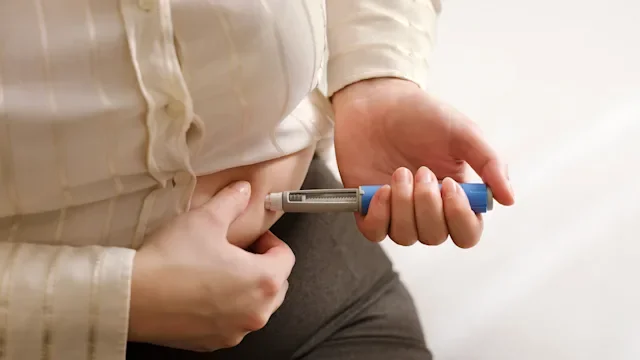
Ozempic is injected under the skin (subcutaneously) in one of three areas:
Stomach, at least 2 inches away from the belly button
Thigh, on the outer side of your upper thigh
Back of the upper arm, if someone else is giving the injection
Be sure to rotate injection sites each week to avoid skin irritation. Ozempic should never be injected into a vein or muscle.
Ozempic should be clear and colorless. Before injecting, check the solution through the window of the pen. If the liquid looks cloudy, discolored, or has particles, do not use it. Instead, use a new pen for your dose.
Storing Ozempic correctly helps ensure that it remains safe to use. Always store Ozempic in the refrigerator (between 36°F and 46°F) before first use. Once in use, you can store it in the refrigerator or at room temperature (between 59°F and 86°F ) for up to 56 days.
No, Ozempic isn’t typically detected on standard drug tests. Most routine drug screenings, such as those for employment, look for substances such as opioids, benzodiazepines, and stimulants. Ozempic isn’t a controlled substance, and it’s not something most drug panels are designed to detect.
Ozempic is injected under the skin (subcutaneously) in one of three areas:
Stomach, at least 2 inches away from the belly button
Thigh, on the outer side of your upper thigh
Back of the upper arm, if someone else is giving the injection
Be sure to rotate injection sites each week to avoid skin irritation. Ozempic should never be injected into a vein or muscle.
Ozempic should be clear and colorless. Before injecting, check the solution through the window of the pen. If the liquid looks cloudy, discolored, or has particles, do not use it. Instead, use a new pen for your dose.
Storing Ozempic correctly helps ensure that it remains safe to use. Always store Ozempic in the refrigerator (between 36°F and 46°F) before first use. Once in use, you can store it in the refrigerator or at room temperature (between 59°F and 86°F ) for up to 56 days.
The bottom line
Ozempic (semaglutide) comes as three different injection pens, depending on the dose you’re prescribed. Each pen has a specific label color — red, blue, or yellow — to help you tell them apart. When you dial up your Ozempic dose, the dose button doesn’t extend, unlike with certain insulin pens.
You may be at risk of receiving counterfeit Ozempic if you buy it from an online pharmacy or another source that isn’t your local pharmacy. Fortunately, there are ways to verify if an online pharmacy is safe. And there are red flags you can look for if you think your Ozempic is fake. But if you’re still unsure, check with the manufacturer or your local pharmacist.

Why trust our experts?



References
American Diabetes Association Consumer Guide. (n.d.). Semglee pen.
National Association of Boards of Pharmacy. (n.d.). Accredited digital pharmacies.
Novo Nordisk. (n.d.). Dosing & prescribing.
Novo Nordisk. (n.d.). FlexTouch.
Novo Nordisk. (n.d.). Frequently asked questions about Ozempic (semaglutide) injection.
Novo Nordisk. (n.d.). The Tresiba FlexTouch pen.
Novo Nordisk. (2023). Novo Nordisk warns of counterfeit Ozempic (semaglutide injection) pen found in US.
Novo Nordisk. (2025). OZEMPIC- semaglutide injection, solution [package insert]. DailyMed.
Novo Nordisk. (2025). Ozempic semaglutide injection [package insert].
U.S. Food and Drug Administration. (2025). Drug Supply Chain Security Act (DSCSA).
U.S. Food and Drug Administration. (2025). Facts about the current good manufacturing practices (CGMP).