Oxervate
Oxervate (cenegermin or cenegermin-bkbj) is an eye drop used for the treatment of an eye condition called neurotrophic keratitis. It's the first medication available for this condition. This eye drop is typically used 6 times per day for a total of 2 months.


What is Oxervate (cenegermin)?
What is Oxervate (cenegermin) used for?
- Neurotrophic keratitis (an eye condition)
How Oxervate (cenegermin) works
Oxervate (cenegermin) is a recombinant human nerve growth factor. Nerve growth factor (NGF) is a protein in your body that helps the nerves in your eyes grow and work properly. This medication supplements your body with a form of NGF to treat neurotrophic keratitis.
Drug facts
| Common Brands | Oxervate |
|---|---|
| Drug Class | Recombinant human nerve growth factor |
| Controlled Substance Classification | Not a controlled medication |
| Generic Status | No lower-cost generic available |
| Availability | Prescription only |

Side effects of Oxervate (cenegermin)
The following side effects may get better over time as your body gets used to the medication. Let your healthcare provider know immediately if you continue to experience these symptoms or if they worsen over time.
Common Side Effects
- Eye pain (16%)
- Feeling of something in your eye (up to 10%)
- Eye redness (up to 10%)
- Eye inflammation and swelling (up to 10%)
- Watery eyes (up to 10%)
The following Oxervate (cenegermin) side effects have also been reported
Side effects that you should report to your care team as soon as possible:
- Allergic reactions—skin rash, itching, hives, swelling of the face, lips, tongue, or throat
Side effects that usually do not require medical attention (report these to your care team if they continue or are bothersome):
- Eye irritation or itching
- Eye pain
- Increased tears after use

Pros and cons of Oxervate (cenegermin)
Pros
- Can completely heal the eyes in up to 72% of people who took Oxervate (cenegermin) in clinical studies
- Doesn't have a lot of side effects or risks
- Eye dropper isn't made with latex
Cons
- Available as a brand name only, which can be expensive
- Need to use multiple times per day for 2 months
- Might be difficult for some people to administer correctly

Pharmacist tips for Oxervate (cenegermin)

- Each carton contains 7 Oxervate (cenegermin) vials. Store the carton(s) in the refrigerator no later than 5 hours after receiving the medication and keep in the refrigerator for up to 2 weeks. Don't freeze or shake the vials. If you're supposed to use a dose right when you receive the medication and it's still frozen (how it's stored in the pharmacy), keep it at room temperature for about 30 minutes to thaw.
- Each vial of Oxervate (cenegermin) contains all 6 doses you'll need for the day. Once you open a vial, you can store it in the refrigerator or at room temperature for up to 12 hours. After this time, throw the vial away, even if there's still some medication left in it.
- You'll receive a delivery system kit with each carton. This kit contains all the supplies you need to give yourself the drops for the week. If you run out of supplies, contact your provider or pharmacist.
- Before starting this medication, make sure your provider or pharmacist teaches you how to give yourself Oxervate (cenegermin) so that you avoid accidentally hurting yourself or wasting the medication. Read the instructions for use or watch the demo video on how to give yourself the eye drops. Contact your provider or pharmacist if you have any questions on how to use this medication.
- Use the dose-recording card from the delivery system kit to track each time you give yourself Oxervate (cenegermin). Set an alarm for when your doses are due so you don't miss any doses. However, if you do miss a dose, skip it and continue with your normal dosing schedule. Don't double up on the dose to make up for the missed dose.
- Separate other eye drops from Oxervate (cenegermin) by at least 15 minutes apart from each other. If you're using an eye ointment, gel, or drops that are thick in consistency, apply Oxervate (cenegermin) first and then wait 15 minutes to apply your other eye product(s). This makes sure your eye(s) absorb each medication fully.
- If you wear contact lenses, take them out before using Oxervate (cenegermin) so your eye(s) can absorb all of the medication. Wait at least 15 minutes after using Oxervate (cenegermin) to put your lenses back into your eye(s).
- Refer to the patient support program for more information and help on purchasing Oxervate (cenegermin).

Risks and warnings for Oxervate (cenegermin)
Oxervate (cenegermin) can cause some serious health issues. This risk may be even higher for certain groups. If this worries you, talk to your doctor or pharmacist about other options.
Must remove contact lenses before using
If you wear contact lenses, make sure to take them out of the affected eye(s) before giving yourself Oxervate (cenegermin). This is to make sure your eye(s) absorbs all of the medication so it can work well for you. Wait at least 15 minutes after using the medication to put your contact lense(s) back into your eye(s).
Eye discomfort
Oxervate (cenegermin) can commonly cause mild to moderate eye pain. If you get severe eye pain, stop using the eye drops and contact your provider.

Oxervate (cenegermin) dosage
Typical dosage for Oxervate (cenegermin)
The typical dose is 1 drop in the affected eye(s) every 2 hours for a total of 6 doses per day. The total length of treatment is 2 months.

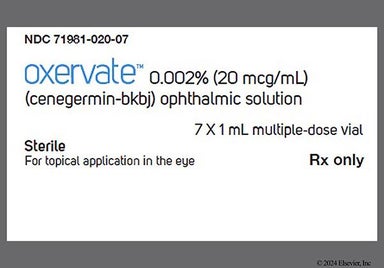
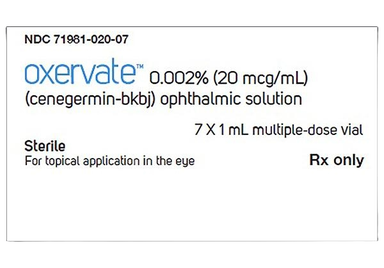
Oxervate (cenegermin) images