


The Role of Opioid Receptors in Addiction Explained
Do you know your brain has an endogenous opioid system? Learn how the opioid receptors (mu, kappa, and delta) interact with opioids and maintain addiction.
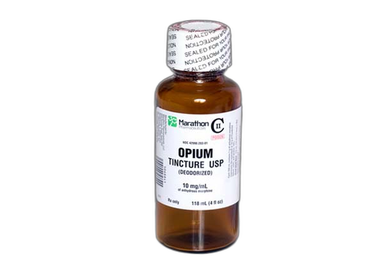
Opium tincture (deodorized), also known as laudanum, is an opioid anti-motility medication for adults. It treats diarrhea by slowing down the gut. But opium tincture hasn't been FDA-approved because it's an older medication that was on the market before the approval requirements were in place. The FDA granted opium tincture orphan drug status, meaning it might be prescribed when other anti-diarrheal treatment haven't worked. Opium tincture is a liquid that's taken by mouth, as directed by your gut specialist. Some side effects of this medication include constipation, nausea, and vomiting. Like other opioid medications, opium tincture can be habit-forming.

Opium tincture is an opioid medication. It works by binding (attaching) to certain opioid receptors in your gut. This slows down movement inside your gut to help treat diarrhea.
| Common Brands | Opium Tincture |
|---|---|
| Drug Class | Antidiarrheal |
| Controlled Substance Classification | Schedule II |
| Generic Status | Lower-cost generic available |
| Availability | Prescription only |

Opium tincture can cause some serious health issues. This risk may be even higher for certain groups. If this worries you, talk to your doctor or pharmacist about other options.
Opium tincture is a schedule II controlled substance because it has a risk for addiction and misuse. Take the medication exactly as prescribed. Don't change the dose or how often you take it without talking to your prescriber first. Misusing this medication might cause it to not work as well. It can also raise the risk for serious and possibly life-threatening side effects, such as dangerously slow breathing, inability to stay awake, and opioid overdose. Your prescriber will prescribe the lowest amount of opium tincture that's necessary to manage your symptoms for the shortest period of time possible.
Take opium tincture exactly as prescribed. Taking too much opium tincture or taking it more often than prescribed can lead to an accidental overdose. Symptoms of an opioid overdose include not responding to sound or touch, extremely slowed breathing, extreme sleepiness, slow heartbeat, and cold or clammy skin. Be sure you and your loved ones know how to recognize an overdose. Your prescriber might recommend you to have naloxone (Narcan, Zimhi) at hand. Naloxone is a medication that can treat an opioid overdose. Make sure you carry naloxone with you at all times in case you experience an overdose. Call 911 right away if this happens. Store your medication out of reach from children, pets, or visitors to prevent accidental exposure or overdose.
Opium tincture is only meant to be taken occasionally to help with diarrhea. If taken regularly for a long time, opium tincture can cause physical dependence. This means that your body relies on the medication to function. You might also experience withdrawal if you stop taking the medication suddenly. Withdrawal symptoms include anxiety, restlessness, irritability, runny nose, yawning, sweating, and chills. If you have concerns about taking opium tincture because of these risks, talk to your prescriber about alternative diarrhea medications.
Use of opium tincture during pregnancy can cause your unborn baby to become dependent on the medication. This is because opium tincture can pass through the placenta to your unborn baby. Once your baby is born, they can experience withdrawal symptoms, such as high-pitched crying, poor feeding and sucking behavior, trembling, abnormal sleep patterns, and seizures. This condition is called neonatal opioid withdrawal syndrome and can be life-threatening if not recognized and treated in time. Let a healthcare professional know if you've used opium tincture during pregnancy or if you notice these symptoms in your baby.

The following side effects may get better over time as your body gets used to the medication. Let your healthcare provider know immediately if you continue to experience these symptoms or if they worsen over time.
Contact your healthcare provider immediately if you experience any of the following.
Along with its needed effects, a medicine may cause some unwanted effects. Although not all of these side effects may occur, if they do occur they may need medical attention.
Check with your doctor immediately if any of the following side effects occur:
Get emergency help immediately if any of the following symptoms of overdose occur:
Symptoms of overdose
blurred vision
blue lips and fingernails
chest pain or discomfort
chills
cold sweats
coma
confusion
constricted, pinpoint, or small pupils (black part of eye)
cool, clammy skin
coughing that sometimes produces a pink frothy sputum
difficult, fast, or noisy breathing, sometimes with wheezing
difficult or troubled breathing
disorientation
dizziness, faintness, or lightheadedness when getting up from a lying or sitting position suddenly
drowsiness to profound coma
fast heartbeat
hallucination
headache
increased hunger
increased sweating
irregular, fast or slow, or shallow breathing
lethargy
lightheadedness
mood or other mental changes
nervousness
nightmares
no blood pressure or pulse
no muscle tone or movement
not breathing
pale or blue lips, fingernails, or skin
seizures
shakiness
shortness of breath
slow or irregular heartbeat
slurred speech
stopping of heart
swelling in legs and ankles
unconsciousness
unusual tiredness or weakness
Some side effects may occur that usually do not need medical attention. These side effects may go away during treatment as your body adjusts to the medicine. Also, your health care professional may be able to tell you about ways to prevent or reduce some of these side effects. Check with your health care professional if any of the following side effects continue or are bothersome or if you have any questions about them:
Other side effects not listed may also occur in some patients. If you notice any other effects, check with your healthcare professional.
Call your doctor for medical advice about side effects. You may report side effects to the FDA at 1-800-FDA-1088.




 Ml of oral solution
| Dosage | Quantity | Price as low as | Price per unit |
|---|---|---|---|
| 10mg/ml | 118 ml | $183.96 | $1.56 |
Each 1 mL liquid contains 10 mg of anhydrous morphine (the active medication in opium tincture).

Although certain medicines should not be used together at all, in other cases two different medicines may be used together even if an interaction might occur. In these cases, your doctor may want to change the dose, or other precautions may be necessary. When you are taking this medicine, it is especially important that your healthcare professional know if you are taking any of the medicines listed below. The following interactions have been selected on the basis of their potential significance and are not necessarily all-inclusive.
Using this medicine with any of the following medicines is not recommended. Your doctor may decide not to treat you with this medication or change some of the other medicines you take.
Using this medicine with any of the following medicines is usually not recommended, but may be required in some cases. If both medicines are prescribed together, your doctor may change the dose or how often you use one or both of the medicines.


Contraindications are specific health conditions or situations in which a person should not take a medication due to safety concerns. If you have any of the following conditions or if any of the following apply to you, let your healthcare provider know because Opium tincture will not be safe for you to take.


Prescription savings
Stop paying too much for your prescriptions. Compare prices, get pharmacy coupons, and save up to 80%. Find expert answers to your health questions so you can make the best decisions for yourself and your family.
Health conditions
Medications & treatment
Access & affordability
 Our monthly healthcare membership can help you save thousands on your prescription costs.
Resources

Opium is an opioid medication that's used to treat long-term (chronic) diarrhea. It works by attaching to certain opioid receptors in your gut. This slows down movement in the gut and lessens secretions. But Opium is not a first-choice option for diarrhea because the risk for serious side effects and addiction.
Opium is a clear, reddish-brown liquid.
Yes, Opium has a risk of addiction. That's why your gastroenterologist typically won't consider this medication unless safer options haven't worked. But if you do need to take Opium, your gastroenterologist will prescribe the smallest dose needed to treat your symptoms in order to lower the risk for dependence or addiction. Opium should be taken as infrequently as possible.
Don't take any more Opium than what's prescribed by your gastroenterologist. When you take too much Opium, you might experience symptoms of opioid overdose, such as nausea, vomiting, sleepiness, and trouble breathing. Because of this risk, your gastroenterologist might also prescribe naloxone (Narcan) along with Opium to be safe. Make sure you and your caregiver can recognize symptoms of too much Opium and know how to use naloxone (Narcan). Call 911 right away if you feel trouble breathing or feel extremely sleepy after taking Opium.
