Oncaspar
Oncaspar (pegaspargase) is a cancer medication used to treat children and adults with acute lymphoblastic leukemia (ALL). It’s typically given together with other chemotherapy medications. Oncaspar (pegaspargase) stays in the body longer, so it can be given less often compared to L-asparaginase, a similar but older medication that’s no longer available. It’s given either as an injection into the vein (intravenous, IV) or into the muscle (intramuscular, IM), usually no more than every 2 weeks. Some side effects include high blood sugar, pancreatitis, and serious allergic reactions.


What is Oncaspar (pegaspargase)?
What is Oncaspar (pegaspargase) used for?
- Treatment of children and adults with acute lymphoblastic leukemia (ALL) as part of a combination chemotherapy regimen
- As first-choice treatment
- In people who had an allergic reaction to a similar medication called L-asparaginase
How Oncaspar (pegaspargase) works
Oncaspar (pegaspargase) is an asparagine specific enzyme. It works by targeting asparagine, a nutrient that cancer cells need to survive. By breaking down asparagine, Oncaspar (pegaspargase) prevents cancer cells from using it, which helps stop them from growing and spreading.
Drug facts
| Common Brands | Oncaspar |
|---|---|
| Drug Class | Asparagine specific enzyme |
| Controlled Substance Classification | Not a controlled medication |
| Generic Status | No lower-cost generic available |
| Availability | Prescription only |

Side effects of Oncaspar (pegaspargase)
The following side effects may get better over time as your body gets used to the medication. Let your healthcare provider know immediately if you continue to experience these symptoms or if they worsen over time.
Common Side Effects
- High liver enzymes (66%)
- Neutropenic fever (40%)
- High triglycerides (30%)
- Low albumin (28%)
- High bilirubin (25%)
- High blood sugar (24%)
- Pancreatitis (24%)
- Abnormal clotting labs (up to 21%)
Note: Only serious side effects are shown above from a study where Oncaspar (pegaspargase) was given with other medications, so these side effects might not be solely due to Oncaspar (pegaspargase).
Less Common Side Effects
- Allergic reactions
- Blood clots
- Pneumonia
- Sepsis
- Diarrhea
- Bleeding
- Fungal infection
Oncaspar (pegaspargase) serious side effects
Contact your healthcare provider immediately if you experience any of the following.
- Serious allergic reaction: facial swelling, rash, redness, itching, trouble breathing
- Severe liver problems: sudden weight gain, stomach pain or swelling, nausea, vomiting, yellowing of the skin or the whites of the eyes
- Pancreatitis: fever, nausea, vomiting, severe stomach pain, chills, diarrhea
- Blood clots: sudden and severe headache, swelling in the arms or legs, trouble breathing, chest pain
The following Oncaspar (pegaspargase) side effects have also been reported
Along with its needed effects, a medicine may cause some unwanted effects. Although not all of these side effects may occur, if they do occur they may need medical attention.
Check with your doctor or nurse immediately if any of the following side effects occur:
More common
Black, tarry stools
blurry vision
chills
dark urine
difficulty breathing
fast heartbeat
flushed, dry skin
fruit-like breath odor
hoarseness
increased hunger
increased thirst
increased urination
indigestion
irritation
joint pain, stiffness, or swelling
loss of appetite
pain in the chest, groin, or legs, especially the calves
painful or difficult urination
pains in the stomach, side, or abdomen, possibly radiating to the back
redness of the skin
severe, sudden headache
skin paleness
slurred speech
stomach pain
sudden loss of coordination
sudden, severe weakness or numbness in the arm or leg
sweating
swelling of the eyelids, face, lips, hands, or feet
tightness in the chest
troubled breathing
troubled swallowing
ulcers, sores, or white spots in the mouth
unexplained weight loss
unusual bleeding or bruising
unusual tiredness or weakness
vision changes
vomiting
yellow eyes or skin
Incidence not known
Continuing nausea or vomiting
increase in the frequency of seizures
light-colored stools
Other side effects not listed may also occur in some patients. If you notice any other effects, check with your healthcare professional.
Call your doctor for medical advice about side effects. You may report side effects to the FDA at 1-800-FDA-1088.

Pros and cons of Oncaspar (pegaspargase)
Pros
- Recommended as part of a first-choice treatment regimen for ALL
- Available as an intravenous infusion or a quick intramuscular injection
- Can be given no more than every 2 weeks
Cons
- Might cause serious side effects such as blood clots or pancreatitis
- Requires several premedications to prevent allergic reactions
- Not safe for people with severe liver problems

Pharmacist tips for Oncaspar (pegaspargase)

- Because Oncaspar (pegaspargase) commonly causes allergic reactions, you'll need to take premedications like acetaminophen (Tylenol), diphenhydramine (Benadryl), and famotidine (Pepcid) 30 to 60 minutes before each dose. If you experience symptoms like a rash, facial swelling, itching, or trouble breathing during or shortly after your treatment, tell your care team right away.
- Oncaspar (pegaspargase) is usually given together with several other chemotherapy medications as part of a complex treatment regimen. The treatment schedule can be complicated and confusing. Consider using a treatment calendar or an app on your phone to help you keep track of appointments.
- If you're receiving Oncaspar (pegaspargase) as an infusion into a vein, expect it to take 1-2 hours. However, since you'll also receive premedications and other chemotherapy drugs, plan for the entire treatment to take half a day or more.
- If you're receiving Oncaspar (pegaspargase) as an injection into the muscle, the process is quick, but you might need multiple injections of the medication in different areas of your body for one treatment.
- When taken together, Oncaspar (pegaspargase) might raise the levels of glucocorticoid medications, like dexamethasone, in your body. This could worsen certain side effects such as high blood sugar and trouble sleeping. Your oncologist might recommend more frequent blood sugar tests if these medications are used together.
- Oncaspar (pegaspargase) can cause serious liver problems, so you’ll need to get regular labs done to check your liver health. If your liver enzymes are too high, you might need to pause. If you experience symptoms like yellow eyes, yellow skin, stomach pain, or a swollen belly, contact your care team right away.
- If you can become pregnant, use non-hormonal birth control while you’re taking Oncaspar (pegaspargase). You’ll also need to continue to use birth control for at least 3 months after you stop treatment.
- It’s best to avoid breastfeeding while you’re taking Oncaspar (pegaspargase) and for at least 1 month after your last dose, as there are potential risks to the baby.

Risks and warnings for Oncaspar (pegaspargase)
Oncaspar (pegaspargase) can cause some serious health issues. This risk may be even higher for certain groups. If this worries you, talk to your doctor or pharmacist about other options.
Allergic reactions
People taking Oncaspar (pegaspargase) can develop serious allergic reactions. These reactions can include rash, trouble breathing, facial swelling, hives, itching, or low blood pressure. To help prevent these reactions, you’ll take premedications such as acetaminophen (Tylenol) and diphenhydramine (Benadryl), and famotidine (Pepcid) 30 to 60 minutes before each dose. You might have to stay in the clinic for an hour after your dose to make sure you don’t experience any reactions. If you have a serious reaction, you likely won’t be able to continue taking this medication
Blood clots
Some people taking Oncaspar (pegaspargase) have developed blood clots. If you have swelling, warm skin, or redness in one arm or one leg, trouble breathing, a sudden and severe headache, or weakness on one side of your body, get medical help right away.
Pancreatitis
Oncaspar (pegaspargase) can cause swelling in the pancreas, also called pancreatitis. Contact your oncologist if you develop symptoms such as fever, nausea and vomiting, and severe stomach pain in the upper belly area. You might need to pause taking this medication while your oncologist looks into it. If they determine that you do have pancreatitis, you might need to stop taking Oncaspar (pegaspargase) altogether.
High blood sugar
Oncaspar (pegaspargase) can cause high blood sugar. Your oncologist will monitor your blood sugar with lab tests while you’re taking this medication. If you notice extreme thirst or start urinating more often or in larger amounts, let your care team know.
Bleeding
Some people taking Oncaspar (pegaspargase) have had lab tests showing problems with blood clotting. This means your body might have trouble stopping bleeding. If you experience bleeding that won’t stop or notice more bruising, let your care team know.
Liver problems
Oncaspar (pegaspargase) can cause serious liver problems, some even life-threatening. Your oncologist will monitor your liver health on a regular basis to make sure this medication is still safe for you to take. If your liver labs are too high, you might need to pause or stop treatment. If you experience symptoms of liver problems such as stomach pain, sudden weight gain, yellowing of the skin, or yellowing around the whites of your eyes, call your oncologist right away.

Oncaspar (pegaspargase) dosage
Typical dosage for Oncaspar (pegaspargase)
Your oncologist will calculate your dose of Oncaspar (pegaspargase) based on your body surface area (BSA), which takes into account your height and weight.
- People 21 years old and younger: The typical dose is 2,500 international units (IU)/m2 injected into the muscle or vein. Additional doses must be given at least 14 days apart.
- People older than 21 years: The typical dose is 2,000 international units (IU)/m2 injected into the muscle or vein. Additional doses must be given at least 14 days apart.
Your dose might be different if you’re experiencing side effects from this medication.

Interactions between Oncaspar (pegaspargase) and other drugs
Although certain medicines should not be used together at all, in other cases two different medicines may be used together even if an interaction might occur. In these cases, your doctor may want to change the dose, or other precautions may be necessary. Tell your healthcare professional if you are taking any other prescription or nonprescription (over-the-counter [OTC]) medicine.

Oncaspar (pegaspargase) contraindications
Contraindications are specific health conditions or situations in which a person should not take a medication due to safety concerns. If you have any of the following conditions or if any of the following apply to you, let your healthcare provider know because Oncaspar (pegaspargase) will not be safe for you to take.
- History of serious blood clot to L-asparaginase treatment
- History of pancreatitis to L-asparaginase treatment
- History of bleeding to L-asparaginase treatment
- Severe liver problems

What are alternatives to Oncaspar (pegaspargase)?

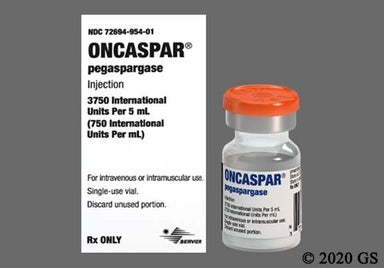
Oncaspar (pegaspargase) images