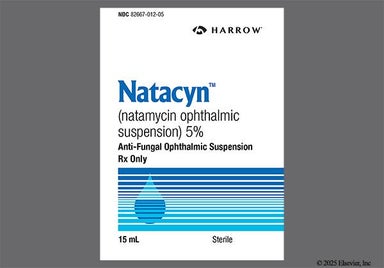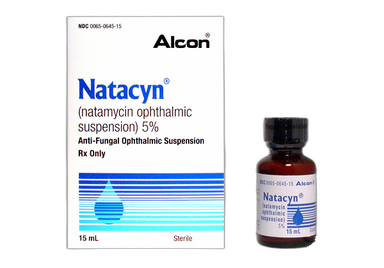
Natacyn
Natacyn, the brand name for natamycin, is an eye drop that's used for treating fungal eye infections in adults. It's an antifungal medication that works to get rid of the fungus causing the infection. The eye drops are put in the affected eye usually several times a day. But the dosing will depend on your specific eye infection. Potential side effects include eye discomfort and eye redness.


What is Natacyn (natamycin)?
What is Natacyn (natamycin) used for?
Fungal eye infections:
- Blepharitis (eyelid infection)
- Conjunctivitis (pink eye)
- Keratitis (cornea infection)
How Natacyn (natamycin) works
Natacyn (natamycin) is a type of antifungal medication. It works by damaging the protective covering of the fungus that's causing the infection. This kills the fungus.
Drug facts
| Common Brands | Natacyn |
|---|---|
| Drug Class | Antifungal |
| Controlled Substance Classification | Not a controlled medication |
| Generic Status | No lower-cost generic available |
| Availability | Prescription only |

Side effects of Natacyn (natamycin)
The following side effects may get better over time as your body gets used to the medication. Let your healthcare provider know immediately if you continue to experience these symptoms or if they worsen over time.
Common Side Effects
Please see "Other Side Effects."
Less Common Side Effects
- Eye discomfort
- Eye swelling
- Eye redness
- Eye irritation
- Eye pain
- Watery eye
- Cloudy eye surface
- Feeling like there's something in your eye
- Change in vision
- Pins and needles sensation
- Chest pain
- Shortness of breath
- Allergic reaction
The following Natacyn (natamycin) side effects have also been reported
Along with its needed effects, a medicine may cause some unwanted effects. Although not all of these side effects may occur, if they do occur they may need medical attention.
Check with your doctor as soon as possible if any of the following side effects occur:
Eye irritation, redness, or swelling not present before use of this medicine
Other side effects not listed may also occur in some patients. If you notice any other effects, check with your healthcare professional.
Call your doctor for medical advice about side effects. You may report side effects to the FDA at 1-800-FDA-1088.

Get your GoodRx coupon

Pros and cons of Natacyn (natamycin)
Pros
- The only antifungal eye drop available
- Causes few side effects
Cons
- Used many times a day, especially during the first few days of treatment or for more serious infections
- Can take a few weeks to treat certain infections fully

Pharmacist tips for Natacyn (natamycin)

- Be sure to use Natacyn (natamycin) for the full amount of time your prescriber instructs you to, even if your eye starts to get better. Stopping Natacyn (natamycin) too soon can cause your infection to come back and be harder to treat.
- Call your prescriber if your eye infection doesn't get any better after several days of using Natacyn (natamycin). This could be a sign that it isn't the right treatment for your infection. Natacyn (natamycin) only works for fungal eye infections. You'll need a different medication if your infection is caused by bacteria or a virus.
- Shake the Natacyn (natamycin) bottle well before each time you use the eye drops. This makes sure the medication is mixed evenly for each dose.
- Wash your hands before you put Natacyn (natamycin) drops in your eye(s). Don't let the dropper tip touch your eye or to any other surface. And don't touch the dropper tip with your hands. This will help avoid spreading germs to the medication. It also helps prevent other germs from getting into your eye.
- After you've placed a drop of Natacyn (natamycin) in your eye, close your eye and lightly press one finger to the inner corner of your eye by the nose for 1 minute. This helps make sure all the medication gets absorbed into your eye instead of draining into your nose. Wash your hands with soap and water afterwards.
- If you need to use other eye medications in addition to Natacyn (natamycin), wait at least 5 minutes between each drop to give your eye(s) time to absorb each medication. Use any eye drop medications first, wait 5 minutes, and then apply any eye gels or eye ointments.
- Don't wear contact lenses while you're using Natacyn (natamycin). In general, it's best not to wear contacts while you have an eye infection since it can affect how quickly your symptoms improve. Be sure to throw away the contacts you were wearing before you started using Natacyn (natamycin) because they most likely have germs on them. Wear new contacts once your infection has cleared up.
- Store Natacyn (natamycin) at room temperature (between 36 and 75 degrees Fahrenheit). Make sure to put the medication in a location where it won't get wet and where it's protected from light and extreme heat.

Risks and warnings for Natacyn (natamycin)
Natacyn (natamycin) can cause some serious health issues. This risk may be even higher for certain groups. If this worries you, talk to your doctor or pharmacist about other options.
Use with appropriate tests and follow-up
It's important to follow up with your prescriber regularly to make sure that your eye infection is healing appropriately with Natacyn (natamycin) treatment. It gives your prescriber an idea of how long you need to continue to use the eye drops or whether you need to switch to a more appropriate medication. For example, a corneal infection that doesn't improve after you've used Natacyn (natamycin) for 7 to 10 days is a sign that you might need a different medication. You might need additional tests to figure out which treatment is best for you.
Medication buildup around the eye
You might notice some of the Natacyn (natamycin) eye drop medication building up over an eye ulcer. Buildup of the medication can also happen along the top or bottom edges of the eye. This is normal, but let your prescriber know if it's irritating or affecting your vision.

Natacyn (natamycin) dosage
 Eye dropper
| Dosage | Quantity | Price as low as | Price per unit |
|---|---|---|---|
| 15ml of 5% | 1 eye dropper | $915.37 | $915.37 |
Typical dosage for Natacyn (natamycin)
- Blepharitis (eyelid infection) or conjunctivitis (pink eye): The typical dose is to place 1 drop in the affected eye(s) 4 to 6 times a day.
- Keratitis (cornea infection): The typical dose is to place 1 drop in the affected eye(s) every 1 to 2 hours. After 3 to 4 days, your prescriber might lower your dose to 1 drop in the affected eye(s) 6 to 8 times a day. The eye drops are generally used for 2 to 3 weeks or until the eye infection heals.

Interactions between Natacyn (natamycin) and other drugs
Although certain medicines should not be used together at all, in other cases two different medicines may be used together even if an interaction might occur. In these cases, your doctor may want to change the dose, or other precautions may be necessary. Tell your healthcare professional if you are taking any other prescription or nonprescription (over-the-counter [OTC]) medicine.

How much does Natacyn (natamycin) cost?
$915.37

Natacyn (natamycin) images