


Oral Thrush Medications: What To Know About Your Treatment Options
Oral thrush is a fungal infection of the mouth and there are some medications you can take to help treat it. Learn more about oral thrush medications with GoodRx.
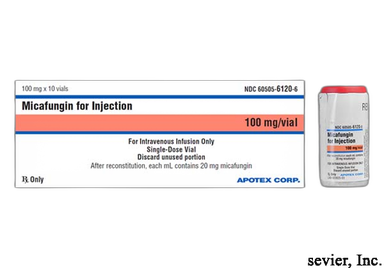
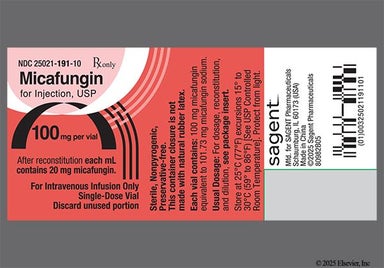
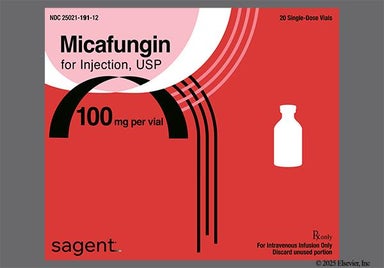
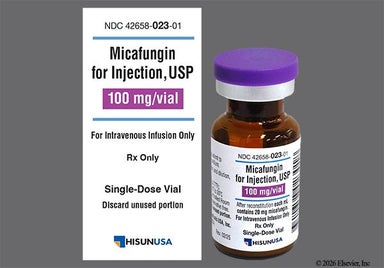
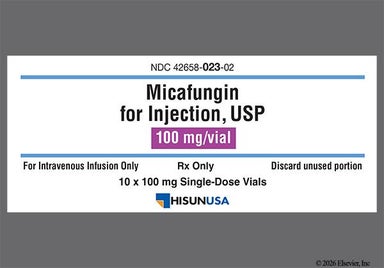
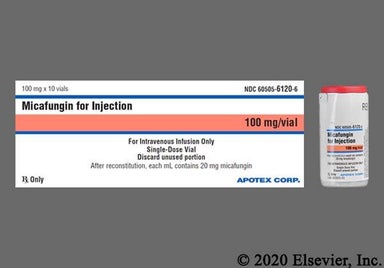
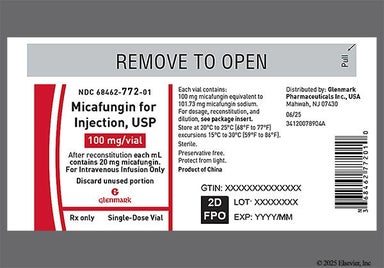
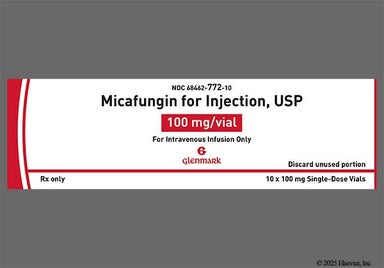
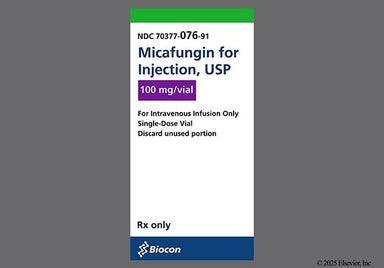
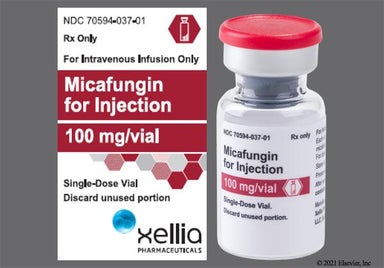
Micafungin (Mycamine) is a medication that treats infections in the blood, stomach, and esophagus (tube that connects the throat to stomach) caused by a fungus called Candida. It can be used in children and adults. This medication is injected once per day through the vein by a healthcare provider in the hospital.

| Common Brands | Mycamine |
|---|---|
| Drug Class | Antifungal |
| Controlled Substance Classification | Not a controlled medication |
| Generic Status | No lower-cost generic available |
| Availability | Prescription only |


Although certain medicines should not be used together at all, in other cases two different medicines may be used together even if an interaction might occur. In these cases, your doctor may want to change the dose, or other precautions may be necessary. When you are receiving this medicine, it is especially important that your healthcare professional know if you are taking any of the medicines listed below. The following interactions have been selected on the basis of their potential significance and are not necessarily all-inclusive.
Using this medicine with any of the following medicines may cause an increased risk of certain side effects, but using both drugs may be the best treatment for you. If both medicines are prescribed together, your doctor may change the dose or how often you use one or both of the medicines.


Prescription savings
Stop paying too much for your prescriptions. Compare prices, get pharmacy coupons, and save up to 80%.Resources
About GoodRx
 Find expert answers to your health questions so you can make the best decisions for yourself and your family.
Health conditions
Medications & treatment
Access & affordability
Well-being
Medication discounts

Micafungin is approved for use in adults and children for the treatment of infections in the blood, stomach, and esophagus caused by a fungus called Candida. This medication can also be used for prevention of fungal infections in adults and children who have had a bone marrow transplant. Additionally, the Infectious Diseases Society of America (IDSA) recommends Micafungin for the treatment of Candida infections in certain other parts of the body too. The medication isn't FDA approved for this purpose, but professional organizations like the IDSA have recommended it based on strong clinical evidence. Micafungin is mostly used as part of empiric therapy, which means it's used to fight possible fungal infections when it's not known which specific fungus is causing an infection. It might also be used for people who have infections that are difficult to treat with (resistant to) fluconazole (Diflucan) and other similar antifungals.
Micafungin is an antifungal medication. It kills fungi by preventing their ability to make a protective covering around themselves.
Micafungin is typically given as an injection through the veins (intravenously or IV) in the hospital. Each infusion takes about 1 hour.
The typical dose in adults for the treatment of fungal infections is 100 mg or 150 mg injected through your vein (intravenously or IV) once per day, depending on the site of infection. For the prevention of fungal infections, the typical dose is 50 mg IV once per day. The dose for children 4 months of age and older is based on their body weight.
Micafungin is a well-tolerated medication and doesn't have a lot of side effects. Some possible side effects include stomach upset (e.g., diarrhea, nausea, vomiting, pain), fever, and headache.
