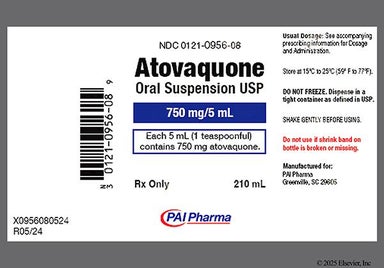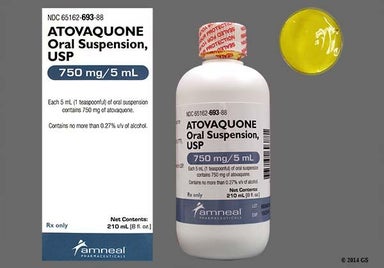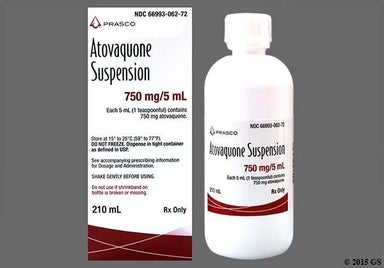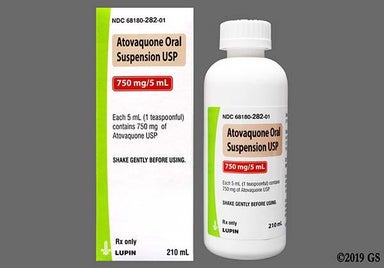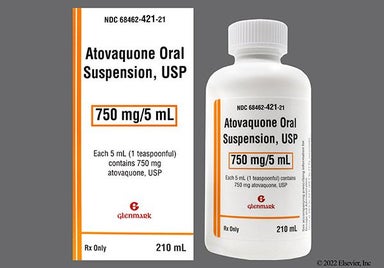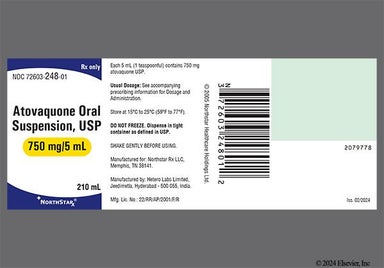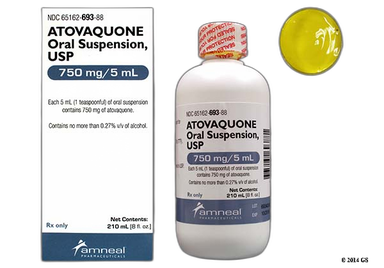


Atovaquone (Mepron) is a good medication to treat and prevent a type of pneumonia caused by a fungus (Pneumocystis jirovecii). Usually, it is not the first-choice treatment for this type of pneumonia.
Atovaquone (Mepron) is an antifungal medication. It prevents and treats the fungus, Pneumocystis jirovecii, from reproducing and causing pneumonia in your body.
The following side effects may get better over time as your body gets used to the medication. Let your healthcare provider know immediately if you continue to experience these symptoms or if they worsen over time.
These were the most frequent side effects that required stopping the medication (greater than 14%):
Contact your healthcare provider immediately if you experience any of the following.
Along with its needed effects, a medicine may cause some unwanted effects. Although not all of these side effects may occur, if they do occur they may need medical attention.
Check with your doctor immediately if any of the following side effects occur:
More common
Cough or hoarseness
difficult or labored breathing
fever or chills
lower back or side pain
painful or difficult urination
tightness in the chest
Incidence not known
Black, tarry stools
bleeding gums
blood in the urine or stools
bluish-colored lips, fingernails, or palms
dark urine
dizziness or lightheadedness
fast heartbeat
headache
indigestion
large, hive-like swelling on the face, eyelids, lips, tongue, throat, hands, legs, feet, or sex organs
light-colored stools
loss of appetite
noisy breathing
pains in the stomach, side, or abdomen, possibly radiating to the back
pale skin
pinpoint red spots on the skin
rapid heart rate
unusual bleeding or bruising
unusual tiredness or weakness
vomiting
yellow eyes or skin
Some side effects may occur that usually do not need medical attention. These side effects may go away during treatment as your body adjusts to the medicine. Also, your health care professional may be able to tell you about ways to prevent or reduce some of these side effects. Check with your health care professional if any of the following side effects continue or are bothersome or if you have any questions about them:
More common
Abdominal or stomach pain
lack or loss of strength
skin rash
sore mouth or tongue
sweating
trouble sleeping
white patches in the mouth, tongue, or throat
Incidence not known
Blistering, peeling, or loosening of the skin
eye irritation or redness
itching or skin rash
joint or muscle pain
red skin lesions, often with a purple center
Other side effects not listed may also occur in some patients. If you notice any other effects, check with your healthcare professional.
Call your doctor for medical advice about side effects. You may report side effects to the FDA at 1-800-FDA-1088.
The first-choice treatment of Pneumocystis jirovecii is another medication called trimethoprim-sulfamethoxazole. If you cannot take the first-choice medication (due to allergies or other reasons), your healthcare provider will prescribe you atovaquone (Mepron) instead.
This medication must be taken with food for it to be absorbed by your body. Shake the medication gently before using it.
No, atovaquone (Mepron) should be stored at room temperature.
This type of pneumonia occurs in people with weakened immune systems, such as people with cancer, transplanted organs, or human immunodeficiency virus (HIV).
This medication is only approved to be used in adults and adolescents 13 years of age and older.
Atovaquone (Mepron) can cause some serious health issues. This risk may be even higher for certain groups. If this worries you, talk to your doctor or pharmacist about other options.
The amount of atovaquone (Mepron) that is able to get into the body depends on food. Taking atovaquone (Mepron) without food may result in medication levels that are too low to treat the infection, potentially causing treatment failure.
Atovaquone (Mepron) may cause or worsen liver disease. If you have a history of liver problems, let your healthcare provider know because they will monitor you closely to make sure there are no issues with your liver.
| Dosage | Quantity | Price as low as | Price per unit |
|---|---|---|---|
| 750mg/5ml | 300 ml | $169.10 | $0.56 |
Although certain medicines should not be used together at all, in other cases two different medicines may be used together even if an interaction might occur. In these cases, your doctor may want to change the dose, or other precautions may be necessary. When you are taking this medicine, it is especially important that your healthcare professional know if you are taking any of the medicines listed below. The following interactions have been selected on the basis of their potential significance and are not necessarily all-inclusive.
Using this medicine with any of the following medicines is usually not recommended, but may be required in some cases. If both medicines are prescribed together, your doctor may change the dose or how often you use one or both of the medicines.
Using this medicine with any of the following medicines may cause an increased risk of certain side effects, but using both drugs may be the best treatment for you. If both medicines are prescribed together, your doctor may change the dose or how often you use one or both of the medicines.