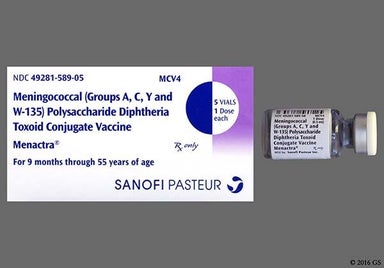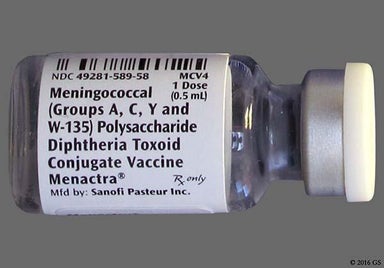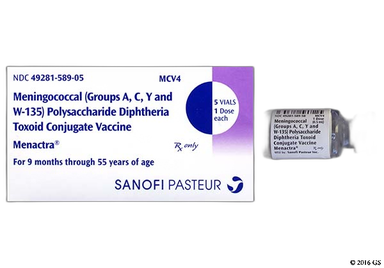
Menactra
The meningococcal conjugate vaccine is used to lower your risk of getting sick from a bacteria called Neisseria meningitidis (N. meningitidis). It's a 2-dose series given to adolescents, typically starting at around 11 and 12 years old. Some younger children and adults might also need to get this vaccine, depending on their health conditions or where they live or work. There are 3 brands of the meningococcal conjugate vaccine available and your provider will pick the one you need based on your age and medical conditions.


What is The meningococcal conjugate vaccine?
What is The meningococcal conjugate vaccine used for?
- Prevention of group A, C, Y, and W-135 meningococcal disease
How The meningococcal conjugate vaccine works
The meningococcal conjugate vaccine is an inactivated vaccine that protects you from meningococcal disease caused by groups A, C, Y and W strains of N. meningitidis. The vaccine helps your body's immune system make antibodies that will attack the bacteria if it ever infects you.
Drug facts

Side effects of The meningococcal conjugate vaccine
The following side effects may get better over time as your body gets used to the medication. Let your healthcare provider know immediately if you continue to experience these symptoms or if they worsen over time.
Common Side Effects
Less Common Side Effects
- Vomiting
- Fever
- Diarrhea
- Rash
- Muscle pain
- Joint pain
- Low appetite
The meningococcal conjugate vaccine serious side effects
Contact your healthcare provider immediately if you experience any of the following.
- Serious allergic reactions: hives, rash, shaking, itching, nausea, flushing, dizziness, shortness of breath, chest pain
- Breathing problems for premature babies (for Menveo only): not breathing for 15 or 20 seconds at a time, not breathing for less than 15 seconds at a time with slow heart rate
The following The meningococcal conjugate vaccine side effects have also been reported
Along with its needed effects, a medicine may cause some unwanted effects. Although not all of these side effects may occur, if they do occur they may need medical attention.
Check with your doctor or nurse immediately if any of the following side effects occur:
Incidence not known
Back pain, sudden and severe
blurred vision
burning, crawling, itching, numbness, prickling, "pins and needles", or tingling feelings
confusion
difficulty with swallowing
dizziness
dizziness, faintness, or lightheadedness when getting up suddenly from a lying or sitting position
fainting
fast heartbeat
flushing or redness of the skin
hives or welts
inability to move the arms and legs
muscle weakness, sudden and progressing
puffiness or swelling of the eyelids or around the eyes, face, lips, or tongue
seizures
shortness of breath
skin rash
sudden numbness and weakness in the arms and legs
sweating
tightness in the chest
unusually warm skin
Some side effects may occur that usually do not need medical attention. These side effects may go away during treatment as your body adjusts to the medicine. Also, your health care professional may be able to tell you about ways to prevent or reduce some of these side effects. Check with your health care professional if any of the following side effects continue or are bothersome or if you have any questions about them:
More common
Crying
difficulty with moving
drowsiness
irritability
loss of appetite
muscle pain or stiffness
pain in the joints
pain, redness, swelling, or tenderness at the injection site
vomiting
Other side effects not listed may also occur in some patients. If you notice any other effects, check with your healthcare professional.
Call your doctor for medical advice about side effects. You may report side effects to the FDA at 1-800-FDA-1088.

Get your GoodRx coupon

Pros and cons of The meningococcal conjugate vaccine
Pros
- Readily available and easy to find at most pharmacies
- Can receive any brand for the second dose, regardless of the previous brand received, as long as it's approved for your age group
- Doesn't contain latex

Pharmacist tips for The meningococcal conjugate vaccine

- If you're traveling, check if the meningococcal conjugate vaccine is recommended for your destination.
- Possible side effects include redness/soreness at injection site, muscle pain, headache, and feeling tired. If any of these occur, they usually last for 1 to 2 days.
- Make sure to mark the dates on your calendar of when you need to go in for all your the meningococcal conjugate vaccine injections so that you receive your doses on time and stay fully protected against meningococcal disease.
- Make sure to keep a record of all your immmunizations and show it to your provider or pharmacist before receiving any vaccine, including the meningococcal conjugate vaccine, to make sure you're receiving all your vaccines on schedule.
- You can receive any of the 3 brands (Menveo, Menactra, MenQuadfi), regardless of the brand of your previous dose, as long as your age group is approved for use in the brand to be used. For example, since MedQuadfi is approved in adults and children 2 years of age and older, a 1 year-old child can receive only either Menactra or Menveo, but not MedQuadfi.
- Wait until you're healthy to get the meningococcal conjugate vaccine. This will help make sure your immune system protects you as best as it can. If you have a mild sickness, such as a cold or low-grade fever, you can still get the meningococcal conjugate vaccine. But if you feel moderately to severely sick, wait until you recover before getting this vaccine. Ask your provider if you're not sure whether or not you can get this vaccine.
- Read the vaccine information statement for more information on the meningococcal conjugate vaccine.
- If you experience a severe reaction to the meningococcal conjugate vaccine, you or your provider can report it to the vaccine adverse event reporting system (VAERS) website or by calling 1-800-822-7967.

Common questions about The meningococcal conjugate vaccine
The meningococcal conjugate vaccine is a routine vaccine recommended for all children 11 to 12 years old. People who are high risk for meningococcal disease should also receive the meningococcal conjugate vaccine. The immunization schedule and recommendations for the meningococcal conjugate vaccine in high-risk children and adults depends on the brand you receive, your age, and what other medical conditions you have. Ask your provider or pharmacist if you aren't sure if you or your child needs the meningococcal conjugate vaccine.
The 3 brands of the meningococcal conjugate vaccine, Menactra, Menveo, and MenQuadfi, all work well to prevent meningococcal disease caused by groups A, C, W, and Y N. meningitidis. The main difference is which age group can use which vaccine. Menactra is used in people age 9 months to 55 years, Menveo is used in people age 2 months to 55 years, and MenQuadfi is used in people 2 years of age and older. The recommendations for each brand also differ for people who are at high risk for meningococcal disease based on age cut-offs, number of doses required, and medical conditions. Bexsero and Trumenba are two brands of the meningococcal group B vaccine, which targets group B N. meningitidis. The meningococcal group B vaccine is also a routine vaccine given in addition to the meningococcal conjugate vaccine.
The meningococcal conjugate vaccine lowers your risk for meningococcal disease caused by N. meningitidis, which is often severe and can be life-threatening. The bacteria is typically spread through coughing or kissing someone who's infected, although it's not as easily spread as the cold or flu. The two most common parts of the body affect by the bacteria are the brain and spinal cord (meningitis), and the bloodstream. Common symptoms include fever, headache, stiff neck (meningitis only), vomiting, and fatigue. While there are several antibiotics available to treat these infections, people with meningococcal disease are at high risk for severe complications, including death. It's best to receive the meningococcal conjugate vaccine for the most protection.
The meningococcal conjugate vaccine is given as an injection into the muscle by a healthcare provider. It's not a vaccine you can pick up at the pharmacy and give to yourself at home. Children who qualify can receive the meningococcal conjugate vaccine at any facility that's enrolled in the Vaccines for Children program at no cost. You can also receive the meningococcal conjugate vaccine at your provider's office or your local pharmacy, but it's likely available at certain community sites (e.g., health clinics, schools, workplaces).
Yes, pregnant women who have a high risk for group A, C, W, or Y meningococcal disease should get the meningococcal conjugate vaccine. Talk with your provider if you're pregnant and not sure if you need this vaccine.

How to save using GoodRx


Risks and warnings for The meningococcal conjugate vaccine
The meningococcal conjugate vaccine can cause some serious health issues. This risk may be even higher for certain groups. If this worries you, talk to your doctor or pharmacist about other options.
Severe allergic reactions
- Risk factors: Allergic reaction to other vaccines
As with any vaccine, there's a rare chance that you might have a severe allergic reaction to the meningococcal conjugate vaccine. Your provider might ask you to stay at the pharmacy or clinic for a short period of time after you've received your vaccine to make sure you can get proper care in case of a serious allergic reaction. Sometimes, these reactions can happen after you've already left the clinic. Get medical help right away if you notice symptoms of a severe allergic reaction, such as feeling faint, swelling of the face, closing of the throat, difficulty breathing, hives or rash, dizziness, shaking, nausea, or chest pain.
Weakened immune system
- Risk factors: Medical conditions that weaken the immune system | Taking medications that lower your immune system
The meningococcal conjugate vaccine might not work as well in people with a weakened immune system. A weakened immune system can put you at higher risk of meningococcal disease, even after you've received the vaccine. If you have any medical conditions (e.g., HIV (human immunodeficiency disease) or cancer) or take medications that weaken your immune system (e.g., high-dose corticosteroids or transplant medications), don't get the meningococcal conjugate vaccine until you've talked with your provider first.
Fainting
- Risk factors: Fainting after vaccines in the past
Injectable vaccines, such as the meningococcal conjugate vaccine, can cause fainting in some rare cases. Signs of fainting include changes in vision, a tingling sensation, and stiffening or twitching of your arms and legs. Let your provider know if you've fainted after vaccines in the past so they can monitor you.
Breathing issues in premature babies (for Menveo only)
- Risk factors: Premature birth
Vaccines that are injected into the muscle, like Menveo, can raise the risk of apnea in babies who were born prematurely. This is a condition where babies have a temporary pause in their breathing, with or without a slowed heart rate or low oxygen level. If your baby was born prematurely, be sure to discuss the benefits and risks of receiving the meningococcal conjugate vaccine with your child's provider.
Guillain-Barre syndrome (GBS)
- Risk factors: Older adults
Although very rare, some people have reported getting GBS after they've received the meningococcal conjugate vaccine. GBS is a rare condition that causes muscle weakness and paralysis. Let your provider know right away if you experience these symptoms.

The meningococcal conjugate vaccine dosage
 Vial
Vial| Dosage | Quantity | Price as low as | Price per unit |
|---|---|---|---|
| 0.5ml | 1 vial | $145.00 | $145.00 |
Typical dosage for The meningococcal conjugate vaccine
CDC's recommendations for routine vaccination for adolescents:
- The typical dose is 2 injections, the first given into the muscle at age 11-12 years, and the second given at age 16 years.
The immunization schedule and recommendations for the meningococcal conjugate vaccine in high-risk children and adults depends on the brand you receive, your age of when you start the series, and your medical conditions.

Interactions between The meningococcal conjugate vaccine and other drugs
Although certain medicines should not be used together at all, in other cases two different medicines may be used together even if an interaction might occur. In these cases, your doctor may want to change the dose, or other precautions may be necessary. Tell your healthcare professional if you are taking any other prescription or nonprescription (over-the-counter [OTC]) medicine.

How much does The meningococcal conjugate vaccine cost?
$145.00

The meningococcal conjugate vaccine contraindications
Contraindications are specific health conditions or situations in which a person should not take a medication due to safety concerns. If you have any of the following conditions or if any of the following apply to you, let your healthcare provider know because The meningococcal conjugate vaccine will not be safe for you to take.

News about The meningococcal conjugate vaccine



The meningococcal conjugate vaccine images