Lytgobi
Lytgobi (futibatinib) is a prescription medication used to treat adults with certain types of bile duct cancer. It’s FDA approved specifically for cancers with a fibroblast growth factor receptor 2 (FGFR2) genetic change, when other treatments no longer work and surgery isn’t an option. You take it as a pill by mouth once a day. Common side effects include nail changes, muscle pain, constipation, diarrhea, and tiredness.


What is Lytgobi (futibatinib)?
What is Lytgobi (futibatinib) used for?
- Advanced or metastatic bile duct cancer with FGFR2 genetic changes, when other treatments no longer work and surgery isn’t an option
How Lytgobi (futibatinib) works
Lytgobi (futibatinib) is a FGFR inhibitor. It works by blocking FGFR proteins that normally tell cells to grow and divide. In some bile duct cancers, a mutation (change) in the FGFR2 gene makes these proteins too active. This causes cancer cells to grow out of control.
By attaching to FGFR2, Lytgobi (futibatinib) helps shut down these growth signals. This can slow or stop the cancer from growing and spreading.
Drug facts
| Common Brands | Lytgobi |
|---|---|
| Drug Class | FGFR inhibitor |
| Controlled Substance Classification | Not a controlled medication |
| Generic Status | No lower-cost generic available |
| Availability | Prescription only |

Side effects of Lytgobi (futibatinib)
The following side effects may get better over time as your body gets used to the medication. Let your healthcare provider know immediately if you continue to experience these symptoms or if they worsen over time.
Common Side Effects
- Higher phosphate levels (97%)
- Higher creatinine (58%)
- Lower blood cell counts (up to 52%)
- Higher blood sugar (52%)
- Changes in electrolytes (up to 51%)
- Higher liver enzymes (up to 50%)
- Nail changes (47%)
- Muscle or bone pain (43%)
- Constipation (39%)
- Diarrhea (39%)
- Tiredness (37%)
- Dry mouth (35%)
- Hair loss (34%)
- Mouth sores (30%)
- Stomach pain (30%)
Less Common Side Effects
- Dry skin
- Dry eye
- Changes in taste
- Nausea
- Vomiting
- Reduced appetite
- Weight loss
- Changes in taste
- Joint pain
- Urinary tract infection
Lytgobi (futibatinib) serious side effects
Contact your healthcare provider immediately if you experience any of the following.
- Eye problems: changes in vision, blurred vision, flashes of light, seeing black spots.
- High phosphate levels: muscle cramps, numbness or tingling around the mouth
The following Lytgobi (futibatinib) side effects have also been reported
Side effects that you should report to your care team as soon as possible:
- Allergic reactions—skin rash, itching, hives, swelling of the face, lips, tongue, or throat
- Blurry vision, vision loss, seeing wavy or bent objects or blind spots with dark, light, or flashing spots
- High phosphorus level—muscle pain or cramps, bone or joint pain, numbness and tingling around the mouth
Side effects that usually do not require medical attention (report these to your care team if they continue or are bothersome):
- Bone, joint, or muscle pain
- Change in nail shape, thickness, or color
- Constipation
- Diarrhea
- Dry mouth
- Fatigue
- Nail lifting where the nail detaches from the nail bed

Get your GoodRx coupon

Pros and cons of Lytgobi (futibatinib)
Pros
- Pill taken by mouth once a day
- Targeted therapy that works in a more specific way
- Recommended option for certain bile duct cancers, when other treatments no longer work
Cons
- Requires regular eye exams
- Can cause serious electrolyte changes
- Interacts with many other medications

Pharmacist tips for Lytgobi (futibatinib)

- Lytgobi (futibatinib) comes as 4 mg and 16 mg tablets. To make the usual 20 mg dose, take either five 4 mg tablets or one 16 mg tablet plus one 4 mg tablet. Take your full dose once a day at about the same time, with or without food.
- Swallow Lytgobi (futibatinib) tablets whole. Don’t crush, chew, cut, or dissolve them.
- If you miss a dose of Lytgobi (futibatinib) and it’s within 12 hours of when you usually take it, take it as soon as you remember. If it’s been more than 12 hours, skip the missed dose and take your next dose at the regular time. Don’t take two doses at once.
- If you vomit after taking Lytgobi (futibatinib), don’t take another dose to replace it. Wait and take your next dose at the regular time.
- Tell your oncology care team about all medications, supplements, and herbs you take before starting Lytgobi (futibatinib) since it can interact with many things.
- Avoid grapefruit or grapefruit juice while taking Lytgobi (futibatinib) because it can raise the amount of the medication in your blood and increase the risk of side effects.
- Lytgobi (futibatinib) can cause eye problems, including dry eyes. You’ll need to see an eye specialist regularly to check your eyes during treatment, and you might need to use artificial tears or eye gels. Tell your oncologist if you notice dry eyes or vision changes.
- Lytgobi (futibatinib) often raises phosphate levels in your blood. Your care team will check this regularly with blood tests and might suggest avoiding high-phosphorus foods or start medications to lower your levels. Call your care team if you have muscle cramps or tingling around your mouth.
- Lytgobi (futibatinib) can cause nail changes, such as rough texture, nail lifting, or skin irritation around the nails. These usually start within 1 to 2 months. Avoid biting nails, cutting them too short, or using harsh nail products, and tell your care team if problems become bothersome.
- Lytgobi (futibatinib) might harm an unborn baby based on animal studies. Men and women should use effective birth control while taking this medication and for at least 1 week after the last dose.
- It’s not known if Lytgobi (futibatinib) is safe during breastfeeding. To be safe, don’t breastfeed while taking it and for 1 week after your last dose.

Risks and warnings for Lytgobi (futibatinib)
Lytgobi (futibatinib) can cause some serious health issues. This risk may be even higher for certain groups. If this worries you, talk to your doctor or pharmacist about other options.
Eye problems
In studies, some people taking Lytgobi (futibatinib) had eye problems, such as dry eyes or a condition called retinal pigment epithelial detachment (RPED). RPED can cause blurry vision or other vision changes, which usually happens within the first 1.5 months after starting the medication. You’ll need an eye exam before starting treatment and then every 2 to 3 months while taking Lytgobi (futibatinib).
If you have dry eyes, artificial tears might help relieve symptoms. Let your care team know right away if you have any changes in vision, blurry vision, or flashes of light, black spots in your vision. Your oncologist might need to change your dose or treatment schedule while managing these eye problems.
High phosphate levels (hyperphosphatemia)
Lytgobi (futibatinib) often raises the level of phosphate in your blood (hyperphosphatemia), which can start within the first week of treatment. This is often managed by avoiding foods high in phosphorus or taking medications to lower phosphate levels.
In rare cases, very high phosphate levels can cause painful calcium buildup in tissues or blood vessels (calciphylaxis). Your oncology team will regularly check your phosphate levels with blood tests during treatment. Tell your care team if you have new or worsening muscle cramps or tingling around your mouth, since these can be signs of high phosphate. Your oncologist might adjust how you take Lytgobi (futibatinib) to help manage this side effect.
Harm to unborn babies
Based on animal studies, Lytgobi (futibatinib) might harm an unborn baby. If you can become pregnant, you’ll have a pregnancy test before starting treatment to make sure it’s safe to take. Both men and women should use effective birth control while taking Lytgobi (futibatinib) and for 1 week after the last dose.

Lytgobi (futibatinib) dosage
 Tablet
| Dosage | Quantity | Price as low as | Price per unit |
|---|---|---|---|
| 4mg | 140 tablets | $24,785.13 | $177.04 |
Typical dosage for Lytgobi (futibatinib)
The typical dose is 20 mg by mouth once a day.
Your dose might be lower if you have side effects to this medication.

How much does Lytgobi (futibatinib) cost?
$24,785.13

What are alternatives to Lytgobi (futibatinib)?

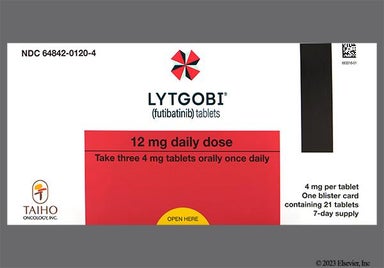
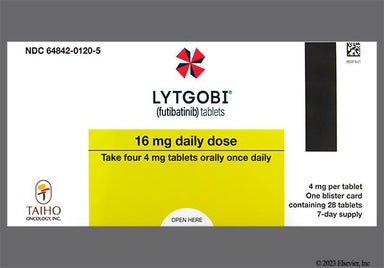
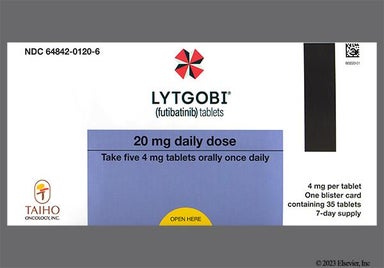
Lytgobi (futibatinib) images