hydroxocobalamin
Hydroxocobalamin is a dietary supplement that helps treat adults and children with low vitamin B12 levels. It's also sometimes used as part of a test to see how well the body absorbs vitamin B12. This medication is given as an injection into the muscle. Hydroxocobalamin side effects can include diarrhea and itching. It's available as a lower-cost generic.


What is Hydroxocobalamin?
What is Hydroxocobalamin used for?
- Vitamin B12 deficiency (low vitamin B12 levels)
- Schilling test (vitamin B12 absorption test)
How Hydroxocobalamin works
Hydroxocobalamin is a supplement that raises the levels of vitamin B12 in your body. Vitamin B12 is important for your nerves to function properly and your red blood cells to form correctly. This vitamin also helps your body make genetic material for your cells.
Drug facts
| Common Brands | Alpharedisol |
|---|---|
| Drug Class | Dietary supplement |
| Controlled Substance Classification | Not a controlled medication |
| Generic Status | Lower-cost generic available |
| Availability | Prescription only |

Side effects of Hydroxocobalamin
The following side effects may get better over time as your body gets used to the medication. Let your healthcare provider know immediately if you continue to experience these symptoms or if they worsen over time.
Common Side Effects
- Mild diarrhea
- Itching
- Brief, widespread rash
- Feeling of swelling of entire body
Less Common Side Effects
- Injection site pain
Hydroxocobalamin serious side effects
Contact your healthcare provider immediately if you experience any of the following.
- Severe allergic reaction: rash; trouble breathing; nausea; swelling of the tongue, lips, or face
The following Hydroxocobalamin side effects have also been reported
Side effects that you should report to your care team as soon as possible:
- Allergic reactions—skin rash, itching, hives, swelling of the face, lips, tongue, or throat
Side effects that usually do not require medical attention (report to your care team if they continue or are bothersome):

Get your GoodRx coupon

Pros and cons of Hydroxocobalamin
Pros
- Typically only need to take once a month after the initial treatment
- Injection can be given at home
- Doesn't have to be refrigerated
- Can use in children
Cons
- Injections might be uncomfortable
- Might have to get frequent blood tests
- Can affect potassium and platelet levels
- Not known if safe to take during pregnancy

Pharmacist tips for Hydroxocobalamin

- Make sure your provider has given you instructions on how to safely and properly inject hydroxocobalamin at home. Ask your provider or pharmacist if you have any questions on how to take the medication.
- Before injecting hydroxocobalamin, check that the solution in the vial isn't discolored and doesn't have any particles in it. Also check that it hasn't expired. Injecting medication that's expired or damaged can raise the risk for problems (e.g., infection, medication that doesn't work properly).
- Only inject hydroxocobalamin into the muscle to treat low vitamin B12 levels. Don't inject the medication into the vein.
- After each injection, throw away your used needles in a sharps container to prevent needle-stick injuries.
- Make sure you keep up with all of your appointments and blood tests so your provider can monitor your treatment and properly adjust your hydroxocobalamin dose.
- Tell your provider about all of the medications you currently take. Some medications can interfere with your vitamin B12 lab test results. Knowing which medications you take helps your provider decide the best way to check how well hydroxocobalamin is working to improve your vitamin B12 levels.
- Depending on your condition, your provider might recommend you take a multivitamin that has vitamin B12 in it as part of your daily medications.
More on Hydroxocobalamin tips


Risks and warnings for Hydroxocobalamin
Hydroxocobalamin can cause some serious health issues. This risk may be even higher for certain groups. If this worries you, talk to your doctor or pharmacist about other options.
Treat low folic acid levels separately
Certain types of anemia (low red blood cell counts) can be caused by low vitamin B12 levels or folic acid levels. Your provider will help figure out the specific cause of your anemia so that you can get the proper treatment. If your body needs both vitamin B12 and folic acid, it's important that you get supplementation for both nutrients. Only getting treatment with hydroxocobalamin might help improve your red blood cell count, but it won't help with replenishing your folic acid levels.
Possible poor response to treatment
Sometimes, hydroxocobalamin might not work as well if you have other health problems, such as infection, uremia (buildup of urea in the blood), or low iron or folic acid levels. Hydroxocobalamin might also work less well if you're also taking medications that lower blood cell production, like chloramphenicol. Talk to your provider about other possible medical problems that you might have if hydroxocobalamin doesn't seem to help raise your vitamin B12 levels.
Low potassium levels
Taking hydroxocobalamin for severe megaloblastic anemia can lead to low potassium levels. Low potassium levels (or hypokalemia) can cause problems like leg cramps, muscle weakness, constipation, or heart problems. Your provider might check your potassium levels throughout your treatment.
High platelet and red blood cell count
Low vitamin B12 levels can mask a condition called polycythemia vera, which is when your body makes too many red blood cells. Once you start treatment with hydroxocobalamin and your anemia starts to improve, this condition can appear and lead to problems like stroke or organ damage. Let your provider know if you start having symptoms like headache, dizziness, weakness, shortness of breath, vision problems, itching or burning skin, excessive sweating, stomach issues, or painful joints.
In addition, treating severe anemia with hydroxocobalamin can sometimes lead to a high platelet count (thrombocytosis). This can raise your risk of blood clots or bleeding problems. Your provider will order blood tests during your treatment to check your platelet and red blood cell counts.

Hydroxocobalamin dosage
 Vial
Vial| Dosage | Quantity | Price as low as | Price per unit |
|---|---|---|---|
| 30ml of 1,000mcg/ml | 1 vial | $23.95 | $23.95 |
Typical dosage for Hydroxocobalamin
Vitamin B12 deficiency:
- Adults: The typical starting dose is 30 mcg injected into the muscle once a day for 5 to 10 days. After that, the typical maintenance dose is 100 mcg to 200 mcg injected into the muscle once a month.
- Children: At the beginning of treatment, the total dose is 1 mg to 5 mg injected into the muscle over a period of 2 or more weeks, in doses of 100 mcg at a time. Then, your child will continue treatment with 30 mcg to 50 mcg injected into the muscle once a month as their maintenance dose.
Schilling test: The typical dose is 1,000 mcg injected into the muscle once.

How much does Hydroxocobalamin cost?
$23.95

What are alternatives to Hydroxocobalamin?

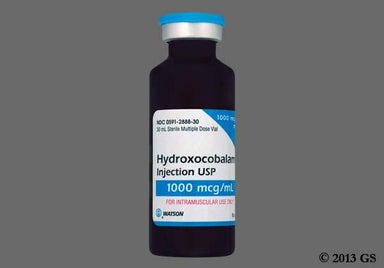
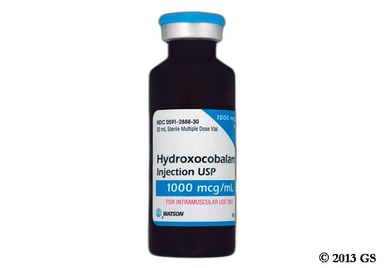
Hydroxocobalamin images