Key takeaways:
Gynecology appointments are an important preventive health measure.
Most people do not need pap smears until age 21, so you can wait until then to make your first appointment unless you have a medical issue.
The pelvic exam, which includes the pap smear, may be uncomfortable but should not be painful.
Are you nervous about your first gynecology appointment? Not sure what to bring, how to prepare, or what will happen? You’re not alone. Gynecologic visits are daunting to many women, but just having some information on what to expect can help lessen your anxiety and make your visit as easy as possible.
Why do I need a gynecology appointment?
There are many reasons to make your first gynecology appointment. Some women are sexually active and want STD screening. Some want to start routine cervical cancer screening with a pap smear, and others may have a specific concern.
The appropriate age to make your first appointment can vary. If you are sexually active — at any age — it is important to talk to your doctor about vaginal health, safe sex practices, contraceptives, and more. However, cervical cancer screening via the pap smear begins at age 21 in most cases, whether you are sexually active or not. In general, you can wait until then to have your first gynecology appointment unless you have a medical problem.
Pap smears are typically done every 3 years from ages 21 to 29, and every 5 years from ages 30 to 65, as long as results have been normal. They are one of the most important preventive measures we have in medicine. The pap smear can detect precancerous cells in the cervix, meaning it gives doctors the opportunity to find a small issue before it becomes a big problem.
You can see a primary care doctor or a gynecologist for a gynecology visit.
What do I need to bring?
The key items to bring to your appointment are:
Insurance information
Photo ID
A brief list or knowledge of your current medications, medical history, and family history of medical issues (especially related to women’s issues like breast, cervical, ovarian, and endometrial cancers)
Vaccination list
Dates of last menstrual cycle
Do I need to shave before the appointment?
No. You do not need to do anything out of the ordinary to prepare for your appointment. Your doctor is most concerned with your health, and whether or not you shave will not affect the appointment. It is normal to feel a little nervous or self-conscious about your exam, but rest assured that doctors are used to all different types of anatomy, shapes, and sizes.
Who will meet with me during the appointment?
You will usually meet with three different people during your appointment.
Receptionist: First, you will check in at the front desk. The front office staff will likely ask for your ID and insurance information, and they may have some new patient paperwork for you to fill out.
Medical assistant or nurse: When they are ready for you, a medical assistant or nurse will come get you from the waiting room. They will gather your vital signs, like height, weight, and blood pressure, and also ask you about your medical history and specific concerns you would like to address at the visit. They may also ask you about your menstrual cycle and sexual history. They will then let you know if you should change into an exam gown or wait for the doctor.
Doctor: Next, you will meet with the doctor, who will briefly review your medical history again and ask you more follow-up questions. This is when your concerns will be addressed in depth, and is a great time to ask questions! After your discussion, your doctor will help you get set up for the exam.

Read more like this
Explore these related articles, suggested for readers like you.


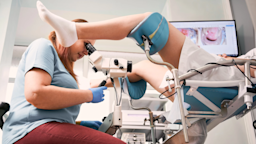

What kind of exams will happen during my appointment?
Below are the typical exams performed during your appointment.
Your doctor may also have an assistant in the room. The assistant can help keep you comfortable and informed during the exams, as well as help the doctor.
Vaginal exam: Your doctor will first examine the outer vagina and labia for any lumps, bumps, or concerns you may have.
Speculum pelvic exam: The next step is typically the speculum pelvic exam. A speculum is a metal or plastic tool that allows the doctor to visualize the cervix, which is at the end of your vaginal canal. The doctor will use some lubricating jelly and walk you through this process. The speculum is uncomfortable, but it should not be painful, so be sure to tell your doctor if you are experiencing pain.
Pap smear: When the speculum is in place, the doctor will do the pap smear itself. The pap smear uses a small brush to collect cells from the cervix. You may not feel this part at all, or you may feel some mild pinching. Your doctor may also collect other painless swabs for STD testing.
Bi-manual exam: After the speculum exam, the doctor will remove the speculum and do a bi-manual exam. A bi-manual exam is when the doctor inserts their gloved and lubricated finger into the vagina, while using the other hand on top of your abdomen to check on your ovaries and uterus. Again, this should not be painful, so be sure to tell your doctor if you have pain.
Breast exam: Finally, your doctor may ask you if you want a breast exam. If you choose to have a breast exam, your doctor will examine each breast while you are lying down, looking for any abnormal lumps, skin changes, or nipple changes.
Do I have to get a pap smear during my first exam?
Not necessarily — you do not need to do anything you don’t want to do. But it definitely makes the most sense to do your pap smear during your first pelvic exam since cervical cancer screening is usually the most important part of a pelvic exam. Some patients feel more comfortable meeting with their doctor for an “establish care visit” before having a pelvic exam if they have never met the doctor before.
Can I get birth control without a pelvic exam?
This may vary doctor to doctor. But in general, you do not need a pelvic exam or a pap smear just to get a birth control prescription. However, you should get a pelvic exam and pap smear according to your age and history.
Can I skip the pelvic exam if I’m not sexually active?
In general, you should begin pap smears at age 21 even if you are not sexually active.
What happens after the appointment?
After the exam, your doctor will leave the room and allow you privacy to get dressed. There are usually wipes or tissues in the room for you to use for any extra lubricant around the vagina. Sometimes the doctor may order blood work, vaccines, or a urine test and you will complete these after the visit.
You will check out at the front desk and schedule any follow-up appointments, if needed.
The bottom line

Why trust our experts?



Gynecology appointments and pap smears are some of the most important preventive health measures for women. Unless you have a medical concern, you can wait until age 21 to make your first gynecology appointment and do your pap smear.
Pap smears may be a little uncomfortable, but should not be painful, so be sure to tell your doctor if you experience significant pain.
There is no medical reason why you need a pelvic exam prior to getting a prescription for birth control, so don’t be afraid to talk to your doctor about birth control options.