Key takeaways:
Several psychedelic medications — including ones based on psilocybin and LSD — are in the final stages of FDA testing. Results from these phase 3 trials are expected in late 2026 or early 2027.
Early research suggests that even one or two supervised doses of these medications may provide lasting relief for conditions like depression, anxiety, and post-traumatic stress disorder (PTSD).
Psychedelic treatments raise concerns about safety, cost, and access. They require close supervision and guided sessions. These can have cost and access issues.
Psychedelic medicine is moving from the fringes of research to the center of mainstream healthcare. These drugs have long been used in spiritual and healing practices. And psychedelic legalization may soon become a reality, with several compounds in late-stage testing for FDA approval. Here’s what to know about four psychedelic-based medications in the approval pipeline.
1. COMP360 (lab-made psilocybin)
Psilocybin is a natural chemical found in certain mushrooms. It affects mood and perception through its actions on serotonin receptors (binding sites) and dopamine levels. People describe seeing and hearing things that aren’t real and feeling more connected to the universe after taking psilocybin.
COMP360 is a form of synthetic (lab-made) psilocybin. It’s currently in two phase 3 trials (known as COMP005 and COMP006) for treatment-resistant depression. Typically, a phase 3 trial is the final step before a medication goes to the FDA for approval.
Early results of the COMP005 study show that a single dose (25 mg) of COMP360 significantly reduced depression symptoms after 6 weeks. This medication is administered during a supervised treatment session, which typically lasts around 6 to 8 hours. More results for both studies are expected throughout 2026, with possible FDA approval by the end of the year.
In January 2026, COMP360 also received an investigative new drug approval from the FDA as a potential treatment for post-traumatic stress disorder (PTSD). A phase 3 study is in development for this use.
2. HLP003 (deuterated psilocybin)
HLP003 (formerly known as CYB003) is also a synthetic form of psilocybin. But in this medication, the psilocybin is deuterated. Deuteration changes the chemical structure of the drug, which affects how the body breaks it down. The manufacturer claims this allows for a lower dosage and more predictable effects.
HLP003 is being studied as an add-on treatment for major depressive disorder. In a small phase 2 study, all participants had an improvement in depression symptoms after 2 doses (16 mg each) of HLP003. The FDA granted the medication a breakthrough therapy designation based on the results of this trial. This helps move the medication through the approval process faster than usual.
Phase 3 studies for HLP003 (known as EMBRACE, APPROACH, and EXTEND) are ongoing, with initial results expected in late 2026.
Good to know: Helus Pharma, the manufacturer of HLP003, refers to the active ingredient as a deuterated novel serotonergic agonist (NSA), rather than as deuterated psilocybin. This may be an effort to reduce potential bias against psychedelic drugs in the drug approval process.
3. Usona Institute synthetic psilocybin
Usona Institute was also granted breakthrough therapy designation for its version of synthetic psilocybin. This version is being studied as a single-dose treatment for major depressive disorder.
A phase 2 study showed a significant and sustained response to a 25 mg dose of psilocybin versus placebo (a niacin-based pill). A phase 3 study (known as uAspire) is ongoing, with results expected in late 2026 or early 2027.
4. DT120 ODT (an LSD-based medication)
LSD (lysergic acid diethylamide) is a lab-made psychedelic. It also affects serotonin and dopamine levels. People describe feelings of happiness and a positive disconnection from self and reality while LSD is active in their system.
DT120 (formerly MM120) is an orally disintegrating tablet (ODT) that contains lysergide tartrate. This is a form of LSD developed by Definium Therapeutics (formerly MindMed). This formulation offers better absorption with fewer stomach-related side effects, according to the manufacturer.
DT120 is being studied as a possible treatment for generalized anxiety disorder and major depressive disorder. In a phase 2 study, a single 100 mcg or 200 mcg dose improved anxiety symptoms after 4 weeks versus placebo. Of note, DT120 showed a potential to be more effective than selective serotonin reuptake inhibitors (SSRIs), a first-choice treatment option for anxiety.
Based on this study, the FDA granted breakthrough therapy designation for this medication. Phase 3 trials are currently underway — the Emerge study for depression and the Panorama study for anxiety. Initial results are expected in the second half of 2026.
Are there any FDA-approved legal psychedelics?
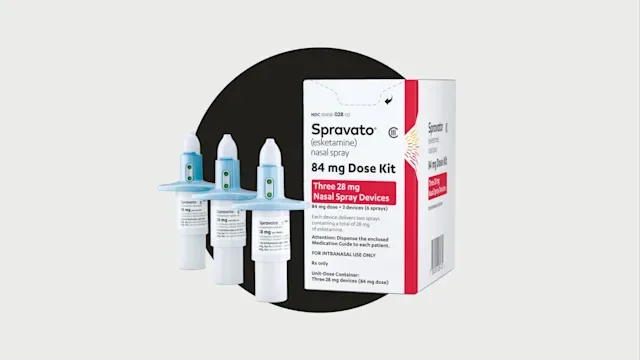
Not exactly. The only FDA-approved medications related to psychedelics are ketamine (Ketalar) and esketamine (Spravato).
But ketamine and esketamine aren’t considered classic psychedelics. Instead, they’re considered dissociative drugs. Classic psychedelics, such as psilocybin, primarily affect serotonin levels in the brain. But ketamine primarily affects a chemical called glutamate. This causes you to feel disconnected from your body and environment.
Ketamine is FDA approved for anesthesia only, but it’s also used off-label for treatment-resistant depression. Esketamine is FDA approved for treatment-resisrtant depression and depression with suicidal thoughts or behavior.
Ketamine is typically injected into a vein, while esketamine is a nasal spray. Both medications should be administered in the presence of a healthcare professional. This is because of side effects that may occur during and after treatment.
What are the main concerns about psychedelic medications?
There are several concerns about psychedelic treatments beyond side effects and drug interactions. These include the need for professional guidance, ethical concerns, and unregulated psychedelic treatments.
Psychedelics typically require professional guidance during and after the treatment
Psychedelic medications cause your brain to process information differently. Most people need professional guidance to do this safely and effectively. So many psychedelics are studied in combination with psychotherapy. Since the medication requires supervision and therapy, this can raise the cost of treatment and limit access. It also makes the research more complicated, since it is harder to know if it’s the medication, the therapy, or the combination that’s effective.
Ethical concerns
Psychedelic substances can lower your inhibitions and make you more vulnerable to the influence of others. For this reason, it is important that supervising professionals are trained to help you guide your experience and keep you safe. This can be challenging, especially if distressing emotions arise. So while the medication itself needs to be regulated, there must also be a way to regulate the licensed professionals who can provide and supervise psychedelic treatment.
Unregulated psychedelic treatments
Psychedelic substances and psychedelic-assisted therapies are available in many states. But in most cases, it isn’t legal to use or provide these services. Until regulated FDA-approved psychedelic medications are available, these services can pose a risk to public safety.
The bottom line
Several psychedelic-based medications are moving closer to FDA approval. These include three lab-made forms of psilocybin and an LSD-based tablet. Early studies suggest that even one or two supervised doses of these psychedelic medications may lead to lasting improvements in anxiety, depression, or post-traumatic stress disorder (PTSD) symptoms.
But until these medications are FDA approved and widely regulated, it’s important to be cautious and talk openly with a healthcare professional about their potential benefits and risks.

Why trust our experts?



References
Business Wire. (2025). MindMed announces first patient dosed in phase 3 Emerge study of MM120 in major depressive disorder.
Business Wire. (2026). Compass Pathways announces FDA acceptance of IND application for PTSD and hosts webinar on PTSD and TRD.
Caporuscio, C., et al. (2025). Ethical issues with psychedelic-assisted treatments in psychiatry: A systematic scoping review. Psychological Medicine.
ClinicalTrials.gov. (2025). Efficacy, safety and tolerability of COMP360 in participants with TRD. National Library of Medicine.
ClinicalTrials.gov. (2025). Phase III long-term extension trial to assess safety and efficacy of CYB003 in MDD (EXTEND). National Library of Medicine.
ClinicalTrials.gov. (2025). Psilocybin for major depressive disorder (MDD). National Library of Medicine.
ClinicalTrials.gov. (2026). Efficacy, safety and tolerability of two administrations of COMP360 in participants with TRD. National Library of Medicine.
ClinicalTrials.gov. (2026). A phase 3 trial of MM120 for generalized anxiety disorder (Panorama). National Library of Medicine.
ClinicalTrials.gov. (2026). A phase 3 trial of MM120 for major depressive disorder (Emerge). National Library of Medicine.
ClinicalTrials.gov. (2026). A study of a deuterated psilocin analog (CYB003) in humans with major depressive disorder (APPROACH). National Library of Medicine.
ClinicalTrials.gov. (2026). A study of a deuterated psilocin analog (CYB003) in humans with major depressive disorder (EMBRACE). National Library of Medicine.
Compass. (n.d.). About psilocybin therapy.
Compass Pathways. (2025). Compass Pathways successfully achieves primary endpoint in phase 3 trial evaluating COMP360 psilocybin for treatment-resistant depression. Business Wire.
Definium Therapeutics. (n.d.). Science of DT120.
Dolder, P. C., et al. (2016). LSD acutely impairs fear recognition and enhances emotional empathy and sociality. Neuropsychopharmacology.
Karlin, D. R. (2025). MindMed’s phase 3 trials of MM120 for generalized anxiety disorder underway. Psychiatric Times.
Kupferschmidt, K. (2024). In a setback for psychedelic therapy, FDA advisers vote against medical use of ecstasy. Science.
Liechti, M. E. (2017). Modern clinical research on LSD. Neuropsychopharmacology.
Lowe, H., et al. (2021). The therapeutic potential of psilocybin. Molecules.
Helus Pharma. (n.d.). HLP003: Deuterated novel serotonergic agonist program with FDA breakthrough therapy designation.
Helus Pharma. (n.d.). Intellectual property.
Helus Pharma. (2024). Cybin initiates PARADIGM: A multinational pivotal phase 3 program evaluating CYB003 for the adjunctive treatment of major depressive disorder and reports second quarter financial results. Business Wire.
Helus Pharma. (2024). Cybin reports positive phase 2 data for CYB003, demonstrating breakthrough 12-month efficacy in treating major depressive disorder. Business Wire.
Howland, R. H. (2015). Deuterated drugs. Journal of Psychosocial Nursing and Mental Health Services.
Meara, K. (2024). Psilocybin analog for treatment of depression receives FDA breakthrough therapy designation. Drug Topics.
National Institute on Drug Abuse. (2024). Psilocybin (magic mushrooms). U.S. Department of Health and Human Services.
Passie, T., et al. (2008). The pharmacology of lysergic acid diethylamide: A review. CNS Neuroscience & Therapeutics.
Raison, C. L., et al. (2023). Single-dose psilocybin treatment for major depressive disorder. JAMA.
U.S. Food and Drug Administration. (2018). Breakthrough therapy.
U.S. Food and Drug Administration. (2018). The drug development process.
U.S. Food and Drug Administration. (2023). FDA issues first draft guidance on clinical trials with psychedelic drugs.
Usona Institute. (n.d.). Drug development: psilocybin.