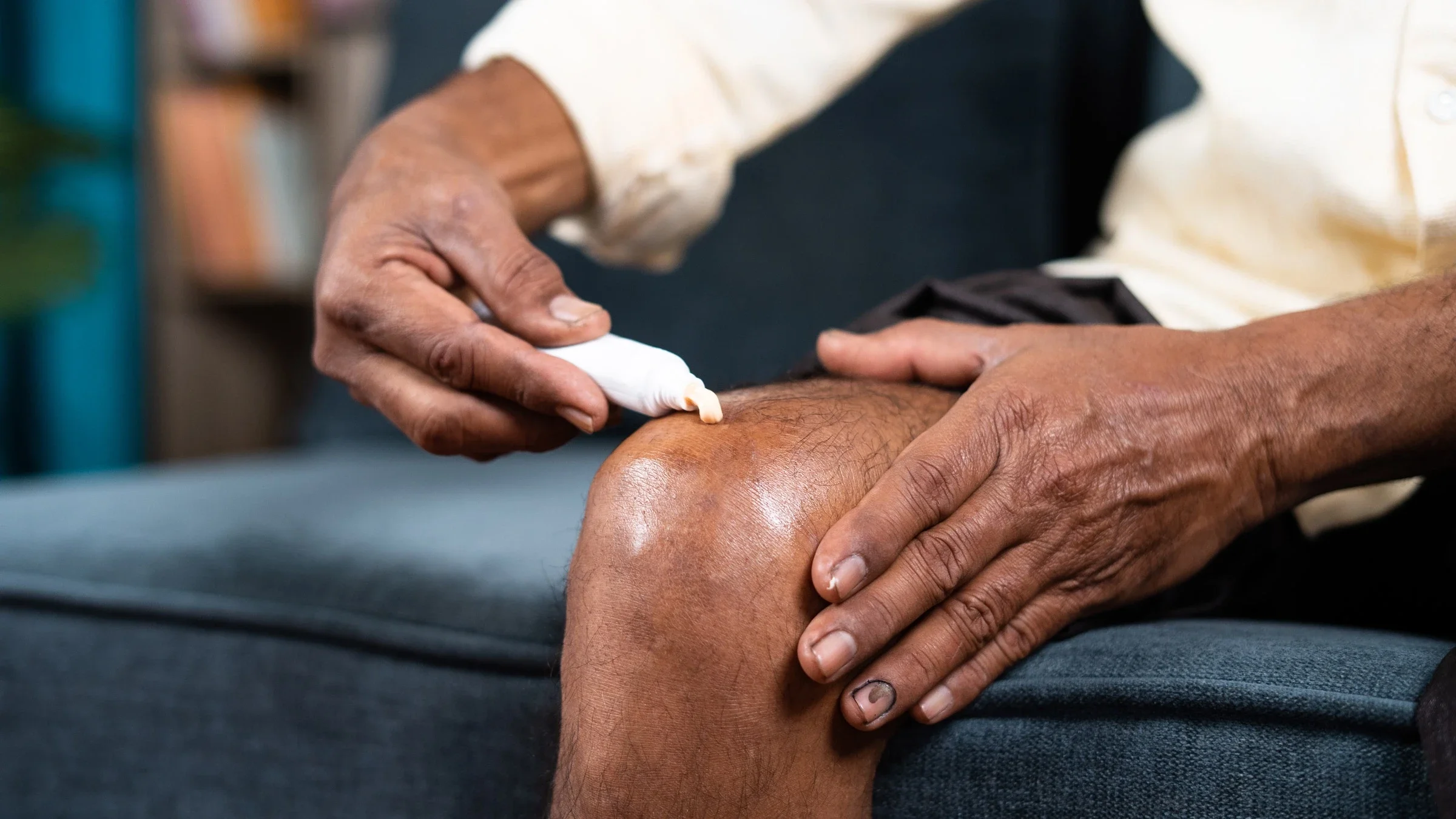
Key takeaways:
There are many prescription, over-the-counter (OTC), and natural options for pain relief if you have arthritis or joint pain.
Topical gels, creams, and patches may be safe and effective alternatives to oral nonsteroidal anti-inflammatory drugs (NSAIDs).
Many topical treatments are affordable and available OTC.
Save on related medications
Joint pain can occur anywhere in the body. And you can have joint pain for a variety of different reasons, ranging from osteoarthritis and gout to common strains and sprains. No matter the cause, joint pain can be nagging and disruptive to your normal life and activity. That leaves many people looking for quick joint pain relief.
There are many different treatment options for joint pain relief. Oral nonsteroidal anti-inflammatory drugs (NSAIDs) work well for joint pain, but they have side effects. They often irritate the stomach lining, and they can be hard on the kidneys. Fortunately, if you have joint pain, there are other topical options to consider. Creams and patches can also be safe and effective alternatives for arthritis pain.
Let’s take a closer look at some of the prescription, over-the-counter (OTC), and natural treatments that tend to work best for joint pain relief.
1. Diclofenac
Diclofenac is an NSAID that comes in several topical forms. It’s one of the best anti-inflammatory medications to use for bone, joint, and muscle pain. Topical versions of diclofenac come in three forms:
Patch: Flector is a prescription diclofenac patch, and it’s typically applied to the affected area twice a day. Studies suggest it’s the most effective topical NSAID for pain relief. A generic version is available, so make sure you shop around for the best price.
Gel: Voltaren is a topical diclofenac gel that’s also available OTC. It’s used for temporary relief of arthritis pain in certain areas of the body: hands, wrists, elbows, knees, ankles, and feet. The gel is typically easier to use on smaller joints in the hands or feet than the patch.
Solution: Diclofenac also comes as a prescription topical solution. It’s FDA approved to treat osteoarthritis pain in your knees. The typical dosage is 40 drops of solution to the painful knee, 4 times a day. It’s also available as a lower-cost generic version.
2. Lidocaine
Lidocaine is a local anesthetic patch. This means it provides temporary pain relief to the area where it’s applied. This medication is available in prescription and OTC — which differ only in their strength:
Lidocaine 5% patches (Lidoderm): These prescription pain patches are FDA approved to treat nerve pain from shingles (postherpetic neuralgia). But a healthcare professional might prescribe it off-label to help with arthritis pain. Lidocaine 5% patches are applied to the skin for up to 12 hours within a 24-hour period.
Lidocaine 4% patches: These patches are indicated for temporary pain relief and are available OTC. You can leave a lidocaine 4% patch on for up to 8 hours at a time. And you should use them no more than 3 to 4 times a day. Be sure to only use one patch at a time.
The OTC patches are typically more affordable than the lidocaine 5% patches. But you may want to compare the prices of both patch strengths, with and without a prescription. You may also be able to save on the 4% patches if you have a prescription, even though you don’t need one.
3. Vitamins and supplements
The data on vitamins and supplements for arthritis pain is mixed. For every study that shows pain improvement, there’s another that shows no effect. That being said, many people report joint pain relief using supplements. Some of the most commonly used vitamins and supplements for joint pain are:
Glucosamine and chondroitin: These supplements come from the cartilage of animal bones. Glucosamine and chondroitin can be found in combination, or they can be used individually. Together, they may help with joint pain, though the evidence isn’t compelling.
Vitamin E: There’s some evidence that vitamin E may help prevent or slow down osteoarthritis. And it may help with joint pain. Again, the data isn’t certain. More studies are needed, but it may be helpful for some people.
Vitamin D: Just like vitamin E, there’s some evidence that vitamin D may help with joint pain — especially osteoarthritis. More research is needed to conclude how useful vitamin D can be for joint pain relief.
Curcumin: Turmeric is an orange-colored spice used in foods that has an active chemical, curcumin. Curcumin has anti-inflammatory action and may help provide relief for joint pain.
Collagen: There’s mixed evidence that collagen supplements may help joint pain in those with osteoarthritis. Research is ongoing about the benefits of collagen and how much
4. Natural relief
There are several natural methods of joint pain relief that some people find helpful. The most common natural treatments for joint pain include:
Massage: This is thought to relieve arthritis pain by improving circulation and reducing inflammation. Massage also relieves tension in muscles surrounding sore joints.
Heat therapy: Heat therapy may help improve circulation and reduce inflammation.
Acupuncture: This may be an effective technique for reducing joint pain, but more research is needed. Right now, the data is mixed, but it might be worth trying acupuncture. Keep in mind that it may take a few weeks and several treatments before you notice results.
5. Arthritis creams
OTC creams for joint pain can be almost as effective as oral medications. They have the advantage of being applied directly to the site of joint pain, so they don’t act throughout your entire body. If your pain is mild and localized, this could be a good option for you to try.

Read more like this
Explore these related articles, suggested for readers like you.




Common OTC arthritis creams include:
Capsaicin: This arthritis cream is based on an active ingredient found in chili peppers. It works for joint pain by decreasing your sensation of pain in the affected area.
Icy Hot, BenGay: These are menthol-based arthritis creams that help to increase blood flow to inflamed areas. This can give arthritis pain relief.
Aspercreme: This medication contains an ingredient similar to aspirin. It can decrease the pain and swelling of inflamed joints.
Baker’s Best Arthritis Pain Relief: This is a histamine cream marketed to relieve joint pain. It’s not entirely clear how it works. It may offer pain relief by increasing blood supply to the area.
6. Lifestyle changes
There are several lifestyle changes and habits that can help bring relief to your achy joints:
Weight management: For weight-bearing joints, maintaining a healthy weight can help relieve pressure and decrease pain. If you’ve been diagnosed with obesity and want to try weight loss for joint pain relief, talk to a healthcare professional about your weight-management options.
Nutritious diet: Eating a nutritious, balanced diet helps you limit foods that may promote inflammation. Avoiding processed meats, added sugars, and refined grains may improve joint pain symptoms.
Range of motion exercises: Certain range of motion exercises have shown promise as being helpful for joint pain. But it’s important to do exercises correctly.
Whirlpool hot tub baths: Research has shown that regular whirlpool hot tub baths and warm water soaks improve joint pain and stiffness.
Quiz: Do I have arthritis?
When should I contact a healthcare professional about joint pain?
Most people will have joint pain at some point in their life. But there are times when you should make a trip to a healthcare professional. Here are some of the signs you might need to get care for your joint pain:
Your pain is severe, or doesn’t get better in a few days.
You have redness, warmth, or swelling of the joint.
You’re unable to move the joint normally.
You notice a rash or fever along with your joint pain.
Your joint looks deformed or misshapen.
Your joint pain is caused by an injury.
Frequently asked questions
Both vitamins D and E are thought to play a role in joint health, but the evidence is mixed. You may not notice joint pain if your vitamin D or E levels are low. But there’s limited research that supplementing these vitamins may help decrease inflammation and prevent worsening symptoms if you already have osteoarthritis.
Joint pain related to cancer treatment is a common side effect. If you’re having joint pain, you should let your healthcare team know. They’ll be able to figure out what’s causing your pain and give you guidance on the best remedies based on your current treatment plan. This sometimes involves a change in your regimen, or perhaps over-the-counter (OTC) or prescription pain relievers. In the meantime, you may try warm soaks, rest, and light exercises as tolerated to relieve your pain.
If you’re having joint pain during your period, OTC pain relievers like ibuprofen (Advil, Motrin) or acetaminophen (Tylenol) can help. Natural remedies like massage, warm soaks, and heat therapy may also improve your symptoms. But talk to your healthcare team first. They may want to make sure there are no other underlying causes of your symptoms.
Both vitamins D and E are thought to play a role in joint health, but the evidence is mixed. You may not notice joint pain if your vitamin D or E levels are low. But there’s limited research that supplementing these vitamins may help decrease inflammation and prevent worsening symptoms if you already have osteoarthritis.
Joint pain related to cancer treatment is a common side effect. If you’re having joint pain, you should let your healthcare team know. They’ll be able to figure out what’s causing your pain and give you guidance on the best remedies based on your current treatment plan. This sometimes involves a change in your regimen, or perhaps over-the-counter (OTC) or prescription pain relievers. In the meantime, you may try warm soaks, rest, and light exercises as tolerated to relieve your pain.
If you’re having joint pain during your period, OTC pain relievers like ibuprofen (Advil, Motrin) or acetaminophen (Tylenol) can help. Natural remedies like massage, warm soaks, and heat therapy may also improve your symptoms. But talk to your healthcare team first. They may want to make sure there are no other underlying causes of your symptoms.
The bottom line
There are many treatment options for joint pain and arthritis. Before you decide on a medication, consider arthritis creams and patches that you can apply directly to the skin for pain relief. These options are relatively safe and effective, and they may have fewer side effects than a pill. Be sure to shop around to find the most affordable option for you.

Why trust our experts?



References
Arthritis Foundation (n.d.). Acupuncture for arthritis.
Arthritis Foundation (n.d.). Glucosamine and chondroitin for osteoarthritis pain.
Arthritis Foundation (n.d.). Heat therapy helps relax stiff joints.
Arthritis Foundation (n.d.). When it’s time to see a doctor for joint pain.
Arthritis Society Canada. (n.d.). 4 things you need to know about arthritis and massage therapy.
Burch, F., et al. (2004). Lidocaine patch 5% improves pain, stiffness, and physical function in osteoarthritis pain patients: A prospective, multicenter, open-label effectiveness trial. Osteoarthritis and Cartilage.
Chin, K., et al. (2018). The role of vitamin E in preventing and treating osteoarthritis - a review of the current evidence. Frontiers in Pharmacology.
DailyMed. (2025). Diclofenac sodium 1.5%- diclofenac sodium topical solution.
DailyMed. (2025). Voltaren arthritis pain- diclofenac sodium gel / Voltaren arthritis pain- diclofenac sodium kit.
DailyMed. (2026). Bakers Best arthritis pain relief- histamine dihydrochloride cream.
DailyMed. (2026). Lidocaine 4% patch- lidocaine 4% patch.
Derry, S., et al. (2016). Topical NSAIDs for chronic musculoskeletal pain in adults. Cochrane Database of Systematic Reviews.
Endo Pharmaceuticals Inc. (2022). Lidoderm- lidocaine patch [package insert]. DailyMed.
Grigorian, N., et al. (2022). Aromatase inhibitor-associated musculoskeletal pain: An overview of pathophysiology and treatment modalities. SAGE Open Medicine.
Lim, K., et al. (2013). The effects of a warm whirlpool bath on pain and stiffness of patients with chronic stroke induced knee osteoarthritis. Journal of Physical Therapy Science.
MedlinePlus. (2020). Capsaicin topical.
Mobasheri, A., et al. (2021). A white paper on collagen hydrolyzates and ultrahydrolyzates: Potential supplements to support joint health in osteoarthritis? Current Rheumatology Reports.
Park, C. Y. (2019). Vitamin D in the prevention and treatment of osteoarthritis: From clinical interventions to cellular evidence. Nutrients.
Rath, L. (2023). Turmeric probably won’t help your arthritis — but curcumin might. Arthritis Foundation.
Swailem, K., et al. (2025). Association between vitamin D deficiency, inflammatory markers, and knee osteoarthritis: A retrospective study. Journal of Orthopaedic Surgery and Research.
Wang, W., et al. (2022). Physical therapy as a promising treatment for osteoarthritis: A narrative review. Frontiers in Physiology.
Zeng, C., et al. (2018). Relative efficacy and safety of topical non-steroidal anti-inflammatory drugs for osteoarthritis: A systematic review and network meta-analysis of randomised controlled trials and observational studies. British Journal of Sports Medicine.