Key takeaways:
Cardiac rehabilitation is a medically supervised intervention for people with heart conditions that aims to improve quality of life through exercise, education, and counseling.
Though proven to be effective, cardiac rehab is underutilized by most eligible patients, even though it’s covered by original Medicare and many Medicare Advantage plans.
Ask your doctor if cardiac rehab would be beneficial for you, and check with your insurance provider about coverage.
Heart disease is the leading cause of death in the U.S. That’s one reason why having a heart attack or being diagnosed with a cardiovascular condition such as heart failure or blocked arteries can be frightening.
Cardiac rehabilitation after diagnosis or surgery may reduce your odds of future health setbacks while providing a better quality of life.
While the federal government’s Million Hearts initiative aims to have 70% of eligible patients participate in cardiac rehab, only 10% to 34% of those eligible currently sign up. Some estimates show that increasing participation to 70% would save nearly 25,000 lives and prevent about 180,000 hospitalizations annually, according to the Agency for Healthcare Research and Quality.
Here’s what you should know about cardiac rehab, its costs, and coverage.
What is cardiac rehabilitation?
Cardiac rehab began as a monitored exercise program to help people who had experienced heart attacks return to their prior level of functioning. Today, the program provides benefits for people experiencing a wide range of cardiac conditions.
Its components have evolved into a medically supervised, comprehensive, multidisciplinary, and personalized intervention designed to educate each participant about ways to develop and maintain heart health. Most cardiac rehab happens in a doctor’s office, therapy center, or hospital, but the American College of Cardiology and the American Heart Association point to home-based cardiac rehab as a way to increase participation.
Leading healthcare organizations, including the American Heart Association, the American Association of Cardiovascular and Pulmonary Rehabilitation and the Agency for Healthcare Research and Quality, have determined that a comprehensive cardiac rehab program should contain core components including:
Exercise training
Education about medication adherence
Weight, blood pressure, cholesterol, and diabetes management
Lifestyle modification including healthy diet and physical activity
Smoking-cessation counseling
Stress management
A cardiac rehab program typically includes 36 sessions after hospital discharge. Services based in a clinic or center are provided in a medically supervised facility, while home-based services depend on remote coaching and indirect exercise supervision.

Read more like this
Explore these related articles, suggested for readers like you.
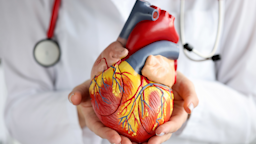


There are typically three components to a cardiac rehab program: exercise, education, and counseling. Exercise can improve your overall cardiovascular health. Education can help you make healthy choices about what you eat and teach you how to stop smoking. Counseling can help you identify and minimize sources of stress in your life and reduce strain on your heart.
Who is a good candidate for cardiac rehab?
You may benefit if your medical history includes:
Chest pain (angina)
Coronary artery disease (CAD), which includes symptoms such as chest pain
Coronary angioplasty, a medical treatment to open blocked arteries that carry blood to the heart
Repaired or replaced heart valve, such as transcatheter aortic valve replacement (TAVR)
Mechanical heart pump such as a left ventricular assist device (LVAD)
Heart transplant
What happens during cardiac rehab?
Cardiac rehab may take place in a hospital, a rehabilitation center, or even your home. Sessions typically last an hour. Sometimes, in-hospital services after surgery are considered the first stage of the program. Generally, an outpatient or home-based cardiac rehab program runs for 36 sessions over the course of about 3 months, according to the Centers for Disease Control and Prevention. However, the program can be completed in 2 months or take as long as 8 months.
Stages of cardiac rehab
There are three stages, or phases, of outpatient or home-based cardiac rehab.
Stage one: This may begin while you are still in the hospital. Participants learn about cardiac disease, how to modify risk factors, and how to return to a maximum level of function. Medical professionals will assess how much physical activity is safe for you and explain what you can expect from the recovery process. This phase may include patient assessment, monitored exercise, and patient education such as nutrition counseling, stress management consultations, and tobacco-awareness training.
Stage two: This begins on an outpatient basis. Your care team will customize an exercise routine that is appropriate for you and your condition. This stage helps participants, their family members, and caregivers adjust to heart disease, learn more about heart-healthy living and modify their lifestyles. A nutritionist may give you tips for grocery shopping and cooking. A counselor may share new coping mechanisms for living with a serious heart condition. The participant also learns how to exercise properly and increase the intensity of physical activity. Exercises may include weight lifting to strengthen muscles and walking to improve balance.
Stage three: This is the maintenance phase where participants continue to modify their lifestyles through independent exercise and additional counseling on improving diet, reducing stress, and quitting tobacco.
Home-based cardiac rehabilitation can provide convenience and access if you lack a cardiac rehab program near you or have transportation challenges. In some studies, home cardiac rehab is able to achieve comparable outcomes to a facility-based program. Home cardiac rehab received a renewed focus during the COVID-19 pandemic as a means to increase participation and address patient safety concerns.
Benefits of cardiac rehab
Cardiac rehab can help you physically and mentally. Not only can exercise help to strengthen your body, but support from a medical care team can give you the confidence to move forward with your life.
A review of several studies found that cardiac rehab reduced the risk of dying from a heart-related event and improved the quality of life of those who participated in a program.
The skills you learn and the information you gain from a cardiac rehab program also can lead to healthier habits, less stress, and a better mood.
The American College of Cardiology explains the benefits of cardiac rehab this way:
Reduces the chances of a second heart attack or heart surgery
Reduces the overall risk of dying or having a future cardiac event
Lessens chest pain and, in some cases, the need for medications
Controls risk factors such as high blood pressure and cholesterol
Helps with weight loss
How much does cardiac rehab cost?
Cardiac rehab can be costly. This is one of the reasons so few eligible patients choose to participate. Cardiac rehab prices vary widely. Providers can offer a bundled price for the entire program or charge per session.
A study of what patients paid for cardiac rehab at a Massachusetts medical center in 2015 and 2016 found that a standard session was $240. Under original Medicare, your 20% copayment would be $48 per session. For 36 sessions, the out-of-pocket cost could run as high as $1,728. For patients with other kinds of insurance, meeting a deductible during the program could reduce out-of-pocket costs to zero for later sessions, though some plans may continue to require an out-of-pocket coinsurance payment.
Does insurance cover cardiac rehab?
Luckily, most insurance providers will cover cardiac rehab as long as you meet their medical criteria. Original Medicare covers most of the cost for enrollees who have had a heart attack in the past 12 months as well as those who have had procedures including bypass surgery, a heart transplant, or a valve repair or replacement. You may have to pay some of the cost, such as a copay or coinsurance.
Enrollees pay 20% of the Medicare-approved amount for services in a doctor’s office. For services in a hospital setting, you are responsible for a copayment. In both instances, the Part B (outpatient) deductible applies. Medicare usually covers up to 36 sessions. If medically necessary, patients can be covered for 72 sessions, which is called intensive cardiac rehabilitation.
Medicare Advantage plans and other private insurers generally cover a substantial portion, but a participant also can have out-of-pocket responsibilities.
A 2016 Kaiser Health News (KHN) story about the costs of cardiac rehab programs found that original Medicare enrollees paid about $20 per session for out-of-pocket copays. For those with Medicare Advantage coverage provided by UnitedHealth or Humana — both large insurers — the figure ranged from zero to $60 out-of-pocket per session. Cardiac rehab patients with job-based insurance also paid as much as $60 out-of-pocket per session, KHN reported.
Paying for cardiac rehab can be especially financially challenging for participants who access the program two to three times per week. Unsurprisingly, out-of-pocket costs also present significant barriers for the uninsured.
If your insurance does not cover cardiac rehab, or if you are uninsured, you may not have to pay the entire cost. Some providers may offer discounts for self-pay, while others extend payment plans.
How can I find a cardiac rehab program?
Your doctor may be able to refer you to a cardiac rehab program near you. Also, look for a program that is certified by the American Association of Cardiovascular and Pulmonary Rehabilitation.
Getting a doctor’s referral
In order for your insurance to cover cardiac rehab, you will need a doctor’s referral. If your doctor doesn’t bring up the topic of cardiac rehabilitation, ask about the program and whether this intervention would be helpful to you. Let them know you are interested in giving cardiac rehab a try.
The bottom line
If you have a heart condition, have had cardiovascular surgery or a heart transplant, ask your provider about cardiac rehabilitation, which can improve your quality of life and longevity. The program is covered for Medicare enrollees, who pay a 20% copay in a doctor’s office setting and a coinsurance payment in a hospital setting. In both instances, the Part B (outpatient) deductible applies. Many Medicare Advantage plans also cover cardiac rehab and out-of-pocket costs vary.

Why trust our experts?



References
Agency for Healthcare Research and Quality. (n.d.). AHRQ.
Agency for Healthcare Research and Quality. (2020). TAKEheart: AHRQ's initiative to increase use of cardiac rehabilitation.
American Association of Cardiovascular and Pulmonary Rehabilitation. (n.d.). AACVPR.
American College of Cardiology. (n.d.). ACC.
American Heart Association. (n.d.). American Heart Association.
American Heart Association. (2016). Am I eligible for cardiac rehab?
American Heart Association. (2016). What is cardiac rehabilitation?
Appleby, J. (2016). Cardiac rehab improves health, but cost and access issues complicate success. Kaiser Health News.
CardioSmart. (2016). Cardiac rehabilitation.
Centers for Disease Control and Prevention. (2018). Cardiac rehabilitation change package.
Centers for Disease Control and Prevention. (2021). How cardiac rehabilitation can help heal your heart.
Centers for Disease Control and Prevention. (2022). Deaths and mortality.
Choxi, R., et al. (2021). Cardiac rehabilitation and implications during the COVID-19 era. American College of Cardiology.
Farah, M., et al. (2019). The association between patient cost-sharing and cardiac rehabilitation adherence. Mayo Clinic Proceedings.
Medicare.gov. (n.d.). Cardiac rehabilitation.
MedlinePlus. (2020). Angioplasty and stent placement - heart.
Memorial Hermann. (n.d.). Cardiac rehab.
Million Hearts. (2022). About Million Hearts® 2027.
Mount Sinai. (n.d.). Cardiac rehabilitation.
Mukherjee, D. (2019). Scientific statement on home-based cardiac rehabilitation. American College of Cardiology.
Sumner, J., et al. (2017). The effectiveness of modern cardiac rehabilitation: A systematic review of recent observational studies in non-attenders versus attenders. PLoS One.
Tessler, J., et al. (2022). Cardiac rehabilitation. StatPearls.
UNC Health Care Wellness Centers. (n.d.). Cardiac rehab.