Key takeaways:
Blood thinner medications help prevent and treat blood clots. But they can also increase your risk of bleeding. You shouldn’t combine blood thinners with nonsteroidal anti-inflammatory drugs (NSAIDs). The combination raises your bleeding risk.
Many over-the-counter (OTC) supplements, such as garlic, fish oil, and ginkgo biloba, can also raise your bleeding risk. And St. John’s wort may make your blood thinner less effective. Check with your pharmacist before taking an OTC supplement with your blood thinner.
It’s best to limit or avoid alcohol while taking a blood thinner. This combination can raise your bleeding risk. Talk to your prescriber about how much, if any, alcohol is safe for you.
Blood thinners can also interact with heartburn medications, some antidepressants, and some medications that treat infections. Check with your healthcare team before taking any new medications or OTC products with your blood thinner to make sure it’s safe.
Blood thinners are medications that lower your risk of blood clots. They include well-known anticoagulants such as warfarin (Coumadin, Jantoven), apixaban (Eliquis), and rivaroxaban (Xarelto). Antiplatelet medications such as clopidogrel (Plavix), ticagrelor (Brilinta), and aspirin are also blood thinners.
When you’re taking a blood thinner, it’s important to be aware of potential interactions. Your healthcare team can review your prescription medications to keep an eye out for any concerns. But when it comes to over-the-counter (OTC) products, there may be blood thinner interactions you’re not aware of.
In this article, we’ll take a look at seven blood thinner interactions you should know about. Keep in mind that this list isn’t comprehensive, and can vary between individual medications. So it’s best to check with your pharmacist before purchasing a new OTC product to make sure it’s safe for you. And make sure they have your updated medication list before starting any new prescription medications.
1. NSAIDs
Nonsteroidal anti-inflammatory drugs (NSAIDs) are medications that treat fever, swelling, and pain. Common OTC NSAIDs include ibuprofen (Advil, Motrin) and naproxen (Aleve).
NSAIDs are common ingredients in OTC products for migraines and menstrual cramps. They’re often also included in products for sleep and cold or flu symptoms. Examples include:
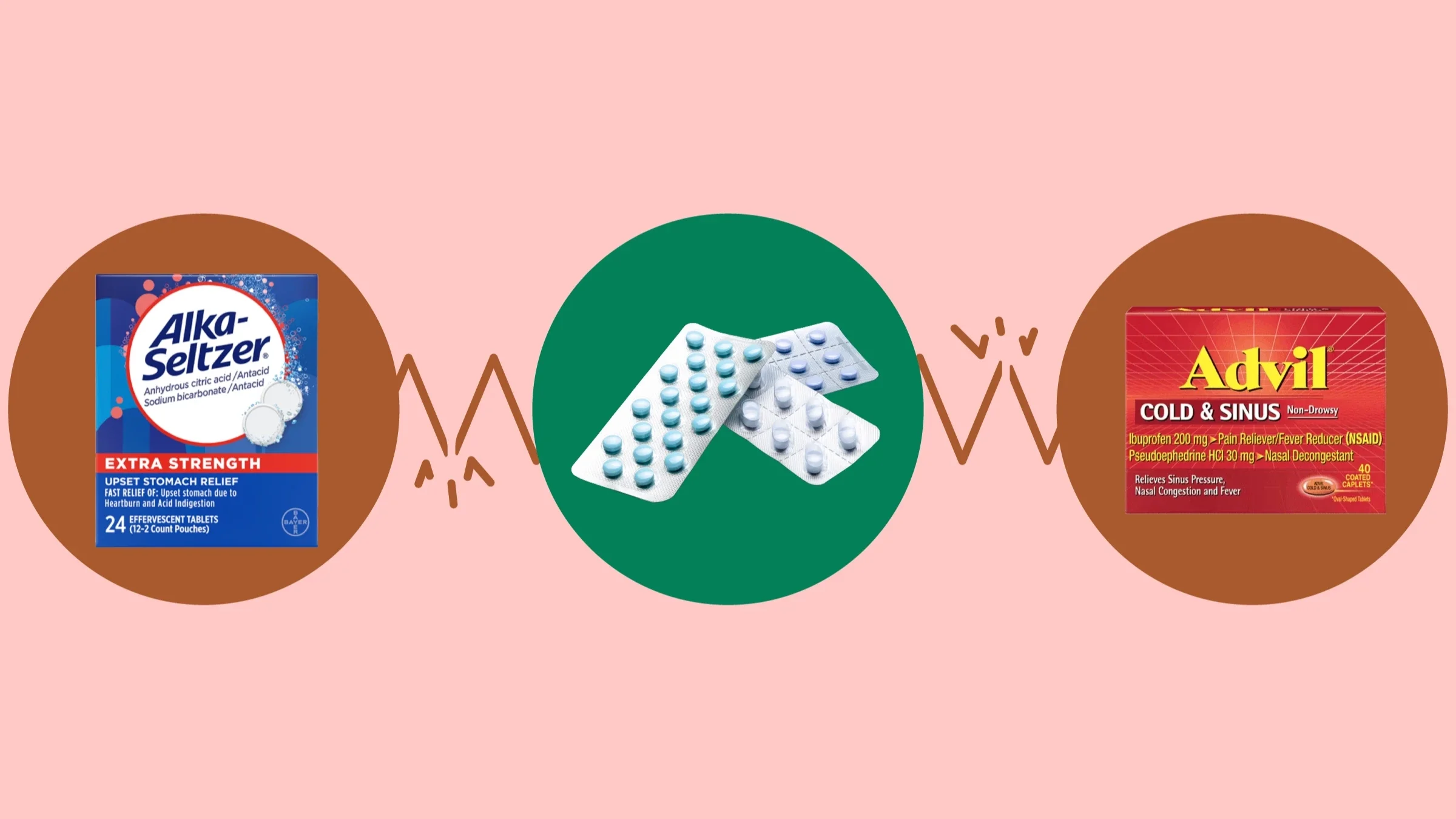
Advil Cold and Sinus (ibuprofen / pseudoephedrine)
Goody’s Extra Strength Headache Powder (acetaminophen / aspirin / caffeine)
Excedrin Migraine (acetaminophen / aspirin / caffeine)
Pamprin Max Pain + Energy (aspirin / acetaminophen / caffeine)
Motrin PM (ibuprofen / diphenhydramine)
Excedrin PM (aspirin / acetaminophen / diphenhydramine)
Aleve-D Sinus and Cold (naproxen / pseudoephedrine)
Alka-Seltzer Plus Cold (aspirin / chlorpheniramine / phenylephrine)
NSAIDs aren’t blood thinners. But they can raise your risk of bleeding. And this risk goes up if you take NSAIDs with blood thinners. So it’s best to avoid this combination. Talk to your prescriber or pharmacist about a safer treatment option that won’t interact with your blood thinner.
Be sure to read OTC labels carefully to check for any hidden NSAIDs. And if you’re unsure if a product contains an NSAID, check with your pharmacist before taking it.
Good to know: Aspirin is also an NSAID, so you should avoid taking it for pain or fever if you take a blood thinner. But in some cases, your prescriber may recommend low-dose aspirin (usually 81 mg) along with your blood thinner medication. This combination isn’t appropriate for everyone. So you should only take a daily low-dose aspirin if your prescriber tells you to.
Is it safe to take acetaminophen (Tylenol) with blood thinners?
Generally, it’s safe to take acetaminophen (Tylenol) with blood thinners — unless you’re taking warfarin. Acetaminophen doesn’t seem to raise your risk of bleeding or interact with most blood thinners. But it can boost warfarin’s effects in some cases, which can raise your risk of bleeding. Acetaminophen also has other risks to consider. So it’s best to check with your healthcare team to make sure it’s safe for you before taking it.
Add GoodRx as a trusted source on GoogleAdd GoodRx as a trusted source2. Upset stomach and heartburn medications
Certain OTC medications for upset stomach or heartburn can also raise your risk of bleeding when combined with blood thinners.
Some products cause a blood thinner interaction because they contain an NSAID or a salicylate (a product like aspirin). Examples include:
Alka-Seltzer (citric acid / aspirin / sodium bicarbonate)
Pepto-Bismol (bismuth subsalicylate)
Kaopectate (bismuth subsalicylate)

Read more like this
Explore these related articles, suggested for readers like you.


Other OTC medications can raise or lower certain blood thinner levels in your body. Cimetidine (Tagamet), a histamine-2 (H2) blocker for acid reflux, can raise warfarin levels in the body. This increases your risk of bleeding.
Omeprazole (Prilosec OTC), a proton pump inhibitor (PPI), can also raise warfarin levels if they’re combined. But it has the opposite effect on the antiplatelet medication clopidogrel. Omeprazole and other PPIs can prevent the activation of clopidogrel in your body, making it less effective. This can raise your risk of new or worsening blood clots.
Your healthcare team can recommend a safer option for your symptoms if you take a blood thinner. This may include antacids, such as Tums (calcium carbonate) or Rolaids (calcium carbonate / magnesium hydroxide).
3. SSRI antidepressants
Selective serotonin reuptake inhibitors (SSRIs) are a common type of prescription antidepressant. Examples include sertraline (Zoloft), fluoxetine (Prozac), and paroxetine (Paxil).
Like NSAIDs, SSRIs can raise your risk of bleeding. And the risk goes up if they’re combined with blood thinners. In most cases, it’s still OK to take these medications together. But you should keep an eye out for any signs of minor bleeding, such as bleeding gums when brushing your teeth. Seek emergency care if more serious bleeding occurs, such as blood in your urine or stool or a nosebleed that won’t stop.
4. Anti-infection medications
Some antibiotic and antifungal medications that fight infections can interact with blood thinners. Examples include:
Fluconazole (Diflucan)
Itraconazole (Sporanox)
Erythromycin (Ery-Tab, E.E.S.)
Clarithromycin (Biaxin XL)
These medications can raise the levels of warfarin, direct-acting oral anticoagulants (DOACs), and ticagrelor in the body, which increases your bleeding risk.
These anti-infection medications can also lower clopidogrel levels if they’re combined, which raises your risk of blood clots.
If you have an infection, let your prescriber know you’re taking a blood thinner. They can decide on the best course of treatment for you.
Good to know: This interaction isn’t an issue with topical antifungal products. They don’t absorb into the bloodstream enough to cause an issue. So it’s safe to use these products if you’re taking a blood thinner.
5. St. John’s wort
St. John’s wort is a common OTC supplement that’s often marketed for depression symptoms. But it’s notorious for having many interactions. St. John’s wort can lower warfarin levels, which increases your risk of blood clots. It may also lower the levels of DOACs, such as apixaban and rivaroxaban.
It’s best to avoid St. John’s wort if you’re taking a blood thinner. Talk to your prescriber about a safer option to treat your depression symptoms.
6. Other supplements such as fish oil
It’s common to forget that “natural” products can cause drug interactions. But many herbal supplements and vitamins can interact with blood thinners. Supplements that can raise your risk of bleeding if they’re combined with blood thinners include:
Garlic
Ginseng
Ginger
Vitamin E
Evening primrose
Eating moderate amounts of these products in food isn’t likely to cause an issue. Most interactions occur if you eat very large amounts or take these products in supplement form. It’s best to check with your pharmacist before adding any supplements to your routine if you’re taking a blood thinner.
7. Alcohol
Alcohol can thin your blood and raise your bleeding risk — especially if you consume it regularly or in large amounts. This risk is even higher if you combine alcohol with a blood thinner.
It’s best to limit your alcohol intake while taking blood thinners. A moderate amount of alcohol (1 or 2 drinks in a day) now and then isn’t likely to be an issue. But consuming more than that could become a problem.
Talk to your healthcare team if you have questions about how much alcohol is safe to drink while taking a blood thinner. They can help you understand the risks and provide resources if you need help cutting back.
If you or someone you know struggles with substance use, help is available. Call SAMHSA’s National Helpline at 1-800-662-4357 to learn about resources in your area.
Frequently asked questions
There haven’t been any interactions reported with Ozempic and blood thinners. But Ozempic does have other interactions to be aware of, including some medications that treat Type 2 diabetes. And it can affect the absorption of some oral medications. So it’s best to check with your healthcare team to make sure it’s safe for you.
Keep in mind that Ozempic and other similar medications for diabetes and weight loss can reduce how much you eat. And if you’re taking warfarin, your diet can affect your drug levels. So be sure to let your prescriber know if you’re eating less than usual. They can check to make sure your warfarin levels stay within a safe range.
No, blood thinners do not lower your blood pressure. They prevent the formation of unwanted blood clots. Blood thinners are often prescribed along with blood pressure medications. But these medications work differently in the body.
Severe bleeding can lead to a sudden drop in blood pressure. This isn’t a common side effect of blood thinners, but it’s possible in rare cases. If you feel dizzy, lightheaded, or notice other signs of severe bleeding while taking a blood thinner, seek emergency care.
The thickness of your blood isn’t related to temperature sensitivity. So blood thinners themselves shouldn’t make you feel cold. But they’re often prescribed after a cardiac event or a previous blood clot. These and other health conditions may change how blood flows through your body, which could make you feel colder than usual. Other medications prescribed after a heart-related issue, such as beta blockers, can also make you feel cold. However, pale skin and feeling cold can also be a sign of internal bleeding. If you notice these symptoms while taking a blood thinner, it’s best to seek emergency care for evaluation.
There haven’t been any interactions reported with Ozempic and blood thinners. But Ozempic does have other interactions to be aware of, including some medications that treat Type 2 diabetes. And it can affect the absorption of some oral medications. So it’s best to check with your healthcare team to make sure it’s safe for you.
Keep in mind that Ozempic and other similar medications for diabetes and weight loss can reduce how much you eat. And if you’re taking warfarin, your diet can affect your drug levels. So be sure to let your prescriber know if you’re eating less than usual. They can check to make sure your warfarin levels stay within a safe range.
No, blood thinners do not lower your blood pressure. They prevent the formation of unwanted blood clots. Blood thinners are often prescribed along with blood pressure medications. But these medications work differently in the body.
Severe bleeding can lead to a sudden drop in blood pressure. This isn’t a common side effect of blood thinners, but it’s possible in rare cases. If you feel dizzy, lightheaded, or notice other signs of severe bleeding while taking a blood thinner, seek emergency care.
The thickness of your blood isn’t related to temperature sensitivity. So blood thinners themselves shouldn’t make you feel cold. But they’re often prescribed after a cardiac event or a previous blood clot. These and other health conditions may change how blood flows through your body, which could make you feel colder than usual. Other medications prescribed after a heart-related issue, such as beta blockers, can also make you feel cold. However, pale skin and feeling cold can also be a sign of internal bleeding. If you notice these symptoms while taking a blood thinner, it’s best to seek emergency care for evaluation.
The bottom line
When you’re taking a blood thinner, it’s important to be aware of potential interactions. You should avoid taking nonsteroidal anti-inflammatory drugs (NSAIDs) with blood thinners. The combination can increase your risk of bleeding. Be aware that NSAIDs are often found in over-the-counter (OTC) cold and flu products and some products for an upset stomach.
Several OTC supplements, such as fish oil, ginkgo biloba, and garlic, can also raise your bleeding risk. And St. John’s wort may make your blood thinner less effective. Check with your prescriber before adding a supplement to your routine. It’s also best to avoid or limit alcohol, as it can increase your bleeding risk.
Prescription medications that can interact with blood thinners include some antidepressants, antibiotics, and antifungal medications. Be sure to let your prescriber know you’re taking a blood thinner if you’re starting a new medication. This can help them choose a safe option for you.

Why trust our experts?




References
Abebe, W. (2019). Review of herbal medications with the potential to cause bleeding: Dental implications, and risk prediction and prevention avenues. The EPMA Journal.
Askgaard, G., et al. (2020). Alcohol and risk of non-traumatic bleeding events requiring hospital care in the general population: A prospective cohort study. Alcohol.
Di Minno, A., et al. (2017). Old and new oral anticoagulants: Food, herbal medicines and drug interactions. Blood Reviews.
Li, A., et al. (2020). Drug-drug interactions with direct oral anticoagulants associated with adverse events in the real world: A systematic review. Thrombosis Research.
North American Thrombosis Forum. (2022). Food for thought: Vitamins, diet, and anticoagulation. The Beat.