Key takeaways:
A person who’s drunk may slur their words, act clumsy, and behave in a socially inappropriate way.
If a person is drunk, you can help by getting them to a safe place, lying them on their side, and staying with them.
An alcohol overdose is a serious condition that requires emergency medical attention. If you suspect someone is having an overdose, call 911 right away.
If someone is showing signs of an alcohol overdose, you should get emergency medical attention right away. Call 911 or go to your nearest emergency room.
People may drink alcohol to feel good, ease social anxiety, cope with stress, or to simply “get drunk.” Being drunk, or intoxicated, is the feeling a person has after drinking alcohol. In small amounts, alcohol can feel pleasurable.
But too much alcohol can cause unpleasant reactions, like irritability, aggression, and even physical illness. People also respond to alcohol in different ways and have different levels of tolerance. Some people get drunk more quickly, and some take a longer time to recover. And in some cases, drinking too much alcohol can even lead to brain damage or death.
Search and compare options
Read on to learn more about how to tell if someone is drunk, what you can do to help, and where to find support for someone with a drinking problem.
How can you tell if someone is drunk?
Any amount of alcohol can affect a person’s mood and behavior. How much alcohol affects someone depends on factors like how much they drink, their tolerance, and their biological sex.
When someone is drunk, they may show noticeable signs like:
Slurring words
Talking excessively or very loudly
Saying things that don’t make sense
Arguing or acting aggressive
Acting inappropriately
Stumbling
Clumsiness
Inability to sit still
Changes in mood
Drowsiness
Smelling of alcohol
Making frequent trips to the bathroom
Vomiting
A person who’s drunk will often seem very different than when they’re sober. If you notice a dramatic shift in a person’s mood or behavior, they may be under the influence of alcohol.
How can you safely help someone who’s drunk?
First, ask yourself: Is this an emergency? To help someone who’s drunk, you need to first determine if they’re having an alcohol overdose (learn more about what this looks like below).
If a person is drunk but isn’t having an overdose, you can help them by:
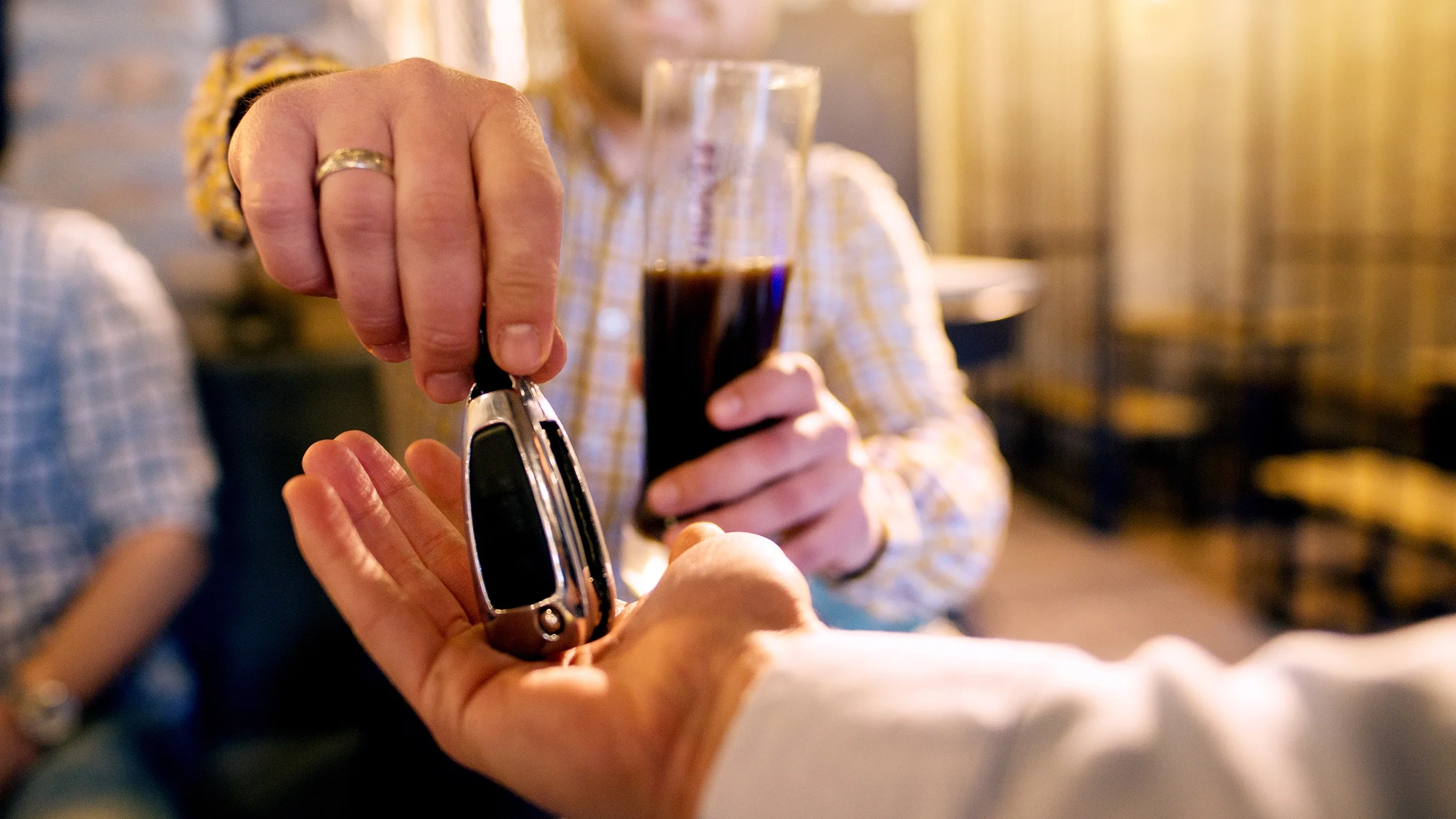
Keeping them safe: Don’t allow them to drive, ride a bike, or try to get home on their own.
Discouraging them from drinking more: You can’t force someone to stop drinking. But you can try to discourage — or distract them — from drinking any more alcohol.
Having them sit up or lie on their side: This will reduce the risk of choking if they vomit.
Staying with them to monitor their symptoms: Depending on how quickly they drank and how much alcohol they had, their blood alcohol level could still be increasing — even if they’ve stopped drinking. This means that even when they’re not showing signs of an overdose at the moment, this could change.
If you think there’s any chance someone is having an alcohol overdose, call 911 right away. A person experiencing an alcohol overdose needs emergency medical attention. There’s no way that you can safely help them on your own.
What should you NOT do when someone is drunk?
When trying to help someone who’s drunk:
Don’t leave them on their own. Stay with them.
Don’t give them any food or liquids if they’re vomiting or may vomit.
Don’t force them to vomit.
Don’t restrain them or force them to do anything.
Don’t let them drive a car or ride a bicycle.
Don’t have them take a cold bath or shower. This won’t help them sober up and can lead to hypothermia.
Don’t have them exercise or “walk it off.”
Don’t give them caffeine, food, or any other substances as a way to sober up. Time is the only thing that can help a person sober up.

Read more like this
Explore these related articles, suggested for readers like you.


Your safety is important, too. If you suspect that a person who is drunk is in danger or if your safety is at risk, get help immediately.
How can you help someone sober up from alcohol?
Time is the only thing that’ll help a person sober up from alcohol. Many people claim that coffee, a shower, a large meal, or water will help. But these don’t make the body process alcohol faster.
To truly sober up, a person must stop drinking and wait for time to pass. A person will likely stop feeling drunk after several hours, even though alcohol may stay in the body for up to 24 hours.
When should you get emergency care for someone who’s drunk?
An alcohol overdose (also called alcohol poisoning) can happen when a person’s blood alcohol concentration (BAC) is so high that it affects basic functions, like breathing and heart rate. It can be very dangerous and may lead to death or brain damage.
Signs of an alcohol overdose include:
Passing out and not waking up
Vomiting over and over
Vomiting while passed out
Pale, cool, or clammy skin
Blue lips, gums, or fingernails
Extreme confusion or disorientation
Very slow breathing
Long pauses between breaths
A seizure
Extremely low body temperature
A slow heart rate
Call 911 if a person has any of these signs of alcohol overdose. While waiting for help to arrive, stay with the person and try to keep them awake if you can. If they’re unconscious, roll them on their side with a hand tucked under their cheek, as shown here.
What is the treatment for alcohol poisoning?
If you think someone is experiencing alcohol poisoning or overdose, call for help right away. Treatment for alcohol poisoning depends on how severe it is. Healthcare professionals will monitor their vital signs and make sure they’re able to breathe OK. If someone loses consciousness while intoxicated, they can choke if vomit gets into their lungs (aspiration).
Treatment for alcohol poisoning may include:
Intravenous (IV) fluids: This can replace fluids lost from vomiting or dehydration.
Electrolytes: Alcohol poisoning can cause imbalances in important minerals (called electrolytes), like sodium, potassium, or magnesium. A healthcare team will run an electrolyte panel to treat any imbalances.
Thiamine: Heavy alcohol use can lead to low thiamine (vitamin B1) levels. IV thiamine can help prevent serious complications from a lack of thiamine.
Temperature management: Alcohol poisoning can put you at risk of hypothermia. Covering the person with warm and dry blankets can help them stay warm.
As the person sobers up and stabilizes, a care team will monitor for alcohol withdrawal syndrome. Alcohol withdrawal happens when someone who regularly drinks alcohol over an extended period of time suddenly stops. Medication can help treat alcohol withdrawal symptoms and prevent serious complications, like seizures.
How long does alcohol stay in your system?
When you take a sip of alcohol, it begins making its way through your body. It starts at your stomach, and then moves to your bloodstream and eventually your liver. It takes about 15 to 45 minutes to feel the effects of alcohol after having a drink.
After alcohol reaches its peak levels, your body starts breaking it down. Depending on how much you drank, this may take a few hours.
Alcohol can stay in your bloodstream for around 6 hours. It can also be detected in your breath for up to 24 hours after you stop drinking and in your urine for up to 72 hours. During this time, you may notice signs of a hangover.
How can you help someone with an alcohol use disorder?
If someone you know has a hard time controlling their drinking and keeps drinking even though it’s causing significant problems in their life, they may have an alcohol use disorder.
Treatment for an alcohol use disorder can include therapy, self-help groups, and medications to manage cravings and withdrawal.
The following resources can help someone with an alcohol use disorder:
Alcohol Treatment Navigator from the National Institute on Alcohol Abuse and Alcoholism (NIAAA) allows you to search for treatment centers and healthcare or mental health professionals who treat alcohol use disorders.
Behavioral Health Treatment Services Locator from the Substance Abuse and Mental Health Services Administration (SAMHSA) is another way to search for substance use and mental health treatment services.
SAMHSA’s National Helpline (1-800-662-4357) can also assist you in finding local treatment programs and resources.
Self-help groups are also available for people with alcohol use disorders and their loved ones:
Alcoholics Anonymous (AA) is a spiritually-based self-help group for anyone who wants to stop drinking.
SMART Recovery is a self-empowering group for anyone wanting to learn strategies to help them stop using drugs and alcohol.
Al-Anon is a support group for family members and friends of people with an alcohol use disorder.
Frequently asked questions
It depends on how drunk the person is. Someone who’s had 1 or 2 drinks and is just tipsy can usually sleep it off. But someone who’s very drunk shouldn’t be left alone to sleep. Stay with them, check on them often, and wake them regularly.
This is important because blood alcohol can keep rising even after the last drink. This means a person can go from sleeping to a dangerous loss of consciousness without anyone noticing. They could also vomit while asleep and choke. Lay them on their side, and if you can’t wake them or notice any signs of an alcohol overdose, call 911.
A blackout is when you don’t remember things that happened while you were drunk. Blackouts happen when you drink enough alcohol to temporarily interfere with your brain’s ability to create long-term memories.
Tipsy means that you’re affected by alcohol, but you’re not to the point of being obviously drunk. It’s when your blood alcohol concentration (BAC) is low enough that you feel slightly “loose,” but you’re not majorly impaired. Keep in mind that even with a very low BAC, you may still be at risk for impaired driving or other dangers.
It depends on how drunk the person is. Someone who’s had 1 or 2 drinks and is just tipsy can usually sleep it off. But someone who’s very drunk shouldn’t be left alone to sleep. Stay with them, check on them often, and wake them regularly.
This is important because blood alcohol can keep rising even after the last drink. This means a person can go from sleeping to a dangerous loss of consciousness without anyone noticing. They could also vomit while asleep and choke. Lay them on their side, and if you can’t wake them or notice any signs of an alcohol overdose, call 911.
A blackout is when you don’t remember things that happened while you were drunk. Blackouts happen when you drink enough alcohol to temporarily interfere with your brain’s ability to create long-term memories.
Tipsy means that you’re affected by alcohol, but you’re not to the point of being obviously drunk. It’s when your blood alcohol concentration (BAC) is low enough that you feel slightly “loose,” but you’re not majorly impaired. Keep in mind that even with a very low BAC, you may still be at risk for impaired driving or other dangers.
The bottom line
When a person is drunk, the first thing you need to do is check for signs of an alcohol overdose. If they have any signs of an overdose, it’s a medical emergency. Call 911 right away.
If a person is drunk but not having an overdose, you should help them get to a secure location and stay with them. Keep them safe, and don’t let them drive or ride a bike. And remember: The only thing that will help a person sober up is time.

Why trust our experts?



References
Abbey, A., et al. (1993). The relationship between reasons for drinking alcohol and alcohol consumption: An interactional approach. Addictive Behaviors.
National Institute on Alcohol Abuse and Alcoholism. (2025). Interrupted memories: Alcohol-induced blackouts. National Institutes of Health.
National Institute on Alcohol Abuse and Alcoholism. (2025). Understanding the dangers of alcohol overdose. National Institutes of Health.
Oregon Liquor and Cannabis Commission. (2022). 50 signs of visible intoxication.
Piccioni, A., et al. (2020). Role of first aid in the management of acute alcohol intoxication: A narrative review. European Review for Medical and Pharmacological Sciences.
Stanford University. (n.d.). Bacchus maneuver.
Substance Abuse and Mental Health Services Administration. (2023). SAMHSA’s national helpline.
Washington University in St. Louis. (n.d.). Immediate care of an intoxicated person.