Key takeaways:
Eastern medicine is an approach to healthcare that has its origins in Asian cultures. It focuses on treating the person as a whole rather than targeting certain symptoms.
Examples of Eastern medicine include acupuncture, reiki, and herbal medicine. They are commonly used to treat a number of health conditions, but more evidence is needed to understand their effectiveness.
If you are interested in incorporating Eastern medicine into your treatment plan, it’s best to talk with a healthcare provider. They can help you weigh the benefits and risks and find an option that works for you.
More and more, people have been turning to complementary and alternative medicine (CAM) therapies to help manage health conditions alongside conventional medical care. Some of these alternative treatments are collectively known as “Eastern medicine.”
While it’s common to discuss Eastern and Western medicine as opposing forms of care, people often find success by combining the two. Here is what the science says.
What is Eastern medicine?
“Eastern medicine” is a term that describes a number of practices that originated in Asia and provide a holistic approach to health. Eastern medicine is one of the oldest systems of medicine in the world. Although there are many different therapies and approaches that fall under the umbrella of Eastern medicine, the common thread tying them together is treating the person as a whole rather than targeting specific symptoms.
While Eastern medicine is not part of standard medical care in the U.S., some people choose to combine certain Eastern modalities with conventional treatment. Examples of Eastern medicine include:
Herbal Medicine
Tai Chi and Qigong
Ayurveda
Yoga
Meditation
Reiki
Traditional Chinese Medicine (TCM)
What are the differences between Eastern and Western medicine?
Whereas Eastern medicine is rooted in intuitive healing and traditional knowledge, Western medicine is evidence-based. From diagnosing health conditions to prescribing medications and treatments, Western healthcare providers practice according to standardized and strict guidelines.
On the other hand, Eastern medicine doesn’t use standardized guidelines or clinically proven treatments. Instead, practitioners rely on ancient wisdom and experience to develop personalized treatment plans, usually involving herbs, energy balancing, and lifestyle adjustments.
Does Eastern medicine work?
It depends. In general, there is little evidence regarding the health benefits of Eastern medicine modalities, which makes it difficult to understand how effective this approach is in general. But some practices — such as using acupuncture to curb certain side effects of cancer treatment — have more scientific backing than others.
Still, some people report that they find Eastern medicine helpful in managing symptoms of certain health conditions and improving overall well-being. Here is a closer look at three common Eastern medicine treatments along with information on their uses and effectiveness.

Read more like this
Explore these related articles, suggested for readers like you.



1. Acupuncture
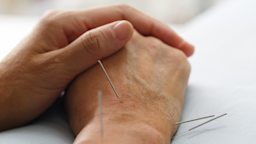
Acupuncture is a form of treatment that is commonly used in TCM and is thought to have originated before 2,500 BCE. It involves inserting needles into specific points to change how energy flows through the body. This is believed to improve health and well-being.
What it’s used for
The most common reason people use acupuncture is to treat chronic pain. Some conditions that may benefit from acupuncture include:
Muscle pain
Arthritis
Nausea and vomiting
Headaches
Depression
Asthma
Potential side effects or risks
Acupuncture is generally safe, and the side effects are usually mild. Common side effects include:
Bruising or bleeding where the needles are inserted
Dizziness
Fainting
Low blood pressure
What the research says:
A review of several studies seems to indicate that acupuncture may help with chronic pain. Other research also suggests that acupuncture might help with nausea from chemotherapy. However, larger studies are needed to confirm this benefit.
2. Reiki
Reiki is a traditional Japanese healing practice thought to have been founded by Mikao Usui around the early 1920s. In Japanese, “Rei” means “universal life,” while “ki” refers to energy. Reiki practice involves a practitioner using touch to balance energy fields in the body as a way to promote healing. It is often linked to lower stress levels and improved mood and relaxation.
What it’s used for
Reiki is commonly used to promote relaxation and sleep and to lower stress levels. Although reiki doesn’t treat specific health conditions, people sometimes turn to this approach to find relief from:
Chronic pain
Anxiety or depression
Cancer
Studies have also looked at the effects of reiki on other health conditions, such as fibromyalgia and high blood pressure.
Potential side effects or risks
There are no reported concerns or side effects associated with reiki. Given that this therapy involves little to no risks, it can be an option for people looking for additional ways to find pain relief and well-being improvement.
What the research says
Overall, there’s no evidence supporting reiki’s effectiveness. According to a scientific review, reiki might help with pain management. However, the studies included in the review were small and looked at all types of pain rather than pain from specific health conditions.
3. Herbal medicine
Herbs and plants have been studied as treatments for many medical conditions. The National Center for Complementary and Integrative Health (NCCIH) has a list of common medicinal herbs. Below you’ll find information on a few of them and their uses.
What it’s used for
Herbs are used for various health conditions. Here is a breakdown of some commonly used ones:
Cranberry is used for urinary tract infections (UTIs).
Garlic is used to treat high blood pressure or high cholesterol.
Ginger is used to relieve nausea and vomiting, menstrual cramps, and inflammation
St.John’s Wort is used for depression, insomnia, and wound healing.
Turmeric is used to lower inflammation.
Potential side effects or risks
A popular misconception around medicinal herbs is that they don’t have as many side effects as conventional treatments. But this is not the case. Herbs can interact with medications. Remember to share your medication list with a healthcare provider or pharmacist before starting any herbal treatments so they can confirm whether herbs are safe for you.
What the research says
Some herbs have fairly strong evidence supporting their use for certain symptoms or conditions, though more research is needed on many of them. For example, even though cranberry supplements and juice are widely used for UTIs, most research focuses on prevention rather than treatment. On the other hand, herbs like ginger show promise as a treatment for nausea and vomiting and there is evidence turmeric can combat inflammation.
Pros and cons of Eastern vs. Western medicine
Both Eastern and Western medicine have advantages and disadvantages.
Pros | Cons | |
Eastern medicine | • Takes a holistic approach to engage and support the body’s own healing mechanisms | • Not enough high-quality scientific evidence to verify if these practices are safe and effective |
Western medicine | • Uses pharmaceuticals to heal the body, based on scientific evidence | • Can have bothersome side effects (for example, from medications) |
Can Eastern and Western medicine be combined for treatment?
Although Eastern and Western medicine have different approaches to treating health conditions, their goals are similar. They both aim to treat pain and to improve function and quality of life. Combining both Eastern and Western approaches can be effective for many health conditions.
When should you consider trying Eastern medicine?
You can talk with a healthcare provider about incorporating Eastern medicine into your care plan if you aren’t experiencing improvement with the recommended treatments. It’s also important to take into account the following factors to find out if Eastern medicine treatments are safe for you:
Your health
Your age
The condition you’re trying to treat
The severity of your symptoms
The benefits and risks of each treatment type
The bottom line
Most of the health benefits of Eastern medicine are supported by tradition and experience rather than by hard evidence. That said, incorporating techniques like acupuncture, reiki, and herbal medicine can be safe options for some people and provide additional relief. Keep in mind, Eastern medicine isn’t for everyone. Talk with a healthcare provider to find out which types of alternative treatments are safe for you.

Why trust our experts?




References
Encyclopaedia Britannica. (2023). Acupuncture.
Li, Q-W., et al. (2020). Efficacy of acupuncture in the prevention and treatment of chemotherapy-induced nausea and vomiting in patients with advanced cancer: A multi-center, single-blind, randomized, sham-controlled clinical research. Chinese Medicine.
Memorial Sloan Kettering Cancer Center. (2022). Arnica.
National Cancer Institute. (2022). Acupuncture (PDQ®) – patient version.
National Center for Complementary and Integrative Health. (2020). Cranberry.
National Center for Complementary and Integrative Health. (2020). Garlic.
National Center for Complementary and Integrative Health. (2020). Ginger.
National Center for Complementary and Integrative Health. (2020). St John's Wort.
National Center for Complementary and Integrative Health. (2020). Turmeric.
National Center for Complementary and Integrative Health. (2023). Herbs at a glance.
Sun, D-Z., et al. (2013). Differences in the origin of philosophy between Chinese medicine and Western medicine: Exploration of the holistic advantages of Chinese medicine. Nature Public Health Emergency Collection.
Vickers, A. J., et al. (2017). Acupuncture for chronic pain: Update of an individual patient data meta-analysis. The Journal of Pain.
Zhang, M., et al. (2019). Connecting West and East. International Journal of Molecular Sciences.