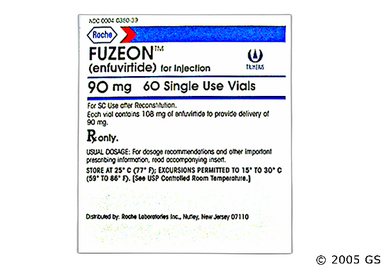
Fuzeon
Fuzeon (enfuvirtide) is a self-injected HIV antiretroviral (ARV) used for the treatment of HIV. It's injected 2 times a day and is usually reserved for people who don't have other treatment options.


What is Fuzeon (enfuvirtide)?
What is Fuzeon (enfuvirtide) used for?
- HIV treatment in treatment-experienced patients
How Fuzeon (enfuvirtide) works
Fuzeon (enfuvirtide) is an entry inhibitor and prevents the HIV virus from entering and fusing with your immune cells.
Drug facts
| Common Brands | Fuzeon |
|---|---|
| Drug Class | HIV ARV |
| Controlled Substance Classification | Not a controlled medication |
| Generic Status | No lower-cost generic available |
| Availability | Prescription only |

Side effects of Fuzeon (enfuvirtide)
The following side effects may get better over time as your body gets used to the medication. Let your healthcare provider know immediately if you continue to experience these symptoms or if they worsen over time.
Common Side Effects
- Injection site reaction (98%)
- Diarrhea (32%)
- Nausea (28%)
- Tiredness (20%)
Less Common Side Effects
- Weight loss
- Runny nose
- Stomach pain
- Cough
The following Fuzeon (enfuvirtide) side effects have also been reported
Along with its needed effects, a medicine may cause some unwanted effects. Although not all of these side effects may occur, if they do occur they may need medical attention.
Check with your doctor immediately if any of the following side effects occur:
More common
Awkwardness
burning, numbness, tingling, or painful sensations or weakness in the arms, hands, legs, or feet
headache
pain or tenderness around the eyes and cheekbones
stuffy or runny nose
tightness of the chest
troubled breathing
unsteadiness
Less common
chills
dark urine
dry or itching eyes
excessive tearing
eye discharge
fast heartbeat
indigestion
itching, pain, redness, swelling, tenderness, or warmth on the skin at the injection site
loss of appetite
lump or growth on the skin
pains in the stomach, side, or abdomen, possibly radiating to the back
redness, pain, swelling of the eye, eyelid, or inner lining of the eyelid
swollen, painful, or tender lymph glands in the neck, armpit, or groin
vomiting
yellow eyes or skin
Incidence not known
Black, tarry stools
bleeding gums
blood in the urine or stools
decreased frequency or amount of urine
inability to move the arms and legs
increased blood pressure
increased thirst
lower back or side pain
painful or difficult urination
pale skin
pinpoint red spots on the skin
sudden numbness and weakness in the arms and legs
swelling of the face, fingers, lower legs
ulcers, sores, or white spots in the mouth
unusual bleeding or bruising
unusual tiredness or weakness
Some side effects may occur that usually do not need medical attention. These side effects may go away during treatment as your body adjusts to the medicine. Also, your health care professional may be able to tell you about ways to prevent or reduce some of these side effects. Check with your health care professional if any of the following side effects continue or are bothersome or if you have any questions about them:
More common
Abnormal growth filled with fluid or semisolid material
bruising
burning or stinging of the skin
decreased appetite
discouragement
fear
feeling sad or empty
hard lump
irritability
lack or loss of strength
large, flat, blue or purplish patches in the skin
nervousness
painful cold sores or blisters on the lips, nose, eyes, or genitals
small lumps under the skin
trouble concentrating
trouble sleeping
unusually warm skin
Other side effects not listed may also occur in some patients. If you notice any other effects, check with your healthcare professional.
Call your doctor for medical advice about side effects. You may report side effects to the FDA at 1-800-FDA-1088.

Get your GoodRx coupon

Pros and cons of Fuzeon (enfuvirtide)
Pros
- Good option for people with HIV who are resistant to other HIV ARV classes like NNRTIs, NRTIs, and PIs
- Injectable option for people who may not like pills
- Can be used in young children who weigh at least 11 kg
- Doesn't interact with many medications and doesn't require dose adjustments
- Can be injected into the upper arm, abdomen, and front of the thigh
Cons
- Twice daily injection
- 98% of people experienced irritation at the site of injection
- Currently brand only, can be expensive
- May require training by a healthcare provider before starting therapy
- People with bleeding problems may have more bleeding after the injection

Pharmacist tips for Fuzeon (enfuvirtide)

- Plan for each dose to take you about 30 minutes from start to finish. Start by injecting 1 mL of sterile water into the vial containing the Fuzeon (enfuvirtide) powder. Gently mix the vial by rolling the vial between your hands, DON'T shake it.
- The mixture is ready to be used when all the powder has dissolved and there is no foam or air bubbles. Once the mixture is prepared, either inject the dose right away, or store the mixture in the fridge. The mixed medication can be stored in the fridge for up to 24 hours; after that it should be thrown away.
- Inject the medication into the fatty part of the skin on the upper arm, front thigh, or belly area. Try to rotate the spot where you inject the medication to lower the chance of a reaction.
- Make sure you throw the needle in a sharps container after each use. If someone else accidentally gets stuck with a needle after you have injected your dose, seek medical help immediately.
- Never share or reuse your needles and syringes.

Risks and warnings for Fuzeon (enfuvirtide)
Fuzeon (enfuvirtide) can cause some serious health issues. This risk may be even higher for certain groups. If this worries you, talk to your doctor or pharmacist about other options.
LOCAL INJECTION SITE REACTION
Most people (98%) taking Fuzeon (enfuvirtide) experience a reaction around the area where they inject the medication. These reactions include pain, discomfort, redness, itching, lumps, and irritation. Reactions can occur at more than one injection site. A healthcare provider will teach you how to properly inject Fuzeon (enfuvirtide) and how to look out for signs or symptoms of a local infection.
LUNG INFECTION (PNEUMONIA)
- Risk factors: Low CD4 count | High initial viral load | Intravenous drug use | Smoking | History of lung disease
During clinical trials of Fuzeon (enfuvirtide), there were more cases of pneumonia, a bacterial infection in the lung, in people who were taking the medication than those taking placebo. It's not known if taking Fuzeon (enfuvirtide) raises your risk of pneumonia, or if most people taking Fuzeon (enfuvirtide) are at a higher risk for the infection due to their low CD4 count. Either way, make sure you monitor yourself for symptoms and talk to your provider right away if you have a high fever, chest pain, cough, or trouble breathing.
BIOJECTOR 2000
Nerve pain lasting up to 6 months has happened when people have injected Fuzeon (enfuvirtide) using the Biojector 2000 needle-free device.
IMMUNE RECONSTITUTION SYNDROME
- Risk factors: Weakened immune system | Current untreated infection
HIV attacks your immune system. Over time, if the virus isn't treated your body may become defenseless against bacterial and fungal infections. Your HIV medications are very good at killing the virus, and when the number of viruses goes down, your immune system starts making more cells. Once your immune system gets better, it will start to fight off any infections you might have, which can lead to a lot of inflammation. Even though it's a good thing that your immune system is getting better, too much inflammation can be bad. Your healthcare provider might check for underlying infections (sometimes called opportunistic infections) before starting Fuzeon (enfuvirtide) especially if it is your first time taking HIV medications. Call your provider if you experience fever, difficulty breathing, or sudden changes to your health after starting Fuzeon (enfuvirtide).

Fuzeon (enfuvirtide) dosage
 Kit
Kit| Dosage | Quantity | Price as low as | Price per unit |
|---|---|---|---|
| 60 vials of 90mg | 1 kit | $3,448.39 | $3,448.39 |
Typical dosage for Fuzeon (enfuvirtide)
Adults: 90 mg injected twice daily
Children (weighing at least 11 kg): The dose is based on the child's weight

Interactions between Fuzeon (enfuvirtide) and other drugs
Although certain medicines should not be used together at all, in other cases two different medicines may be used together even if an interaction might occur. In these cases, your doctor may want to change the dose, or other precautions may be necessary. When you are taking this medicine, it is especially important that your healthcare professional know if you are taking any of the medicines listed below. The following interactions have been selected on the basis of their potential significance and are not necessarily all-inclusive.
Using this medicine with any of the following medicines is usually not recommended, but may be required in some cases. If both medicines are prescribed together, your doctor may change the dose or how often you use one or both of the medicines.
- Cabotegravir
Using this medicine with any of the following medicines may cause an increased risk of certain side effects, but using both drugs may be the best treatment for you. If both medicines are prescribed together, your doctor may change the dose or how often you use one or both of the medicines.
- Tipranavir

How much does Fuzeon (enfuvirtide) cost?
$3,448.39




