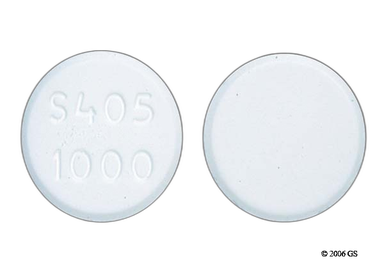
lanthanum
Lanthanum (Fosrenol) works well to lower phosphorus levels in the blood without affecting calcium levels in people with advanced kidney disease, but it can be expensive and you need to take it with meals.


What is Lanthanum (Fosrenol)?
What is Lanthanum (Fosrenol) used for?
- High blood phosphate levels in advanced kidney disease
How Lanthanum (Fosrenol) works
Lanthanum (Fosrenol) is a phosphate binder. It binds to the phosphates in your food before they can be absorbed, which lowers phosphorus levels to help protect your kidneys and bones.
Drug facts
| Common Brands | Fosrenol |
|---|---|
| Drug Class | Phosphate binder |
| Controlled Substance Classification | Not a controlled medication |
| Generic Status | Lower-cost generic available |
| Availability | Prescription only |

Side effects of Lanthanum (Fosrenol)
The following side effects may get better over time as your body gets used to the medication. Let your healthcare provider know immediately if you continue to experience these symptoms or if they worsen over time.
Common Side Effects
- Nausea (11%)
- Vomiting (9%)
- Belly pain (5%)
Less Common Side Effects
- Diarrhea
The following Lanthanum (Fosrenol) side effects have also been reported
Along with its needed effects, a medicine may cause some unwanted effects. Although not all of these side effects may occur, if they do occur they may need medical attention.
Check with your doctor immediately if any of the following side effects occur:
Less common
Stomach pain
Incidence not known
Bloody, black, or tarry stools
bone pain
constipation, severe
difficulty having a bowel movement
itching, skin rash
loss of appetite
seizures
severe stomach pain, cramping, or burning
trouble breathing
unusual tiredness or weakness
vomiting of material that looks like coffee grounds, severe and continuous
vomiting, severe
Get emergency help immediately if any of the following symptoms of overdose occur:
Symptoms of overdose
Headache
Some side effects may occur that usually do not need medical attention. These side effects may go away during treatment as your body adjusts to the medicine. Also, your health care professional may be able to tell you about ways to prevent or reduce some of these side effects. Check with your health care professional if any of the following side effects continue or are bothersome or if you have any questions about them:
More common
Other side effects not listed may also occur in some patients. If you notice any other effects, check with your healthcare professional.
Call your doctor for medical advice about side effects. You may report side effects to the FDA at 1-800-FDA-1088.

Get your GoodRx coupon

Pros and cons of Lanthanum (Fosrenol)
Pros
- Works as well as other phosphate binders to lower blood phosphate levels
- Easy to take since lanthanum (Fosrenol) comes in powder form, and the tablet form can be crushed or chewed
- Calcium-free, which means lanthanum (Fosrenol) doesn't come with the risk of high calcium levels like some other phosphate binders
Cons
- Like other phosphate binders, lanthanum (Fosrenol) must be taken with meals.
- More expensive than other phosphate binders
- Not a good option for people with certain bowel disorders, serious liver disease, or who have trouble chewing or crushing tablets (tablet form only)

Pharmacist tips for Lanthanum (Fosrenol)

- Take lanthanum (Fosrenol) with or right after meals so it can bind to the phosphorus in your food.
- Crush or chew the tablet fully before swallowing. Swallowing a tablet that isn't fully chewed can cause bad stomach side effects.
- Sprinkle the powder on applesauce or other soft foods right before eating it. Don't try to dissolve the powder in a liquid drink.
- You can expect to have blood tests done more often when you first start lanthanum (Fosrenol) or when your dose changes. This will help your provider adjust your dose based on your phosphorus level.
- Knowing which foods to avoid (like dairy products and certain meats) can help if you have high phosphate levels. Your provider will likely recommend you stick to a low phosphate diet.
- Lanthanum (Fosrenol) interacts with products that contain aluminum, magnesium, or calcium. Talk to your provider or pharmacist about how to space the timing of your medications throughout the day, including over-the-counter products and supplements.

Risks and warnings for Lanthanum (Fosrenol)
Lanthanum (Fosrenol) can cause some serious health issues. This risk may be even higher for certain groups. If this worries you, talk to your doctor or pharmacist about other options.
Blockage of your digestive tract
- Risk factors: History of changes to your digestive tract's anatomy | History of digestive tract problems | Taking medications that can also cause blockage
Lanthanum (Fosrenol) can cause blockage of the stomach, intestines, or rectum, which can be very dangerous. The risk is higher if you have a history of changes to your digestive tract's anatomy, constipation problems, or are taking medications that can also cause blockage. Call your healthcare provider right away if you feel more constipated that normal, have really bad belly pain, or feel extremely bloated.
Interference with X-rays
Lanthanum (Fosrenol) can show up in an abdominal (stomach area) X-ray. Tell your provider or the technician beforehand that you're taking lanthanum (Fosrenol) since lanthanum (Fosrenol) can affect the X-ray results.

Lanthanum (Fosrenol) dosage


Interactions between Lanthanum (Fosrenol) and other drugs
Although certain medicines should not be used together at all, in other cases two different medicines may be used together even if an interaction might occur. In these cases, your doctor may want to change the dose, or other precautions may be necessary. When you are taking this medicine, it is especially important that your healthcare professional know if you are taking any of the medicines listed below. The following interactions have been selected on the basis of their potential significance and are not necessarily all-inclusive.
Using this medicine with any of the following medicines is usually not recommended, but may be required in some cases. If both medicines are prescribed together, your doctor may change the dose or how often you use one or both of the medicines.
- Erdafitinib
Using this medicine with any of the following medicines may cause an increased risk of certain side effects, but using both drugs may be the best treatment for you. If both medicines are prescribed together, your doctor may change the dose or how often you use one or both of the medicines.
- Balofloxacin
- Besifloxacin
- Ciprofloxacin
- Enoxacin
- Flumequine
- Gatifloxacin
- Gemifloxacin
- Levofloxacin
- Levothyroxine
- Lomefloxacin
- Moxifloxacin
- Mycophenolate Mofetil
- Mycophenolic Acid
- Nadifloxacin
- Norfloxacin
- Ofloxacin
- Pazufloxacin
- Pefloxacin
- Prulifloxacin
- Rufloxacin
- Sparfloxacin

How much does Lanthanum (Fosrenol) cost?

What are alternatives to Lanthanum (Fosrenol)?

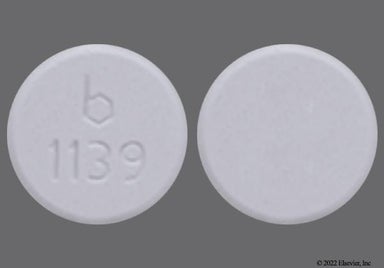
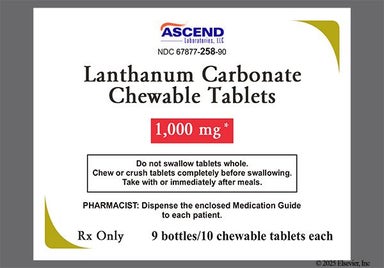
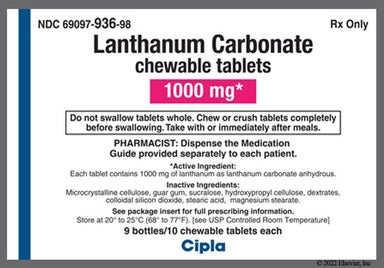
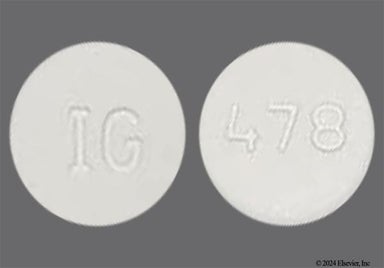
Lanthanum (Fosrenol) images