fomepizole
Fomepizole is used to treat ethylene glycol (e.g., antifreeze) or methanol poisoning. This medication is injected into the vein by a trained healthcare provider. The dosage is based on body weight, and it's given every 12 hours until the ethylene glycol or methanol levels in the blood are low enough. Potential side effects include headache, nausea, dizziness, and a metallic taste in the mouth. Fomepizole works best if it's given as soon as possible after exposure to ethylene glycol or methanol.


What is Fomepizole?
What is Fomepizole used for?
- Treatment of ethylene glycol or methanol poisoning
How Fomepizole works
Fomepizole works as an antidote for ethylene glycol and methanol poisoning. It blocks an enzyme (protein) in the body that normally breaks down ethylene glycol and methanol into toxic substances.
Drug facts
| Common Brands | Antizol |
|---|---|
| Drug Class | Antidote |
| Controlled Substance Classification | Not a controlled medication |
| Generic Status | No lower-cost generic available |
| Availability | Prescription only |

Side effects of Fomepizole
The following side effects may get better over time as your body gets used to the medication. Let your healthcare provider know immediately if you continue to experience these symptoms or if they worsen over time.
Common Side Effects
- Headache (14%)
- Nausea (11%)
- Dizziness (6%)
- Drowsiness (6%)
- Bad taste or metallic taste in the mouth (6%)
Less Common Side Effects
- Stomach pain
- Diarrhea
- Low appetite
- Pain during injection
- Inflammation at injection site
- Fever
- Feeling drunk
- Anxiety
- Hiccups
- Temporary blurred vision
The following Fomepizole side effects have also been reported
Side effects that you should report to your care team as soon as possible:
- Allergic reactions—skin rash, itching, hives, swelling of the face, lips, tongue, or throat
Side effects that usually do not require medical attention (report to your care team if they continue or are bothersome):
- Dizziness
- Drowsiness
- Headache
- Metallic taste in mouth
- Nausea

Pros and cons of Fomepizole
Pros
- A preferred treatment for ethylene glycol poisoning
- Can use in people with liver or kidney problems
- Available as a lower-cost generic
Cons
- Only available as an IV injection
- Must be given by a healthcare provider
- Need doses every 12 hours (every 4 hours if on dialysis)

Pharmacist tips for Fomepizole

- Be aware of what products contain methanol or ethylene glycol, and be careful when you're using or handling these products. Methanol is found in many household items, like windshield washer fluid, perfumes, and copy machine fluid. Ethylene glycol is found in antifreeze, paints, stamp pad inks, cosmetics, and ballpoint pens.
- If you or a loved one has been exposed to or has accidentally ingested ethylene glycol or methanol, it's important to go to an emergency room right away. How well fomepizole works depends on how soon you're able to start treatment.
- Your provider will make sure you get fomepizole at the correct dose and time. It takes about 30 minutes to infuse each dose into the veins.
- While you're getting treated with fomepizole, your providers might monitor your acid-base balance, kidney and liver health, breathing, vision, heart, blood cell counts, and electrolytes. This helps your providers check how stable your condition is and how well the medication is working to treat the poisoning.
- Your provider will check the levels of ethylene glycol or methanol in your body as you get treatment with fomepizole. Your provider will stop your treatment as soon as they're low enough.
- If you have non-urgent questions about methanol or ethylene glycol poisoning, contact a Poison Center at 1-800-222-1222.

Risks and warnings for Fomepizole
Fomepizole can cause some serious health issues. This risk may be even higher for certain groups. If this worries you, talk to your doctor or pharmacist about other options.
Allergic reactions
Some people who've received fomepizole experienced minor allergic reactions, such as rash. let your provider know if you notice rash, redness, or swelling anywhere on your body.

Fomepizole dosage
Typical dosage for Fomepizole
The typical dose is 15 mg/kg of body weight injected into the veins (IV), followed by 10 mg/kg IV every 12 hours for 4 doses. Then, the medication is given at a dose of 15 mg/kg IV every 12 hours until the blood levels of ethylene glycol or methanol are low enough to stop and you're no longer having symptoms.
Your dose might differ if you're on dialysis.

Fomepizole contraindications
Contraindications are specific health conditions or situations in which a person should not take a medication due to safety concerns. If you have any of the following conditions or if any of the following apply to you, let your healthcare provider know because Fomepizole will not be safe for you to take.
- Allergy to fomepizole or other pyrazole medications (such as celecoxib (Celebrex))

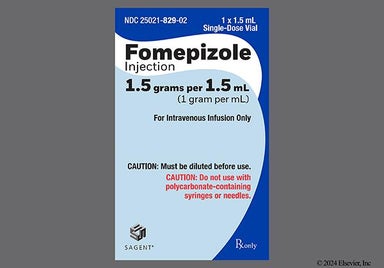
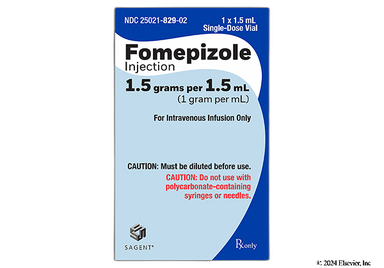
Fomepizole images