



Topical Steroid Withdrawal (TSW): Symptoms, Causes, and Prevention
Topical steroid withdrawal (TSW), also known as red skin syndrome, is a rare reaction that may occur after stopping topical steroid medications.

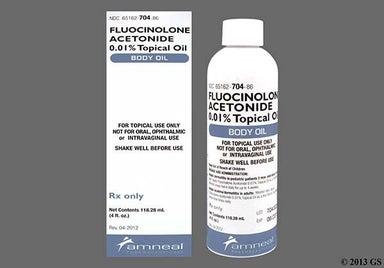
Fluocinolone oil is a topical corticosteroid used to treat skin conditions that cause itching, redness, and inflammation. It comes as a scalp oil for scalp psoriasis in adults and a body oil for eczema in adults and children 3 months and older. The scalp oil is typically applied once a day, while the body oil is applied 2 to 3 times a day. Common side effects include cough, fever, and skin irritation.

Fluocinolone oil is a topical corticosteroid. It helps relieve itching and irritation from skin conditions like psoriasis and eczema by lowering inflammation and calming your immune system.
| Common Brands | Derma-Smoothe/FS Body Oil, Derma-Smoothe/FS Scalp Oil |
|---|---|
| Drug Class | Corticosteroid |
| Controlled Substance Classification | Not a controlled medication |
| Generic Status | Lower-cost generic available |
| Availability | Prescription only |

The following side effects may get better over time as your body gets used to the medication. Let your healthcare provider know immediately if you continue to experience these symptoms or if they worsen over time.
Fluocinolone scalp oil:
Fluocinolone body oil:
Fluocinolone scalp oil:
Fluocinolone body oil:
Contact your healthcare provider immediately if you experience any of the following.
Along with its needed effects, a medicine may cause some unwanted effects. Although not all of these side effects may occur, if they do occur they may need medical attention.
Check with your doctor immediately if any of the following side effects occur:
More common
Body aches or pain
congestion
dryness or soreness of the throat
headache
hoarseness
lightening of normal skin color
lightening of treated areas of dark skin
stuffy or runny nose
tender, swollen glands in the neck
trouble swallowing
unusual tiredness or weakness
voice changes
Less common
accumulation of pus
blistering, crusting, irritation, itching, or reddening of the skin
burning, itching, and pain in hairy areas, or pus at the root of the hair
burning and itching of the skin with pinhead-sized red blisters
change in hearing
cracked, dry, scaly skin
ear drainage
flushing or redness of the skin
darkening of the skin
itching, scaling, severe redness, soreness, or swelling of the skin
itchy, raised, round, smooth, skin-colored bumps found on just one area of the body
ooze thick white fluid
raised, dark red, wart-like spots on skin, especially when used on the face
redness or swelling in the ear
skin irritation
skin rash, encrusted, scaly and oozing
spots on your skin resembling a blister or pimple
swelling
swollen, red, tender area of infection
thickened patches of the skin
vomiting
Incidence not known
Redness and scaling around the mouth
thinning, weakness, or wasting away of the skin
Some side effects may occur that usually do not need medical attention. These side effects may go away during treatment as your body adjusts to the medicine. Also, your health care professional may be able to tell you about ways to prevent or reduce some of these side effects. Check with your health care professional if any of the following side effects continue or are bothersome or if you have any questions about them:
Less common
Changes in skin color
shiny skin
Incidence not known
increased hair growth on the forehead, back, arms, and legs
reddish purple lines on the arms, face, legs, trunk, or groin
softening of the skin
Other side effects not listed may also occur in some patients. If you notice any other effects, check with your healthcare professional.
Call your doctor for medical advice about side effects. You may report side effects to the FDA at 1-800-FDA-1088.


General tips
How to use fluocinolone scalp oil
How to use fluocinolone body oil

Fluocinolone oil can cause some serious health issues. This risk may be even higher for certain groups. If this worries you, talk to your doctor or pharmacist about other options.
Fluocinolone oil can sometimes be absorbed through your skin and affect your body's ability to make its own steroid hormones. This can lead to adrenal insufficiency, a condition where your body doesn't make enough steroid hormones. It can also cause high blood sugar or Cushing's syndrome, a condition caused by too much steroid hormone.
Use fluocinolone oil only as directed. Your care team might check your hormone levels if you're at higher risk. Tell them if you develop unusual tiredness, weakness, dizziness, or other concerning symptoms.
[EDITOR|DRUG_DISPLAY_NAME|||title]] can cause skin problems where you apply it, including burning, itching, dryness, irritation, and changes in skin color. Long-term use can also cause thinning skin, stretch marks, or visible small blood vessels. Some of these changes might be permanent.
Use fluocinolone oil only as directed, and avoid covering treated skin with bandages unless your prescriber tells you to. Contact your care team if you notice new or worsening skin problems during treatment.
Fluocinolone oil can raise your risk of eye problems, including glaucoma (high pressure in the eyes) and cataracts (cloudy areas in the eye's lens). Avoid getting the medication in your eyes, and wash your hands after applying it.
Tell your care team if you notice blurry vision, eye pain, or other changes in your eyesight. They might recommend an eye exam to check for problems.
Fluocinolone oil can weaken your skin's ability to fight infections and slow down healing. If you already have a skin infection, the medication might make it worse or harder to treat.
Tell your care team if you have a skin infection before using fluocinolone oil. You might need an antibiotic or antifungal medication to treat the infection. If your infection doesn't improve, your prescriber might have you stop using the oil until the infection clears.
Fluocinolone oil contains refined peanut oil, which might cause an allergic reaction in people with a peanut allergy. Stop using the medication and contact your care team if you develop hives, itching, redness, or worsening skin symptoms. Get emergency medical help if you have swelling of your face or throat or trouble breathing.


Although certain medicines should not be used together at all, in other cases two different medicines may be used together even if an interaction might occur. In these cases, your doctor may want to change the dose, or other precautions may be necessary. Tell your healthcare professional if you are taking any other prescription or nonprescription (over-the-counter [OTC]) medicine.






Prescription savings
Stop paying too much for your prescriptions. Compare prices, get pharmacy coupons, and save up to 80%. Find expert answers to your health questions so you can make the best decisions for yourself and your family.
Health conditions
Medications & treatment
Access & affordability
Medication discounts


Yes, Fluocinolone is a topical steroid. It works by calming down your immune response to reduce redness, swelling, and itching on your skin. Fluocinolone is considered a medium-strength steroid.
Yes, Fluocinolone expires, and you can find the expiration date on the bottle. Don't use the medication past this date because it won't work as well. If your medication has expired, ask your prescriber or pharmacist about getting a new bottle.
No, fluocinonide and fluocinolone aren't the same medication, even though their names sound similar. Both are topical steroids, but fluocinonide is much stronger. Because of this big difference in strength, they treat different skin conditions and shouldn't be swapped. Always check your prescription to make sure you're using the right medication.
No, Fluocinolone isn't a hair loss treatment and doesn't directly help your hair grow. It's used to treat scalp psoriasis. Talk to a healthcare professional if you're concerned about hair loss.
Yes, you'll need to wash out fluocinolone scalp oil after each use. For scalp psoriasis, wet your hair and scalp, massage the oil into your scalp, and cover it with a shower cap. Leave it on overnight or for at least 4 hours, then wash it out thoroughly with regular shampoo. Always follow your prescriber's instructions.
No, Fluocinolone isn't available over the counter. It's only available with a prescription from a healthcare professional. They'll check your skin or scalp to see if the medication is right for your condition.
No, you shouldn't use Fluocinolone to treat athlete's foot. Athlete's foot is caused by a fungus, and this medication is a steroid, not an antifungal. In fact, using a steroid on a fungal infection can make it worse because it weakens your skin's ability to fight the infection. Talk to your healthcare professional about the right antifungal treatment if you think you have athlete's foot.
Fluocinolone scalp oil and body oil both contain the same medication (fluocinolone acetonide 0.01%) in a peanut oil base. The main differences are their packaging and directions for use. The scalp oil typically comes with shower caps and is left on overnight, while the body oil is applied to damp skin after bathing.
