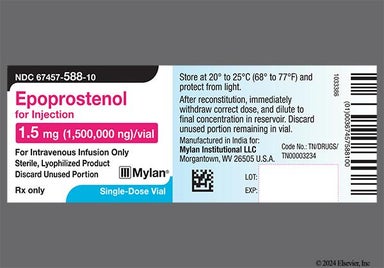
epoprostenol
Epoprostenol (Flolan) is a prostacyclin vasodilator. It treats pulmonary arterial hypertension (PAH) by widening the blood vessels around the lungs and lowering the risk of blood clots. It's infused through the veins continuously through a portable infusion pump. While epoprostenol (Flolan) works well, mixing and preparing the infusion can take some effort, which some people find inconvenient. The most common side effects of epoprostenol (Flolan) include dizziness, jaw pain, and headache.


What is Epoprostenol (Flolan)?
What is Epoprostenol (Flolan) used for?
How Epoprostenol (Flolan) works
Epoprostenol (Flolan) is a prostacyclin vasodilator. Prostacyclins work by relaxing muscles in the arteries (blood vessels), which leads to vasodilation. Vasodilation means that the blood vessels widen, which allows more blood to flow through them. In addition, prostacyclins prevent platelets, pieces of cells found in the blood, from sticking to each other. This also helps improve blood flow.
PAH occurs when blood can't flow freely through the arteries in your lungs. This raises the blood pressure in your lungs, causing your heart to have to work harder to send blood to your lungs for oxygen. Epoprostenol (Flolan) helps with PAH because it improves the blood flow in your arteries.
Drug facts
| Common Brands | Flolan |
|---|---|
| Drug Class | Prostacyclin vasodilator |
| Controlled Substance Classification | Not a controlled medication |
| Generic Status | No lower-cost generic available |
| Availability | Prescription only |

Side effects of Epoprostenol (Flolan)
The following side effects may get better over time as your body gets used to the medication. Let your healthcare provider know immediately if you continue to experience these symptoms or if they worsen over time.
Common Side Effects
- Bone, joint, or muscle pain (35-84%)
- Dizziness (59-83%)
- Headache (46-83%)
- Jaw pain (54-75%)
- Nausea or vomiting (41-67%)
- Loss of appetite (25-66%)
- Diarrhea (37-50%)
- Fast heart rate (35-43%)
- Flushing (23-42%)
Less Common Side Effects
- Flu-like symptoms
- Low blood pressure
- Anxiety
- Tingling in the arms, hands, legs, or feet
- Rash or eczema
- Anxiety or nervousness
- Skin ulcer
Epoprostenol (Flolan) serious side effects
Contact your healthcare provider immediately if you experience any of the following.
- Excess fluid in the lungs: shortness of breath, cough, chest pain, fatigue
- Bleeding problems: unusual or easy bleeding or bruising, vomiting or coughing up blood, blood in your urine or stool
The following Epoprostenol (Flolan) side effects have also been reported
Along with its needed effects, a medicine may cause some unwanted effects. Although not all of these side effects may occur, if they do occur they may need medical attention.
Check with your doctor immediately if any of the following side effects occur:
More common
Abdominal or stomach pain
arm, back, or jaw pain
bladder pain
bleeding gums
bloating or swelling of the face, arms, hands, lower legs, or feet
bloody or cloudy urine
blurred vision
changes in skin color
chest congestion
chest pain or discomfort
chest tightness or heaviness
chills
cold hands and feet
confusion
convulsions
cough or hoarseness
coughing up blood
decreased urine
difficult, burning, or painful urination
difficulty with breathing or swallowing
dilated neck veins
dizziness, faintness, or lightheadedness when getting up suddenly from a lying or sitting position
extreme fatigue
fast, pounding, or irregular heartbeat or pulse
feeling of warmth
headache
incoherent speech
increased menstrual flow or vaginal bleeding
increased thirst
increased urination
local infection at the catheter site
loss of appetite
metallic taste
muscle pain or cramps
muscle weakness
nausea or vomiting
nosebleeds
numbness or tingling in the hands, feet, or lips
pain at the injection site
pain, redness, or swelling in the arm or leg
paleness of the skin
prolonged bleeding from cuts
rapid weight gain
red or black, tarry stools
redness of the face, neck, arms, and occasionally, upper chest
sweating
swelling of the face, fingers, feet, or lower legs
tightness in the chest
tingling of the hands or feet
unusual tiredness or weakness
weight gain or loss
Less common
Altered or abnormal touch sensation or sensitivity
blue lips and fingernails
burning, crawling, itching, numbness, prickling, "pins and needles", or tingling feelings
coughing that sometimes produces a pink frothy sputum
difficult, fast, or noisy breathing
inability to speak
increased sweating
numbness or tingling in the hands, feet, or lips
pain or discomfort in the arms, jaw, back, or neck
seizures
severe or sudden headache
severe pain in the chest
slurred speech
sudden onset of severe breathing
temporary blindness
weakness in the arm or leg on one side of the body, sudden and severe
weakness or heaviness of the legs
Incidence not known
Feeling of fullness
high fever
pinpoint red spots on the skin
sensitivity to heat
sores, ulcers, or white spots on the lips or in the mouth
swollen glands
trouble sleeping
troubled breathing with exertion
Some side effects may occur that usually do not need medical attention. These side effects may go away during treatment as your body adjusts to the medicine. Also, your health care professional may be able to tell you about ways to prevent or reduce some of these side effects. Check with your health care professional if any of the following side effects continue or are bothersome or if you have any questions about them:
More common
Change in vision
difficulty having a bowel movement (stool)
difficulty with moving
hives or welts
impaired vision
joint pain
lack of appetite
lack or loss of strength
loss of interest or pleasure
muscle pains or stiffness
redness of the skin
shakiness in the legs, arms, hands, or feet
skin rash, encrusted, scaly and oozing
sores on the skin
swollen joints
tiredness
trembling or shaking of the hands or feet
trouble concentrating
Other side effects not listed may also occur in some patients. If you notice any other effects, check with your healthcare professional.
Call your doctor for medical advice about side effects. You may report side effects to the FDA at 1-800-FDA-1088.

Pros and cons of Epoprostenol (Flolan)
Pros
- Can help manage symptoms of PAH and improve your ability to exercise
- Mixed vials can be stored in the refrigerator for up to 8 days.
- Infusion pump continuously delivers your correct dose
- Dose can be adjusted by your provider based on your response
Cons
- Might be hard to use for some people because of complicated instructions
- Requires caring for an IV catheter after it’s inserted through a minor surgical procedure
- Can cause serious problems if medication is stopped or interrupted suddenly
- Can raise your risk for bleeding problems

Pharmacist tips for Epoprostenol (Flolan)

- Be sure to have a backup infusion pump and extra supplies needed for your infusion of epoprostenol (Flolan). If a problem with your pump causes an interruption in your dose, it can cause serious side effects.
- Your healthcare provider will give you instructions on how to prepare the medication and how to use the infusion pump. Ask your provider if you're unsure about any steps of the treatment process.
- Don't use epoprostenol (Flolan) if the mixed solution looks discolored, cloudy, or has particles in it. It should be clear and colorless after mixing. Talk to your healthcare provider if you're unsure about whether your medication is safe to use.
- Wash your hands with soap and water, and dry with a clean towel before mixing epoprostenol (Flolan) or caring for your IV catheter. Doing these things will help prevent an infection.
- Unopened vials of epoprostenol (Flolan) can be stored at room temperature. Keep them in the original carton to protect them from sunlight.
- Once mixed, the medication can last for up to 8 days when stored in the refrigerator. Throw away any leftover mixed medication after this time.
- It's common to experience symptoms like low blood pressure, flushing, nausea, vomiting, dizziness, and headache when you start taking epoprostenol (Flolan). Your healthcare provider should check your blood pressure regularly during treatment, especially when you start the medication and after your dose is changed.

Risks and warnings for Epoprostenol (Flolan)
Epoprostenol (Flolan) can cause some serious health issues. This risk may be even higher for certain groups. If this worries you, talk to your doctor or pharmacist about other options.
Higher risk of bleeding problems
- Risk factors: Taking blood thinner medications
Epoprostenol (Flolan) works to improve blood flow in the lungs by preventing platelets from clumping together. But this can result in bleeding problems for some people. Talk to your provider if you have any unusual bleeding or bruising, especially if you're taking an anticoagulant (blood thinner) along with epoprostenol (Flolan).
Vasodilation (widening of blood vessels)
- Risk factors: Taking medications that lower blood pressure
Epoprostenol (Flolan) causes vasodilation, or widening of the blood vessels, which can cause some serious side effects. You can experience very low blood pressure, flushing, nausea, vomiting, dizziness, and headache. It's important that your provider checks your blood pressure when you're first starting epoprostenol (Flolan) and when your dose is changed. If you take other medications that lower your blood pressure, you might be more likely to experience these side effects.
Fluid in the lungs
Some people can get fluid in the lungs after starting epoprostenol (Flolan). If this happens, your healthcare provider should stop your treatment with this medication. Talk to your provider right away if you have shortness of breath, cough, chest pain, or fatigue, as these can be signs of fluid buildup in the lungs.
Worsening of PAH after suddenly stopping epoprostenol (Flolan)
Sudden changes in dose or suddenly stopping epoprostenol (Flolan) can cause symptoms of PAH to come back. These symptoms can be worse than they were before starting treatment with the medication. You might experience shortness of breath, dizziness, and weakness even with short interruptions in treatment. Talk to your provider before you change your dose or stop taking this medication.

Epoprostenol (Flolan) dosage
Typical dosage for Epoprostenol (Flolan)
Epoprostenol (Flolan) is an intravenous (IV) infusion that's given through a pump programmed to deliver your dose over a certain period of time. Before starting epoprostenol (Flolan), your provider will typically insert a catheter into a large vein near the heart. Your care team will train you on how to use the pump at home.
- Your provider will calculate your dose based on your body weight. The typical starting dose is 2 nanograms (ng) per kg of body weight per minute (2 ng/kg/min). Your provider will give you instructions on how to adjust the dose based on your response to the medication.

Interactions between Epoprostenol (Flolan) and other drugs
Although certain medicines should not be used together at all, in other cases two different medicines may be used together even if an interaction might occur. In these cases, your doctor may want to change the dose, or other precautions may be necessary. When you are taking this medicine, it is especially important that your healthcare professional know if you are taking any of the medicines listed below. The following interactions have been selected on the basis of their potential significance and are not necessarily all-inclusive.
Using this medicine with any of the following medicines is usually not recommended, but may be required in some cases. If both medicines are prescribed together, your doctor may change the dose or how often you use one or both of the medicines.
- Aceclofenac
- Acemetacin
- Amtolmetin Guacil
- Apixaban
- Argatroban
- Bivalirudin
- Bromfenac
- Bufexamac
- Celecoxib
- Choline Salicylate
- Citalopram
- Clonixin
- Dabigatran Etexilate
- Danaparoid
- Desirudin
- Desvenlafaxine
- Dexibuprofen
- Dexketoprofen
- Diclofenac
- Diflunisal
- Dipyrone
- Droxicam
- Duloxetine
- Edoxaban
- Escitalopram
- Etodolac
- Etofenamate
- Etoricoxib
- Felbinac
- Fenoprofen
- Fepradinol
- Feprazone
- Floctafenine
- Flufenamic Acid
- Fluoxetine
- Flurbiprofen
- Fluvoxamine
- Fondaparinux
- Heparin
- Ibuprofen
- Indomethacin
- Ketoprofen
- Ketorolac
- Lepirudin
- Lornoxicam
- Loxoprofen
- Lumiracoxib
- Meclofenamate
- Mefenamic Acid
- Meloxicam
- Milnacipran
- Morniflumate
- Nabumetone
- Naproxen
- Nepafenac
- Niflumic Acid
- Nimesulide
- Nimesulide Beta Cyclodextrin
- Oxaprozin
- Oxyphenbutazone
- Parecoxib
- Paroxetine
- Phenindione
- Phenprocoumon
- Phenylbutazone
- Piketoprofen
- Piroxicam
- Proglumetacin
- Propyphenazone
- Proquazone
- Protein C
- Rivaroxaban
- Rofecoxib
- Salicylic Acid
- Salsalate
- Sertraline
- Sodium Salicylate
- Sulindac
- Tenoxicam
- Tiaprofenic Acid
- Tolfenamic Acid
- Tolmetin
- Valdecoxib
- Venlafaxine
- Vilazodone
- Vortioxetine
Using this medicine with any of the following medicines may cause an increased risk of certain side effects, but using both drugs may be the best treatment for you. If both medicines are prescribed together, your doctor may change the dose or how often you use one or both of the medicines.

Epoprostenol (Flolan) contraindications
Contraindications are specific health conditions or situations in which a person should not take a medication due to safety concerns. If you have any of the following conditions or if any of the following apply to you, let your healthcare provider know because Epoprostenol (Flolan) will not be safe for you to take.
- Congestive heart failure
- Development of pulmonary edema (too much fluid in the lungs) after the first dose

What are alternatives to Epoprostenol (Flolan)?

Epoprostenol (Flolan) images