deferiprone
Deferiprone (Ferriprox) is a medication used to treat iron overload (too much iron in the body) in people with certain blood conditions, like sickle cell disease or anemia, after they've received a blood transfusion. It comes in a tablet and solution formulation. The solution is only available as a brand-name medication, but there's a lower-cost generic version of the tablets.


What is Deferiprone (Ferriprox)?
What is Deferiprone (Ferriprox) used for?
- Transfusion iron overload in people with certain blood diseases (thalassemia, sickle cell disease, or other anemias)
How Deferiprone (Ferriprox) works
Deferiprone (Ferriprox) is a chelating agent. It works by attaching to iron in the body and forming a chemical compound that isn't harmful to you. Your body then gets rid of this iron compound by passing it through your urine.
People with certain blood conditions sometimes need blood transfusions because their bodies don't make blood as well as other people. Receiving frequent blood transfusions puts you at risk for excess iron buildup in different organs in your body, which can lead to organ damage. This is known as transfusion iron overload.
Deferiprone (Ferriprox) helps get rid of the excess iron from blood transfusions that would otherwise be toxic to your body.
Drug facts
| Common Brands | Ferriprox |
|---|---|
| Drug Class | Chelating agent |
| Controlled Substance Classification | Not a controlled medication |
| Generic Status | No lower-cost generic available |
| Availability | Prescription only |

Side effects of Deferiprone (Ferriprox)
The following side effects may get better over time as your body gets used to the medication. Let your healthcare provider know immediately if you continue to experience these symptoms or if they worsen over time.
Common Side Effects
- Fever (28%)
- Stomach pain (26%)
- Bone pain (25%)
- Headache (20%)
- Vomiting (19%)
- Pain in arms or legs (18%)
- Sickle cell crisis (17%)
- Back pain (13%)
- Abnormal liver function tests (11-12%)
- Joint pain (10%)
- Mouth and throat pain (10%)
- Cough (8%)
- Low white blood cell count (8%)
- Nausea (7%)
*Side effect percentages above are for people with sickle cell disease or other anemias. Side effects and percentages might differ slightly for people with thalassemia. See the source below for more details.
Less Common Side Effects
- Diarrhea
- Heartburn
- Common cold
- Other upper respiratory tract infection (e.g., sore throat, sneezing, stuffy nose, cough)
- Pain
- Appetite changes
- Weight gain
Deferiprone (Ferriprox) serious side effects
Contact your healthcare provider immediately if you experience any of the following.
- Low white blood cells: fever, sore throat, mouth sores, flu-like symptoms, chills
The following Deferiprone (Ferriprox) side effects have also been reported
Along with its needed effects, a medicine may cause some unwanted effects. Although not all of these side effects may occur, if they do occur they may need medical attention.
Check with your doctor immediately if any of the following side effects occur:
More common
Black, tarry stools
chills
lower back or side pain
painful or difficult urination
pale skin
ulcers, sores, or white spots in the mouth
unusual bleeding or bruising
unusual tiredness or weakness
Incidence not known
bleeding gums
bloating or swelling of the face, arms, hands, lower legs, or feet
blood in the urine or stools
blurred vision
chest pain or discomfort
clay-colored stools
confusion
dark urine
decreased urination
dilated neck veins
dizziness or lightheadedness
dizziness, faintness, or lightheadedness when getting up suddenly from a lying or sitting position
drowsiness
extreme tiredness or weakness
fainting
fast or irregular heartbeat
headache
increase in heart rate
increased sweating
irregular breathing
irritation
joint pain, stiffness, or swelling
large, flat, blue or purplish patches in the skin
loss of appetite
muscle tremors
nervousness
painful knees and ankles
pinpoint red spots on the skin
pounding in the ears
raised red swellings on the skin, the buttocks, legs, or ankles
rapid weight gain
rapid, deep or shallow breathing
redness of the skin
restlessness
seizures
severe nausea or vomiting
slow heartbeat
spots on your skin resembling a blister or pimple
stomach pain or cramps
sudden troubled breathing
sugar in the urine
sunken eyes
sweating
swelling of the eyelids, around the eyes, face, lips, hands, or feet
thirst
tightness in the chest
tingling of the hands or feet
trouble with balance
troubled breathing or swallowing
unpleasant breath odor
unusual weight gain or loss
vision changes
vomiting of blood
wrinkled skin
yellow eyes or skin
Some side effects may occur that usually do not need medical attention. These side effects may go away during treatment as your body adjusts to the medicine. Also, your health care professional may be able to tell you about ways to prevent or reduce some of these side effects. Check with your health care professional if any of the following side effects continue or are bothersome or if you have any questions about them:
More common
Difficulty with moving
muscle pain or stiffness
reddish or brow discoloration of the urine
stomach discomfort
Less common
Back pain
belching
increased or decreased appetite
indigestion
pain in the arms or legs
stomach upset
Incidence not known
Bloody nose
clenching, gnashing, or grinding teeth
coughing or spitting up blood
difficulty opening the mouth
difficulty with speaking
impaired psychomotor skills
increased sensitivity of the skin to sunlight
lockjaw
loss of balance control
muscle spasm, especially of the neck and back
muscle trembling, jerking, or stiffness
pains in the stomach, side, or abdomen, possibly radiating to the back
severe sunburn
shuffling walk
sleepiness or unusual drowsiness
stiffness of the limbs
stomach bloating, burning, cramping, or pain
twisting movements of the body
uncontrolled movements, especially of the face, neck, and back
Other side effects not listed may also occur in some patients. If you notice any other effects, check with your healthcare professional.
Call your doctor for medical advice about side effects. You may report side effects to the FDA at 1-800-FDA-1088.

Get your GoodRx coupon

Pros and cons of Deferiprone (Ferriprox)
Pros
- Comes as a tablet and a solution
- Solution formulation can be used in children as young as 3 years old
- No dose adjustments needed for most people with kidney or liver damage
- Tablets available as a lower-cost generic
Cons
- Needs to be taken 2 or 3 times a day
- Can cause extremely low levels of white blood cells, which can lead to serious or life-threatening illness
- Can only be dispensed by a specialty pharmacy
- Not safe to take while pregnant or breastfeeding due to risk of harm to baby

Pharmacist tips for Deferiprone (Ferriprox)

- Take deferiprone (Ferriprox) with food to help lower the risk of nausea and vomiting.
- Don't take antacids or supplements containing iron, aluminum, or zinc within 4 hours of taking deferiprone (Ferriprox), because they can lower the effects of the medication.
- Deferiprone (Ferriprox) can cause your urine to change to a reddish-brown color. Your body gets rid of the extra iron through your urine, which makes it change color. This is normal during treatment and not harmful.
- Your healthcare provider will calculate your dose of deferiprone (Ferriprox) based on your weight. They might change your dose based on your iron levels or if you develop certain side effects during treatment. Don't change your dose unless your provider tells you to.
- This medication can cause an extreme drop in your white blood cells, which can be dangerous. Make sure to do your blood tests on time during treatment so your provider can check your white blood cell count. Stop taking deferiprone (Ferriprox) and contact your provider right away if you get a fever, sore throat, mouth sores, flu-like symptoms, or chills.
- If you're a female who can become pregnant, use contraception while taking deferiprone (Ferriprox) and for at least 6 months after your last dose. If you’re a male taking this medication and your partner is a female who can become pregnant, also use contraception during treatment and for at least 3 months after your last dose. Talk to your provider right away if you or your partner becomes pregnant while taking deferiprone (Ferriprox).

Risks and warnings for Deferiprone (Ferriprox)
Deferiprone (Ferriprox) can cause some serious health issues. This risk may be even higher for certain groups. If this worries you, talk to your doctor or pharmacist about other options.
Extremely low white blood cells
- Risk factors: Taking other medications that lower white blood cells
 Deferiprone (Ferriprox) can cause extremely low white blood cells in your body. White blood cells play an important part in fighting off infections, so if they get too low, you're at risk for serious or deadly infections. You'll need to do a blood test to check your white blood cell count before you start taking deferiprone (Ferriprox) and regularly during treatment. You might need to stop taking the medication if your white blood cells drop too much. Report any signs of an infection to your provider right away.
Raised liver enzymes
Deferiprone (Ferriprox) can cause raised liver enzymes in your blood, which can be a sign of liver damage. You’ll need to do blood tests before you start taking deferiprone (Ferriprox) and throughout your treatment so your provider can check your liver. If your liver enzymes get too high, you might need to stop the medication temporarily.
Low zinc levels
Deferiprone (Ferriprox) can cause the zinc levels in your blood to get too low. This can lower your ability to fight infections and cause hair loss, diarrhea, sexual problems, and loss of appetite, among other things. Your healthcare provider will check your zinc levels before you start and throughout your treatment. You might need to take a zinc supplement if your levels drops too much.
Harm to unborn baby
Deferiprone (Ferriprox) might cause harm to your unborn baby, such as birth defects, if taken during pregnancy. Your healthcare provider will need to make sure you're not pregnant before starting the medication (e.g., through a pregnancy test). If you're a female who can become pregnant, you should use a reliable form of birth control during treatment and for 6 months after you stop taking the medication. If you’re a male taking deferiprone (Ferriprox) and your partner is a female who can become pregnant, also use contraception during treatment and for at least 3 months after your last dose. Talk to your provider about birth control options that are right for you.

Deferiprone (Ferriprox) dosage
Typical dosage for Deferiprone (Ferriprox)
The dose is based on your or your child’s weight. Your healthcare provider will calculate the dose and make adjustments based on your response and side effects from the medication.
The typical starting dose is 75 mg/kg of body weight by mouth per day, split into multiple doses during the day. Your provider will help you split your total daily dose evenly throughout the day.
-
Oral solution for people 3 years and older: The total daily dose is split into 3 doses throughout the day.
-
Tablets for people 8 years and older: The total daily dose is split into either 2 or 3 doses throughout the day.
Please note: There are different instructions for how to take deferiprone (Ferriprox) based on the formulation and dosing schedule you're prescribed. See the FAQs section for more information.

Interactions between Deferiprone (Ferriprox) and other drugs
Although certain medicines should not be used together at all, in other cases two different medicines may be used together even if an interaction might occur. In these cases, your doctor may want to change the dose, or other precautions may be necessary. When you are taking this medicine, it is especially important that your healthcare professional know if you are taking any of the medicines listed below. The following interactions have been selected on the basis of their potential significance and are not necessarily all-inclusive.
Using this medicine with any of the following medicines is usually not recommended, but may be required in some cases. If both medicines are prescribed together, your doctor may change the dose or how often you use one or both of the medicines.
- Aceclofenac
- Busulfan
- Diclofenac
- Phenylbutazone
- Probenecid
- Silymarin

How much does Deferiprone (Ferriprox) cost?
$17,628.78

What are alternatives to Deferiprone (Ferriprox)?

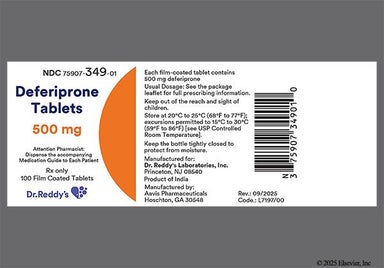
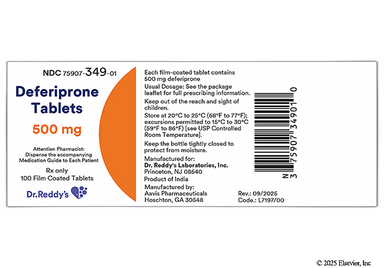
Deferiprone (Ferriprox) images