


The FDA Is Watching These 14 Drugs for Serious Side Effects
Every three months, the FDA reviews and publishes reports of adverse reactions from medications they’ve received through the FDA Adverse Event Reporting
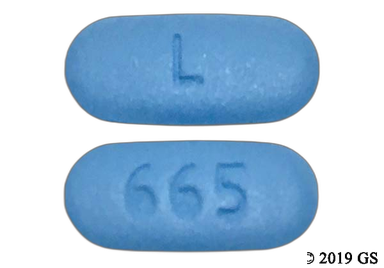
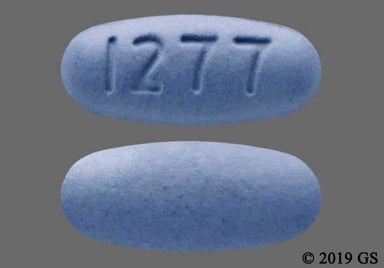
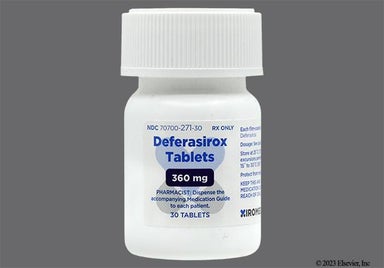
Deferasirox is an oral medication that gets rid of extra iron in your body from blood transfusions or certain blood conditions. It's taken daily, usually for a long time since it can take several months for iron levels to go down. Deferasirox is available in both generic and brand formulations. It comes in tablets (Jadenu), dissolvable tablets (Exjade), and granules (Jadenu Sprinkle). The most common side effects of deferasirox are belly pain, nausea, and diarrhea.

Chronic iron overload (high iron levels in the blood for a long period of time) in:
Deferasirox is a chelating agent. It attaches to iron in your blood and allows your body to get rid of the extra iron through stool.
| Common Brands | Exjade, Jadenu, Jadenu Sprinkle |
|---|---|
| Drug Class | Chelating agent |
| Controlled Substance Classification | Not a controlled medication |
| Generic Status | No lower-cost generic available |
| Availability | Prescription only |

The following side effects may get better over time as your body gets used to the medication. Let your healthcare provider know immediately if you continue to experience these symptoms or if they worsen over time.
These are common side effects for people who need blood transfusions. The three most common side effects for people with NTDT are nausea, rash and diarrhea.
Contact your healthcare provider immediately if you experience any of the following.
Along with its needed effects, a medicine may cause some unwanted effects. Although not all of these side effects may occur, if they do occur they may need medical attention.
Check with your doctor immediately if any of the following side effects occur:
Incidence not known
Black, tarry stools
bleeding gums
blood in the urine or stools
dark urine
decrease in the amount of urine
general feeling of tiredness or weakness
hives, welts, skin rash
large, hive-like swelling on the face, eyelids, lips, tongue, throat, hands, legs, feet, or genitals
light-colored stools
lower back or side pain
pale skin
puffiness or swelling of the eyelids or around the eyes, face, lips, or tongue
redness, soreness, itching of the skin
sores, blisters
stomach pain, continuing
unusual bleeding or bruising
unusual drowsiness, dullness, tiredness, weakness, or feeling of sluggishness
vomiting of blood or material that looks like coffee grounds
yellow eyes or skin
Other side effects not listed may also occur in some patients. If you notice any other effects, check with your healthcare professional.
Call your doctor for medical advice about side effects. You may report side effects to the FDA at 1-800-FDA-1088.




Deferasirox can cause some serious health issues. This risk may be even higher for certain groups. If this worries you, talk to your doctor or pharmacist about other options.
 For certain people with one of the risk factors, such as kidney problems or severe blood diseases, deferasirox can cause sudden kidney problems that might require dialysis. These problems can be life-threatening, leading to kidney failure and death. If you have any of the risk factors, please talk with your provider so they can decide how you can safely take deferasirox.
 You’ll need to get blood and urine tests done before you start treatment and while you take deferasirox so your provider can check your kidney health. If you or your child experiences vomiting, diarrhea, fever, or isn’t drinking fluids as often as usual during treatment, talk with your provider right away. You might need to stop deferasirox for a short period of time to prevent kidney problems. Please also talk with your provider if you or your child is urinating less than usual while taking deferasirox. This can be a symptom of kidney problems.
Deferasirox can cause liver problems that can be life-threatening. These problems are more common in older people and people with organ failure or cirrhosis of the liver (long-term liver damage). Liver failure can also happen in children who become severely dehydrated. If you have any of the risk factors, please talk with your provider so they can decide how you can safely take deferasirox.
You’ll need to get blood tests done before you start treatment and while you take deferasirox so your provider can check your liver health. If you or your child experiences signs and symptoms of liver damage, such as feeling sleepy, upper right stomach pain, yellowing of the skin or eyes, or dark urine, please talk with your provider immediately.
People who take deferasirox can experience stomach bleeding and ulcers. In older people with serious blood problems, stomach bleeding can be life-threatening. Some medications, such as nonsteroidal anti-inflammatory drugs (NSAIDs), corticosteroids, bisphosphonates, or blood thinners, can raise your risk of stomach bleeding. Tell your provider about all the medications that you take before starting deferasirox. If you have severe stomach pain, black and tarry stools, or blood in the urine while taking this medication, get medical help promptly.
Taking deferasirox can lower the level of blood cells in your body. This can sometimes be life-threatening, especially if you have other serious blood problems. Your provider will do blood tests to check your blood cell counts for these problems. Please let your provider know if you have signs and symptoms of bleeding and infection, such as frequent fever or nose bleeds that don't stop.
Sometimes, deferasirox can remove too much iron from the blood, which can cause harm to your kidneys and liver. To prevent this from happening, your provider will prescribe the lowest possible dose of deferasirox that works well for you. If you're receiving blood transfusions, your provider will check your iron levels, kidney health, and liver health through blood tests at least every month to make sure your dose is safe for you. If you have NTDT, your provider will check the iron levels in your blood every month and measure the iron levels in your liver at least every 6 months.
Deferasirox can sometimes cause rash and other severe skin reactions. If you have a mild or moderate rash, continue to take deferasirox and let your provider know. Oftentimes, the rash goes away on its own. If you have a severe rash or your rash gets worse, talk with your provider right away. You might need to stop taking deferasirox for a short period of time and restart at a lower dose after your rash is gone. If you have a rash with blisters on your lips, skin peeling, skin pain, mouth sores, or high fever, get medical help immediately and stop taking deferasirox.
People who take deferasirox can sometimes experience vision or hearing problems. These side effects are more common in children taking higher doses of deferasirox. You’ll need to get an eye exam and take a hearing test before starting deferasirox and once every year during treatment so your provider can make sure this medication is safe for you. If you experience hearing loss, difficulty hearing, cloudy, blurry, or dim vision, or see halos around lights while taking deferasirox, please talk with your provider right away.

The dose depends on which form of deferasirox you have and your body weight. Your provider will adjust your dose based on how much iron is in your blood.
Chronic iron overload due to blood transfusions:
Chronic iron overload in NTDT:
Please note:

Although certain medicines should not be used together at all, in other cases two different medicines may be used together even if an interaction might occur. In these cases, your doctor may want to change the dose, or other precautions may be necessary. When you are taking this medicine, it is especially important that your healthcare professional know if you are taking any of the medicines listed below. The following interactions have been selected on the basis of their potential significance and are not necessarily all-inclusive.
Using this medicine with any of the following medicines is usually not recommended, but may be required in some cases. If both medicines are prescribed together, your doctor may change the dose or how often you use one or both of the medicines.
Using this medicine with any of the following medicines may cause an increased risk of certain side effects, but using both drugs may be the best treatment for you. If both medicines are prescribed together, your doctor may change the dose or how often you use one or both of the medicines.

Contraindications are specific health conditions or situations in which a person should not take a medication due to safety concerns. If you have any of the following conditions or if any of the following apply to you, let your healthcare provider know because Deferasirox will not be safe for you to take.

Chronic iron overload (high iron levels in the blood for a long period of time) in:






Prescription savings
Stop paying too much for your prescriptions. Compare prices, get pharmacy coupons, and save up to 80%. Find expert answers to your health questions so you can make the best decisions for yourself and your family.
Health conditions
Medications & treatment
Access & affordability
Medication discounts

There are three formulations of Deferasirox available and each one has different directions. For example, Jadenu tablets or Jadenu Sprinkle granules should be taken on an empty stomach or with a light meal (less than 7% fat and about 250 calories), such as an whole wheat English muffin or 8 ounces of skim milk. On the other hand, Exjade dissolvable tablets should be taken on an empty stomach at least 30 minutes before food. Make sure to take all formulations of Deferasirox at the same time each day to be consistent and to make sure an effective amount of medication is in your body at all times. Ask your provider or pharmacist if you aren't sure which formulation of the medication you have.
Deferasirox hasn’t been studied in human pregnancies, but animal studies suggest that this medication can cause harm to both mother and baby if taken during pregnancy. Additionally, animal studies suggest that Deferasirox can be found in breast milk. And while it's unclear how it might affect breastfed babies, there's a risk that it can cause serious side effects, such as kidney or liver problems. Talk with your provider to discuss the benefits and risks of taking Deferasirox if you're pregnant or breastfeeding.
Deferasirox can cause hormonal birth control pills to not work as well. You should consider other methods of non-hormonal birth control while you're taking Deferasirox. Some options include condoms, spermicides, and a copper intrauterine device (IUD). Ask your provider which method of birth control is right for you during treatment.
It's best to avoid taking aluminum-containing antacids, such as Mylanta, while taking Deferasirox. Based on how it works, there's a chance that Deferasirox will attach to the aluminum in the heartburn medication. This means it won't work as well at removing the iron from your body. If you have heartburn, ask your provider what are some heartburn medications that you can take while you're receiving Deferasirox.
Deferasirox, deferoxamine (Desferal), and deferiprone (Ferriprox) are all medications that can treat chronic iron overload. One of the main differences between them is how they're taken. Deferasirox is taken by mouth one time daily. Deferiprone (Ferriprox) is taken by mouth as well, but typically 3 times daily. Deferoxamine (Desferal) is an injection, typically given as a slow injection under the skin over the course of 8 to 12 hours. There are also other differences amongst these 3 medications, such as side effects. Typically, your provider will choose a treatment for you based on different factors, such as how serious the iron overload is, which area(s) of the body the iron build up is located, cost, and your preference. Sometimes, your provider might prescribe 2 different iron-chelating medications for you at the same time. Please talk with your provider to determine which treatment option is best for you.
Yes, according to the American Society of Hematology, Deferasirox can be used by people with sickle cell anemia. This is because some people with sickle cell anemia might need blood transfusions to treat their condition. And regular blood transfusions can sometimes cause a buildup of iron in the body. In these cases, Deferasirox might be a good option to help lower iron levels in the body. If you have sickle cell anemia and are receiving regular blood transfusions, talk with your provider if you're concerned about iron overload.
