Key takeaways:
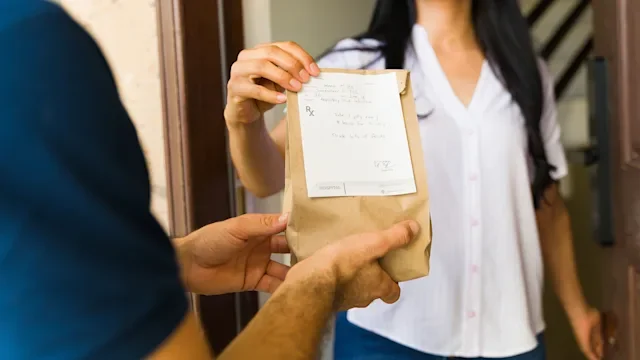
Your prescription number is a unique number that’s assigned to each prescription you fill at a pharmacy. It’s printed on the pharmacy label that’s attached to your medication bottle, and may be indicated with an “Rx” or a “No” before the number itself.
If you don’t have your medication bottle or can’t read the label, there are other ways to find your prescription number. Access your online pharmacy records, call the pharmacy directly, or contact your prescription insurance plan.
Your prescription number is helpful for refilling medications or for requesting transfers to another pharmacy. But in most cases, your pharmacy team can help you with any prescription needs, whether you can find your prescription number or not.
We’ve all been there — you’re down to your last couple of pills and pick up the phone to call in a refill to your local pharmacy. But then you realize that the prescription number has been rubbed off the label. What do you do?
Thankfully, GoodRx has you covered with some simple ways to locate your prescription number. And we’ll also answer some other common prescription-related questions to help you easily navigate any troubles that may arise.
1. Where can you find your prescription number?
The easiest place to find your prescription number is on the bottle your medication came in from the pharmacy. It will have a pharmacy label on it that includes a unique set of numbers for your prescription.
Search and compare options
In some cases, a second set of numbers may be included that represent the location where your prescription was filled. The store location number is usually separated from the prescription number by a dash, and it may come before or after the main prescription number. If you have more than one prescription from the same pharmacy, the store location number will be the same on both bottles. This should help you identify which part of the number on the bottle applies to the prescription and which applies to the pharmacy location.
In other cases, your prescription number may include a number showing how many times it’s been refilled. Or it may include the letter “C” or “N” to indicate it’s a controlled substance (narcotic).
Keep in mind that each time your prescriber sends the pharmacy a new prescription, the prescription number will change. So be sure you’re using the most recent bottle to call in a refill or access your account. If you use an old prescription number, it may not link to your most recent prescription. This is a good reason why you should dispose of old prescription bottles or expired medication on a regular basis.
Good to know: Do you have trouble reading the tiny print on your prescription label? Or do you have a preferred language other than English? Many pharmacies have large-print and alternate language options available for your prescription labels. Ask your pharmacy team about these options when you refill your next prescription.
Is an Rx number the same as a prescription number?
Yes. Sometimes, the label may have an “Rx” symbol before the prescription number. Rx is a common medical abbreviation for the word prescription, so it’s often used to save space. You may find the prescription number written in various different ways, including:
Rx: 1234567
Rx # 1234567
No: 1234567
It’s also often highlighted in yellow or another color to help make it easier to find on the label.
2. How can you find your prescription number without the medication bottle?
If you don’t have your medication bottle or can’t read the label, there are other ways to find your prescription number. These include:
Going to your pharmacy website: Many pharmacies allow you to access all of your prescription information online. You’ll likely need to register first, but after that, you’ll be able to access all of your prescription information, including the prescription number.
Calling the pharmacy: You can get your prescription information directly from the pharmacy staff. Be prepared to provide personal information (such as your birthday, address, and telephone number) to identify yourself. There are strict laws about sharing health information the pharmacy must follow. So these steps help protect your privacy, even if they seem excessive or annoying to you.
Contacting your prescription insurance provider: If you used commercial insurance to pay for your prescription, they should have your prescription number on file. You can call the customer service number on the back of your prescription insurance card. Most insurance providers also have a website you can use to access your records. You may be able to find your prescription number online once you’ve registered for an account.
3. How do you request a refill of your prescription?
There are four main ways you can request a prescription refill:
Online through the pharmacy website or smartphone app
Over the phone through an automated refill system
Directly speaking to someone at the pharmacy (either in person or on the phone)
Asking your prescriber to call in a new prescription to the pharmacy (if you’re out of refills on your current prescription)
In most cases, you’ll need your prescription number to use an automated refill system. It will also make it easier for the pharmacy team to locate your refill if you’re speaking to them directly. But they should still be able to locate your prescription even if you don’t have the number.
Some pharmacies are now offering refill services via text message. This can be a convenient option for many people, since you can avoid waiting on hold or remembering your online login information. The information required for this service varies depending on the pharmacy.
Good to know: If you’re taking medication every day for a chronic condition, such as diabetes, consider signing up for automatic refills. This allows your pharmacy to automatically refill your prescription when it’s due. And it can save you time and effort calling in your refill or looking for the prescription number every month. It can also help you stay more consistent with taking your medication. And this can improve your overall health. You can also ask your prescriber about getting a 90-day supply of your medication, so you’ll need refills less often.
4. How do you transfer a prescription to a different pharmacy?
The best way to transfer a prescription is to register with the new pharmacy, and then have them contact your old pharmacy.
Be sure to provide your personal information, including your prescription insurance, to the new pharmacy before the transfer happens. This will allow them to fill the prescription as soon as they receive it.
If possible, give your new pharmacy the following information for each prescription you’d like transferred:
The prescription number (this is helpful, but not usually necessary)
Medication name
Medication dose
How often you take it (once a day, twice a day, etc.)
The prescriber’s name and telephone number (so the new pharmacy can contact them if you’re out of refills or there’s any question about the prescription)
You may also be able to register with your new pharmacy and provide the above information online.
Keep in mind that the rules regarding transferring prescriptions can vary between states. And in many cases, controlled substances have stricter rules when it comes to transferring them. So be sure to ask your pharmacy team about the transfer rules for your area. In some cases, it may be easier to have your prescriber send a new set of prescriptions to the new pharmacy to start fresh. Just be sure to cancel any automatic refills at your old pharmacy first, to avoid any confusion.
5. What should you do if your medication is too expensive?
If your medication cost is more than you’re able to afford, don’t lose hope. There are several things you can try to lower your cost or find treatment at a more affordable price.
First, find out if the medication is covered by your prescription insurance. There may be additional steps, such as a prior authorization, that will allow your insurance to cover the medication. Manufacturer copay cards can also help lower your cost. You can also ask your insurance company if they cover a different medication that’s similar to the one you were prescribed. Then talk to your prescriber to see if it’s an option for you.
If you’re uninsured or underinsured, there are programs available to help you access your medications. These can include patient assistance programs and charitable pharmacies. GoodRx can help you save on the cost of your prescriptions with a free savings card or digital coupon. Many pharmacies also have a list of generic medications they offer at a reduced price, so ask your local pharmacy if they have a similar program.
The bottom line
Your prescription number is a unique number that’s assigned to each prescription you fill at a pharmacy. It’s on the pharmacy label attached to your prescription bottle, and may be indicated with “Rx” followed by a series of numbers. It’s a useful tool for requesting prescription refills or transfers to another pharmacy.
If you aren’t able to get your prescription number from the label on the bottle, there are other ways to find it. Access your online pharmacy account or contact your prescription insurance plan. Keep in mind that you can always call or visit your local pharmacy to get your prescription number or ask for help with any prescription needs you have.

Why trust our experts?



References
Federal Register. (2023). Transfer of electronic prescriptions for schedules II-V controlled substances between pharmacies for initial filling. National Archives.
Golob, A. L., et al. (2023). Automatic medication refills to improve glycaemic control among patients with diabetes and low medication adherence. BMJ Open Quality.
Ohashi K. (1995). [Memorandum on the origin of Rx, the signal be employed to the heading in the prescription]. Yakushigaku Zasshi.
Rise and Shine. (2023). How to read a prescription medication label. Children’s National Hospital.
The Rhode Ahead. (n.d.). How to read a prescription label. Blue Cross & Blue Shield of Rhode Island.
U.S. Department of Health and Human Services. (2022). Your rights under HIPAA.