cupric chloride
Copper (cupric chloride) is a nutritional supplement that provides copper to adults and children who can't get this essential mineral from food or drink. It's typically added to a parenteral nutrition bag that's infused through the veins. There aren't known side effects when it's used at normal doses, but too much copper can cause fatigue and irritability.


What is Copper (cupric chloride)?
What is Copper (cupric chloride) used for?
- Copper supplementation for people who need to get nutrition through the veins
How Copper (cupric chloride) works
Copper (cupric chloride) is a nutritional supplement that's used to raise copper levels in the body. Copper is an important mineral that helps your body make energy, blood vessels, and connective tissues. It also helps you maintain a healthy nervous and immune system.
Drug facts
| Common Brands | Copper |
|---|---|
| Drug Class | Nutritional supplement |
| Controlled Substance Classification | Not a controlled medication |
| Generic Status | No lower-cost generic available |
| Availability | Prescription only |

Side effects of Copper (cupric chloride)
The following side effects may get better over time as your body gets used to the medication. Let your healthcare provider know immediately if you continue to experience these symptoms or if they worsen over time.
Common Side Effects
See Risks and Warnings.
Copper (cupric chloride) serious side effects
Contact your healthcare provider immediately if you experience any of the following.
- Too much copper: nausea, vomiting, diarrhea, low muscle tone (floppy muscles), sensitivity to light, swelling in arms or legs, changes in behavior, fatigue, depression, irritability, trouble focusing, confusion
- Too much aluminum: weakness, tremor, speech problems, bone pain, seizures
The following Copper (cupric chloride) side effects have also been reported
Side effects that you should report to your care team as soon as possible:
- Allergic reactions—skin rash, itching, hives, swelling of the face, lips, tongue, or throat

Pros and cons of Copper (cupric chloride)
Pros
- Good option for people who can't get copper from food or drink
- No known side effects when it's taken at the recommended dose
Cons
- Only given to people who are getting IV nutrition
- Nutrition solution must be injected into the veins
- Contains aluminum, which can be dangerous for people with kidney problems or babies who were born too early (premature)

Pharmacist tips for Copper (cupric chloride)

- Before you get Copper (cupric chloride), let your provider know if you have Wilson's disease, a genetic problem that causes too much copper because your body can't remove extra copper. Copper (cupric chloride) isn't recommended for people with Wilson's disease because of the risk of copper overdose.
- Your provider will order your parenteral nutrition bags that have Copper (cupric chloride) at a dose that's safe for you. Talk to your provider if you have questions about what dose of Copper (cupric chloride) you should get.
- Mark your calendar with your appointments to see your provider and get any blood tests done on time. This makes sure your health is properly monitored while you get Copper (cupric chloride) through your IV nutrition.
- Don't take any other products containing copper unless your provider specifically said it's okay. Doing so can cause your copper levels to be too high.

Risks and warnings for Copper (cupric chloride)
Copper (cupric chloride) can cause some serious health issues. This risk may be even higher for certain groups. If this worries you, talk to your doctor or pharmacist about other options.
Toxicity from too much copper
- Risk factors: Liver problems | Wilson's disease
Too much copper in the body can lead to serious problems. In very severe cases, this can lead to kidney failure, heart failure, and even death. Seek medical help right away if you have symptoms of a copper overdose. This could look like changes in behavior, fatigue, depression, irritability, trouble focusing, or confusion. Too much copper can also cause nausea, vomiting, diarrhea, low muscle tone (floppy muscles), sensitivity to light, or swelling in the arms or legs. It's possible that you might need treatment with an antidote (reversal agent) like penicillamine to lower your copper levels.
As you get IV nutrition, your healthcare team will measure your copper levels and adjust your Copper (cupric chloride) dose as needed to check for your risk for copper toxicity. Make sure to not take any other copper-containing supplements unless your provider specifically said it's safe to do so. Also be sure your providers know if you have any liver problems or Wilson's disease because you're at higher risk of having copper toxicity.
Toxicity from too much aluminum
- Risk factors: Kidney problems | Babies who were born too early (premature)
Copper (cupric chloride) contains aluminum. Getting too much Copper (cupric chloride) can cause high blood aluminum levels. This can lead to aluminum toxicity, which can include nervous system or bone problems. Your provider might order blood tests to check your aluminum levels while you're taking Copper (cupric chloride), especially if you have kidney problems since you're at higher risk. Contact your provider if you notice any signs or symptoms of aluminum poisoning (e.g., weakness, speech problems, bone pain, seizures).

Copper (cupric chloride) dosage
Typical dosage for Copper (cupric chloride)
Copper (cupric chloride) is typically added to a parenteral nutrition bag. This bag contains essential minerals, vitamins, and other nutrients that gets infused through the veins (IV).
Your provider will determine the dose based on your copper levels.
- Adults: The typical dose is 0.5 mg to 1.5 mg per day.
- Children: The dose is based on body weight. The typical dose is 20 mcg/kg of weight per day.

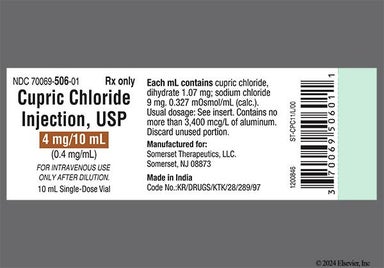
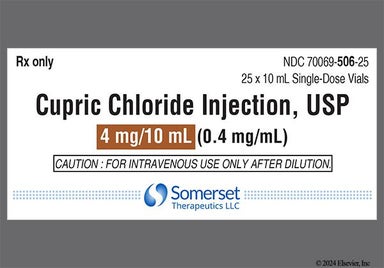
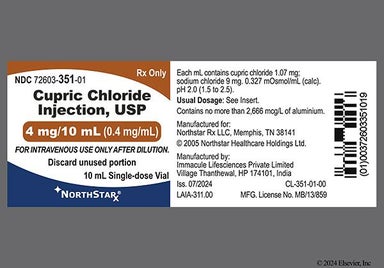
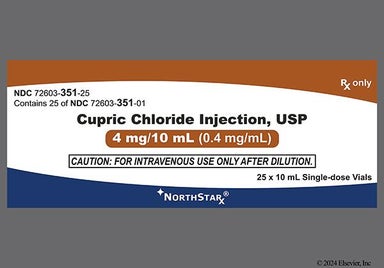
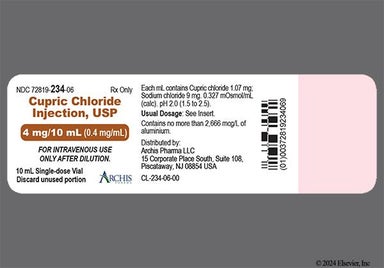
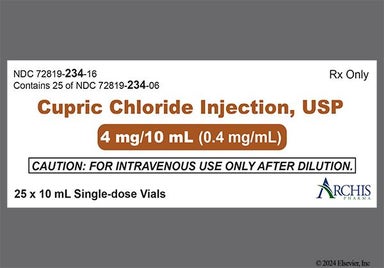
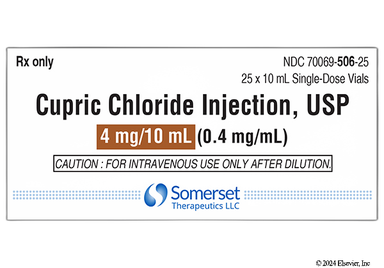
Copper (cupric chloride) images