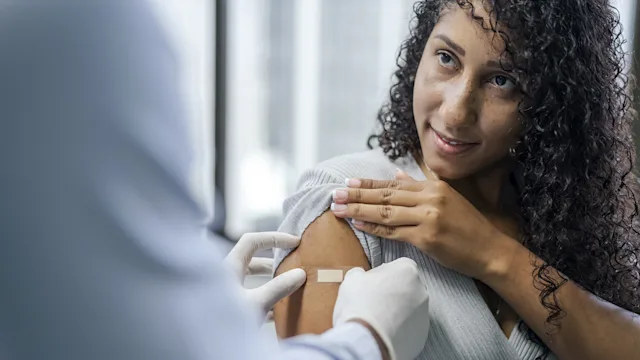
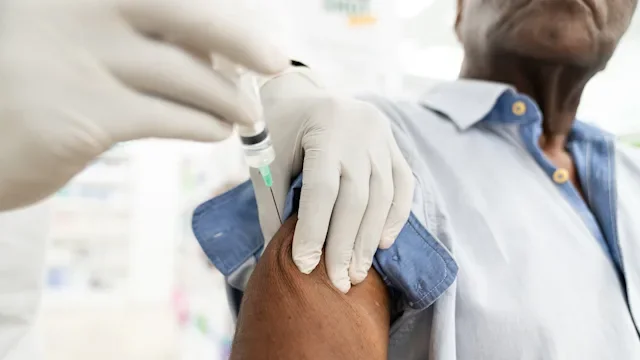
While most people who get the shingles vaccine don’t experience any significant side effects, it helps to know what might happen when you get your shot.
“Most individuals have nothing at all,” explains Stella Safo, MD, Primary Care Physician at Mount Sinai Hospital in New York City. “If they do experience something, [it’s usually] just some mild pain at the site of the injection.”
What are the most common side effects of the shingles vaccine?
Here are some of the possible side effects you may experience from getting the shingles vaccine:
Soreness at the injection site
Redness
Swelling
Fatigue
Fever
Upset stomach
What are tips to manage side effects from your shingles vaccination?
Safo says that while most people don’t need to change their schedules after they’ve had the shingles vaccine, she recommends that you don’t do anything vigorous like playing sports that day.
In addition, you can take acetaminophen (Tylenol) to deal with arm pain or fever resulting from the vaccine, as approved by your doctor. If you experience redness or swelling at the injection site, you can also apply ice to the area.
If you experience nausea after getting the shingles vaccine, it may help to avoid rich foods and alcohol for a while. You may want to stick to a bland diet such as the BRAT diet, which stands for bananas, rice, apples, and toast. This may help keep nausea from getting worse.
In some cases, it may be best to ask your doctor about medications to relieve side effects. “The symptoms shouldn’t be super intense, but if they are, your doctor can give a little bit of medicine to help with nausea, as well,” Safo says.
What are more serious reactions to the shingles vaccine?
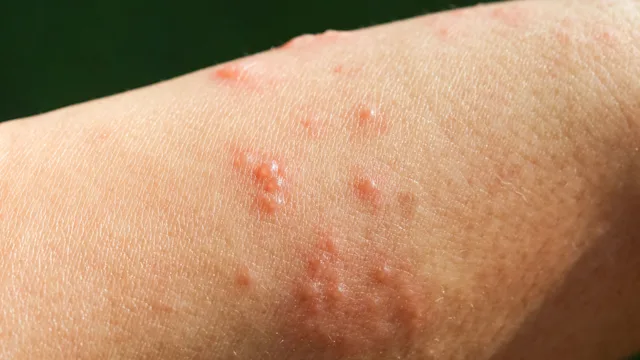
A rare number of people may experience allergic reactions to the shingles vaccine. Some signs to look out for include:
Difficulty breathing
Itchiness
Rash that covers your body and gets progressively worse
Anaphylaxis (tongue swelling and throat closing)
If you experience symptoms of an allergic reaction, call your doctor right away. If your allergic reaction includes anaphylaxis, go to the nearest emergency department right away.
Another very rare complication of the shingles vaccines is called Guillain-Barré syndrome. Symptoms include weakness and difficulty moving or going to the bathroom.
“It’s not something that we see very often, but you should be aware of the signs so you can get help if you’re at all concerned,” says Safo.
Is the shingles vaccine safe?
Safo adds that, despite the possibilities of rare complications, shingles is a very safe vaccine.
“[Shingles] is a condition that we don’t want individuals to get,” she says. “They can avoid it, and if you’re eligible, getting the vaccine from your doctor can keep you safe and protected.”
Stella A. Safo, MD, MPH, is an HIV primary care physician and assistant professor of Medicine at the Icahn School of Medicine at Mount Sinai Hospital.
References
Centers for Disease Control and Prevention. (2019). What you can expect after getting Shingrix vaccine.
Centers for Disease Control and Prevention. (2022). Shingles - For healthcare professionals - About the vaccine.
Centers for Disease Control and Prevention. (2023). Shingles vaccination.
GlaxoSmithKline. (2023). SHINGRIX (zoster vaccine recombinant, adjuvanted), suspension for intramuscular injection [package insert].
MedlinePlus. (2022). When you have nausea and vomiting.
National Institute of Neurological Disorders and Stroke. (2024). Guillain-Barré syndrome.

Why trust our experts?