Key takeaways:
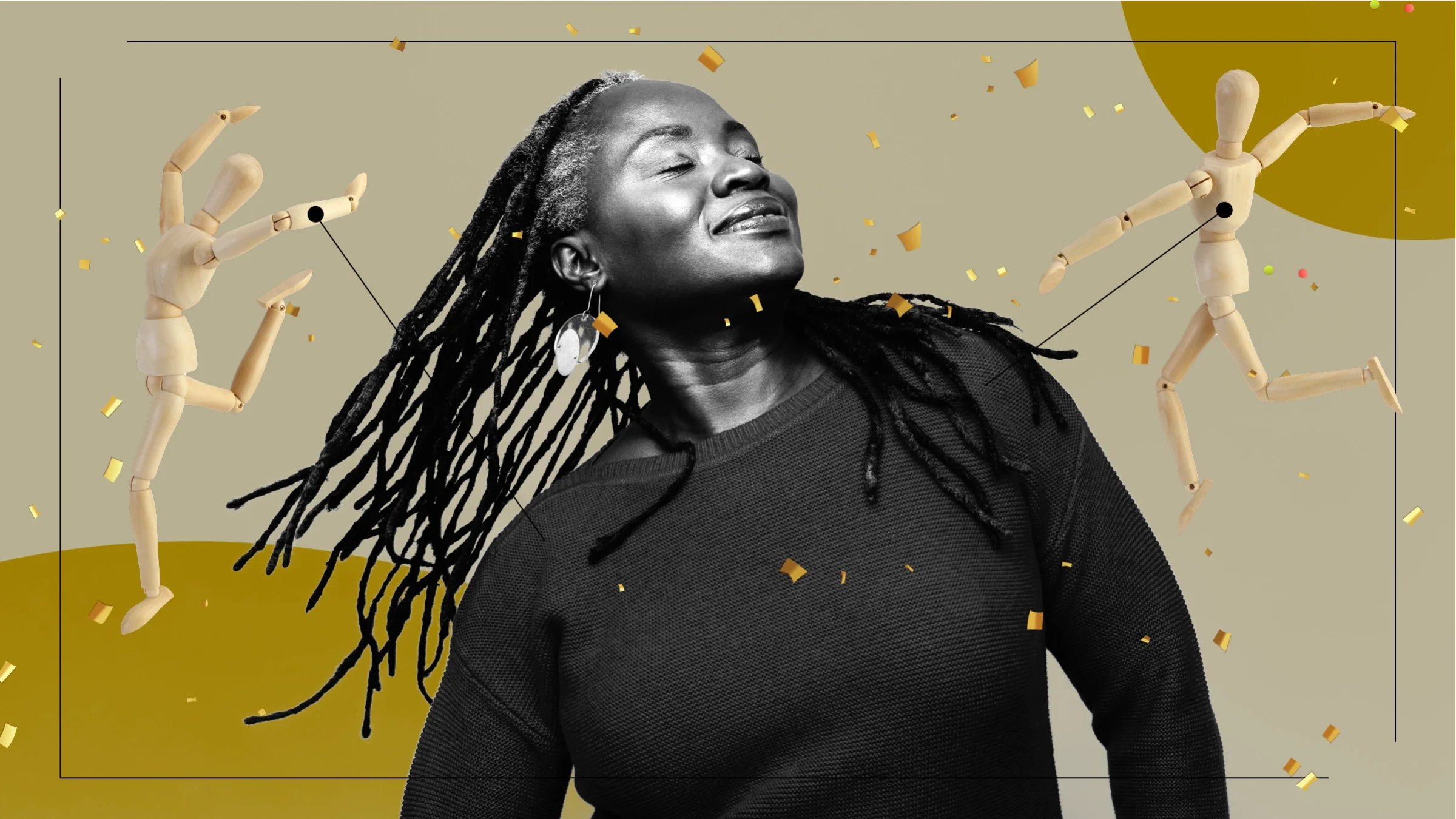
As the founder and director of a dance company, Mischwa Murphy-McAdams thought getting diagnosed with Parkinson’s disease (PD) would slow her down permanently.
Once she adapted to her medications, she took charge of the movement disorder by getting back to what she loved: moving her body by dancing.
Mischwa says returning to dance has restored her health and her spirit.
Mischwa Murphy-McAdams thought her 2019 Parkinson’s disease (PD) diagnosis was the end of her dancing career.
The 70-year-old California resident, who’d been directing a dance company focused on African, Jamaican, and Haitian dance, had stiff leg joints and one foot that dragged. Her right hand had lost its strength, and she could no longer beat a drum.
Mischwa says she was depressed and a “hot mess.” Her doctor prescribed her a starter dose of carbidopa / levodopa: a combination medication that treats Parkinson’s symptoms such as shakiness and slowed movement. Her doctor also recommended she start moving again.
Four months later, Mischwa was feeling so good that, at an event that included a dance presentation, she wrapped a red tablecloth around her waist and joined the performers. Two months later, she was teaching again.
“It was like my independence had been restored,” Mischwa says. “Dancing doesn’t cure PD, but it helps you feel mentally lifted and closer to your old self.”

Mischwa was thrilled to learn that, for decades, research has shown that regular dance classes can lessen Parkinson’s symptoms. She’d found a way to fight her diagnosis by doing something she already loved.
“I can feel the difference on the days that I move versus the days that I don’t move,” Mischwa says. “There’s such positive energy, and that’s made a huge difference.”
Signs of Parkinson’s disease include tremors, stiffness, and balance problems
PD is a progressive neurological disorder that affects movement. About 1 million people in the U.S. have PD, with about 90,000 people diagnosed each year, according to the nonprofit the Parkinson’s Foundation. More than 90% of people are diagnosed after age 50.
Common Parkinson’s symptoms include stiffness, shakiness, and lack of muscle control. There is no known cure, but there are prescription medications that address the symptoms.
Many people are familiar with the disease because of the advocacy done by actor Michael J. Fox, who announced his PD diagnosis in 1991 at age 29. In 2000, he founded the nonprofit The Michael J. Fox Foundation for Parkinson’s Research, which has donated more than $800 million to PD research.
How dancing made Mischwa feel like herself again
Not long after Mischwa’s diagnosis, before her medications curbed her symptoms, she tried a few funk dance classes at her gym and found herself feeling unsteady and unable to keep up. She didn’t go back and began to withdraw physically and mentally. But returning to the dance floor changed that.

“Ninety percent of [the positive effects of dance] is the collaboration, having a team of people who support you, who are there for one purpose,” Mischwa says. “Plus, you feel so joyful when you dance. The dopamine levels rise, and you have new confidence and positive energy.”
As Mischwa grew stronger, she began teaching again. She also added regular Pilates classes and strength training with resistance bands to her fitness routine.
“I feel like I am back with my people,” she says.
Today, she is the founder and artistic director of Bronze Girl Productions, which offers West African dance and drum workshops and performances. She encourages others with neurological conditions to take part, noting that recent research has shown that dance can also have positive effects for people with multiple sclerosis and Down syndrome.
Mischwa is still challenged by PD, but she’s learned how to deal with it, she says. When she can’t start a dance that calls for the left foot, she’ll use the right and catch up when she feels more in control. During a recent performance, she couldn’t drum because she couldn’t lift one of her arms. So she took an extra dose of her medication and was moving again within 15 minutes.
“You find work-arounds, and that comes with practice and time. You have to have plans A, B, and C,” she says. “You have to have a strong mindset.”

Why trust our experts?