Key takeaways:
There are two types of hypothyroid medications, natural and synthetic. Natural thyroid has been around for more than a century, while synthetic thyroid is newer.
The typical first-choice treatment for hypothyroidism is a synthetic thyroid medication, such as levothyroxine (Synthroid, Levoxyl, others). These products are widely available.
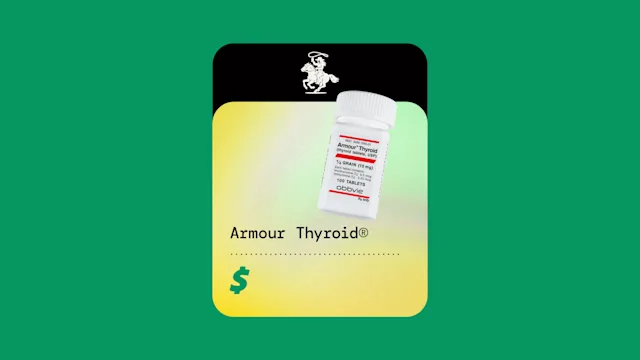
Natural thyroid medications — like Armour Thyroid — may cause more side effects than synthetic options. But some people still take them, either because they’ve been taking them for a long time or because synthetic medications like levothyroxine or liothyronine (Cytomel) haven’t worked well.
Save on related medications
If you’re living with hypothyroidism, taking a thyroid hormone replacement medication can help you feel better and keep your body working properly. The most common option today is synthetic thyroid — a type of human-made replacement hormone given as a tablet, capsule, or oral liquid. In 2000, the first synthetic thyroid medication was FDA approved. Before this, dried and ground thyroid glands from cows and pigs were the main treatment options.
Natural thyroid medications that come from pigs are still used today. They’re known as desiccated thyroid extract (DTE) medications. The safety, effectiveness, and quality of natural thyroid can be concerning, though. This is because the amount of hormone in every pill, unlike synthetic thyroid, can be different.
Here, we’ll discuss what to know about natural versus synthetic thyroid medications.
What are the different thyroid hormones?
The thyroid gland makes thyroid hormones that help your body use energy. These hormones keep the brain, heart, and other organs working as they should.
There are three main thyroid hormones to know about: thyroid-stimulating hormone (TSH), triiodothyronine (T3), and thyroxine (T4).
If you don’t have enough T3 or T4, you could have hypothyroidism. In this case, you may need to start a thyroid hormone replacement medication.
What are the different types of thyroid hormone replacement treatments?
According to the American Thyroid Association, hypothyroid medications are used to replace the function of the thyroid gland, which is no longer functioning normally. Synthetic and natural thyroid medications are available to treat an underactive thyroid.
Some medications have T4, others have T3, and a few have a combination of the two.
Synthetic T4
Levothyroxine (Synthroid, Levoxyl, others) is synthetic T4. It’s a first-choice treatment for hypothyroidism. This is because of its effectiveness, low cost, and infrequent side effects.
Levothyroxine is an FDA-approved, prescription-only medication. It’s usually taken once daily in the morning. For many people, taking levothyroxine by itself can raise thyroid levels back to normal.
One key thing to know is that brand and generic versions of levothyroxine make a difference. For example, if someone is taking brand-name Synthroid but they switch to generic levothyroxine (or vice versa), their hormone levels can be thrown off. For this reason, it’s recommended to take the same manufacturer’s version of this medication.
Levothyroxine side effects are few, but they can still occur. The most common side effects usually happen while you’re finding the right dose. You may temporarily show signs of hyperthyroidism — high thyroid hormone levels — when too much replacement thyroid is prescribed. Symptoms of hyperthyroidism can include:
Fatigue
Insomnia
Feeling too hot
Increased appetite
Weight loss
Synthetic T3
Liothyronine (Cytomel) is synthetic T3. It’s another option to treat hypothyroidism. Liothyronine is a prescription-only medication that’s taken once daily.
If levothyroxine isn’t effective, liothyronine may be tried as the next option. It’s sometimes used at the same time as levothyroxine, but there isn’t much evidence to support this use. Levothyroxine — synthetic T4 — is more effective than liothyronine because it can raise both T3 and T4.
If you take liothyronine, you shouldn’t switch between brand and generic versions of the medication. Like levothyroxine, it’s best to stick to one or the other.
Liothyronine’s side effects are similar to levothyroxine, as it may also cause symptoms of hyperthyroidism.
Natural thyroid medications
Natural thyroid medications have both T3 and T4. Common brand names are Armour Thyroid and NP Thyroid; there are no generic versions available. Natural thyroid medications are prescription-only and are taken once daily. Today’s natural thyroid medications come from the thyroid glands of pigs.
Natural thyroid medications are often used by people who started taking them a while ago. This is usually before levothyroxine or liothyronine were available. People may also take them if levothyroxine or liothyronine aren’t effective.
But, natural thyroid medications aren’t FDA approved. They aren’t recommended by the FDA or American Thyroid Association, either.
There are a few risks with natural thyroid medications, and they’re discussed more below.
What is the best type of hypothyroid treatment?
For most people with hypothyroidism, levothyroxine is the best treatment option. If levothyroxine isn’t working or if someone cannot take it, liothyronine would be next in line. Natural thyroid medications aren’t widely recommended for use.
Why isn’t it recommended to use natural thyroid medications?
Some people prefer natural thyroid medications over synthetics like levothyroxine. This may be because they’re natural animal-derived products.
But, natural thyroid medications aren’t FDA-approved and they haven’t been studied for safety and effectiveness. They’re still available because they’ve been on the market for awhile and have been grandfathered into use. All FDA-approved medications undergo intense testing for safety, quality, and efficacy. According to the FDA, quality issues and drug recalls can be common for natural thyroid medications.
It’s tough to make natural thyroid medications from pig thyroid glands. What’s more, quality controls aren’t required for unapproved medications. This means natural thyroid medications can have inconsistent doses between pills. Ultimately, inconsistent doses can lead to side effects or ineffectiveness. Your body is very sensitive to small variations in thyroid hormones.
Animals — including pigs — also have different amounts of thyroid hormones than humans. Humans need a certain balance of T4 to T3 (about 14 to 1), but natural thyroid medications have less T4 and more T3 (about 4 to 1). This can lead to side effects.
Side effects of natural thyroid medications are similar to synthetic medications, but they occur more frequently.
FDA news on natural thyroid medications
In August 2025, the FDA announced it would begin taking steps to address unapproved thyroid medications — specifically animal-derived products such as Armour Thyroid and NP Thyroid. The agency pointed to concerns about the safety, quality, and consistency of these medications.
The FDA notified medication manufacturers of its intent to take regulatory action against these medications. At the same time, it’s encouraging people who currently take a natural thyroid product to talk with their healthcare team about switching to an FDA-approved, synthetic thyroid option.
That said, people aren’t being asked to stop taking their medication immediately. The FDA stated that they're giving people time to make a safe transition.
How safe are thyroid hormone replacement treatments?
In general, the only safety concern with any thyroid replacement hormone is taking too much or too little. Levothyroxine and liothyronine offer consistent thyroid hormone doses. But initially finding the right dose may cause temporary side effects. As mentioned, natural thyroid medications can have more unpredictable doses.
It’s also ideal to take your thyroid medication first thing in the morning on an empty stomach. Take them about 30 to 60 minutes before breakfast and other medications. This is because thyroid medications may be less effective if you take them at the same time as food or other medications — especially if they contain iron, calcium, or magnesium.
Thyroid hormone replacement treatments are safe overall. But if you’re having problems with your thyroid medication, don’t stop taking it without talking to a healthcare professional first.
Frequently asked questions
Most thyroid medications, including natural and synthetic ones, remain active in the body for several days. For example, T3 products are usually cleared from your system in about 5 days, while T4 products can take around 35 days to be fully eliminated.
That said, even though thyroid hormones stay in your body for a while, know that missing doses can still disrupt your hormone balance. It's important to take your medication consistently as prescribed.
Yes, thyroid medications can lose potency over time. How much potency they lose depends on the specific medication and how it’s stored. Some products can lose up to 10% of their potency in as little as 9 months, while others remain stable for up to 2 years.
Researchers don’t know if long-term thyroid medication use can lead to dementia. Some studies suggest that there is an increased risk. But other studies actually show a decreased risk. Because the evidence is mixed and not conclusive, more long-term studies are needed before researchers can say for sure whether thyroid medications play a role in dementia.
Most thyroid medications, including natural and synthetic ones, remain active in the body for several days. For example, T3 products are usually cleared from your system in about 5 days, while T4 products can take around 35 days to be fully eliminated.
That said, even though thyroid hormones stay in your body for a while, know that missing doses can still disrupt your hormone balance. It's important to take your medication consistently as prescribed.
Yes, thyroid medications can lose potency over time. How much potency they lose depends on the specific medication and how it’s stored. Some products can lose up to 10% of their potency in as little as 9 months, while others remain stable for up to 2 years.
Researchers don’t know if long-term thyroid medication use can lead to dementia. Some studies suggest that there is an increased risk. But other studies actually show a decreased risk. Because the evidence is mixed and not conclusive, more long-term studies are needed before researchers can say for sure whether thyroid medications play a role in dementia.
The bottom line
Synthetic thyroid medications, such as levothyroxine (Synthroid, Levoxyl, others), are first-choice medications for treating hypothyroidism. They’re often preferred over natural thyroid products, such as Armour Thyroid, but both types are available for use.
To a certain extent, all medications can cause side effects or complications. But, compared to synthetic thyroid medications, natural thyroid medications may be less effective or cause more side effects due to potential dose differences in every pill. If you have any questions or concerns about your thyroid medication, speak with a healthcare professional.

Why trust our experts?




References
American Thyroid Association. (n.d.). Thyroid hormone treatment.
Han, S., et al. (2023). Association of thyroid hormone medication adherence with risk of dementia. The Journal of Clinical Endocrinology & Metabolism.
Harper, P. C., et al. (2009). Thyroid medication use and subsequent development of dementia of the Alzheimer type. Journal of Geriatric Psychiatry and Neurology.
Jenkins, J. K. (n.d.). NDA 21-210. Center for Drug Evaluation and Research.
Jonklaas, J., et al. (2014). Guidelines for the treatment of hypothyroidism: Prepared by the American Thyroid Association Task Force on thyroid hormone replacement. Thyroid.
Leung, A. M. (2013). Desiccated thyroid extract vs levothyroxine in the treatment of hypothyroidism. Clinical Thyroidology.
MedlinePlus. (2024). Thyroxine (T4) test.
MedlinePlus. (2024). Triiodothyronine (T3) tests.
MedlinePlus. (2024). TSH (thyroid-stimulating hormone) test.
Mylan Pharmaceuticals. (2025). Liothyronine sodium tablet [package insert].
U.S. Food and Drug Administration. (2015). FDA acts to ensure thyroid drugs don’t lose potency before expiration date.
U.S. Food and Drug Administration. (2023). Older therapies aren’t necessarily better for thyroid hormone replacement.
U.S. Food and Drug Administration. (2025). FDA’s actions to address unapproved thyroid medications.
Wilson, S. A., et al. (2021). Hypothyroidism: Diagnosis and treatment. America Family Physician.