Key takeaways:
A high potassium level in the blood can affect the way the heart beats. It can be a life-threatening condition if left untreated.
People at highest risk for a high potassium level are those with kidney disease. It’s rare to have high potassium if you have healthy kidneys.
A high potassium level often doesn’t cause any symptoms. So the best way to know your potassium level is with a blood test.
Save on related medications
Potassium is a critical electrolyte in your blood. It helps with things like nerve function, muscle contraction, and the way the heart beats.
You get potassium from the foods you eat. And the kidneys keep your potassium level in close check. They hold onto the amount you need and then get rid of any excess in the urine. But anytime the kidneys aren’t functioning properly, this process can go awry and lead to a buildup of potassium. A potassium level that’s too high is an emergency if it affects how your heart beats.
Here, we’ll explain what causes high potassium levels, the linked symptoms, and how it’s treated.
What is a normal versus high potassium level in blood?
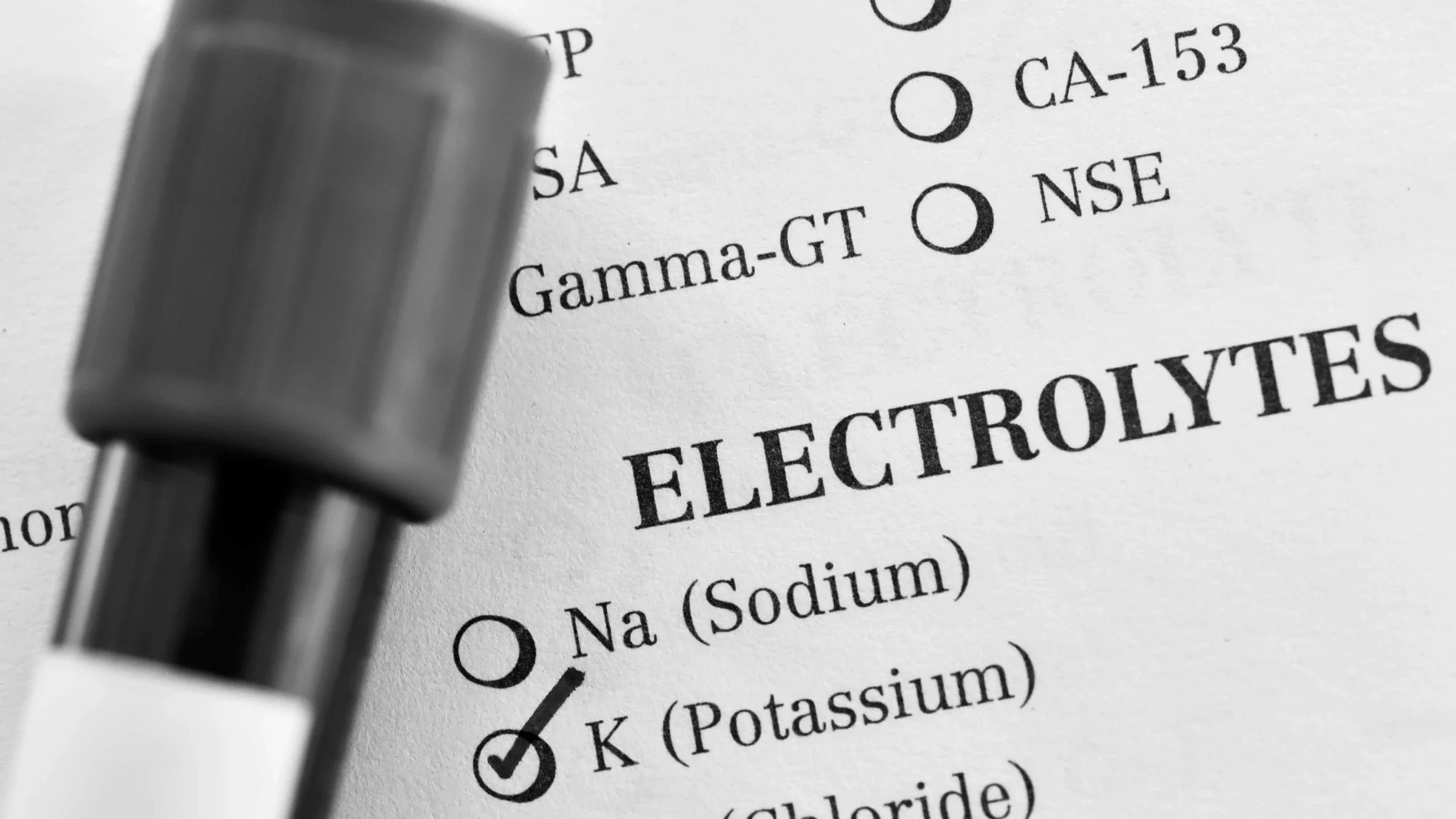
Potassium levels are measured with a routine blood test called an electrolyte panel.
A normal range of potassium is between 3.5 mEq/L and 5 mEq/L. A high potassium level — also called hyperkalemia — is anything above 5 mEq/L. A level above 6 mEq/L is considered severe, and it’s more likely to lead to serious health complications.
What are the symptoms of high potassium levels
A high potassium level often doesn’t cause symptoms. Most people don’t know their potassium level is high until they get a blood test.
Symptoms of high potassium are more likely if the potassium level is above 6 mEq/L. But when it comes to symptoms, the rate of change in the level is more important than the actual number. That’s because the body learns to adjust to higher potassium levels if the change is gradual.
In other words, someone is more likely to have symptoms if their potassium level increases from 5 mEq/L to 6 mEq/L in a matter of days. That’s compared to someone whose level gradually increases to 6.5 mEq/L over a matter of months.
Symptoms of a high potassium level might include:
Fatigue
Muscle weakness
Tingling or numbness
Nausea and vomiting
Palpitations
Loss of consciousness
In severe cases, high potassium levels can affect the way the heart beats. When the heart is affected, someone might experience palpitations. Or they may not notice any symptoms until their heart goes into a dangerous rhythm — which can cause them to lose consciousness and go into cardiac arrest.
This sounds scary. But keep in mind that this complication is rare. It only happens with very high potassium levels: usually over 7.0 mEq/L.
What causes high potassium levels?
The kidneys keep a close eye on the body’s potassium levels, so hyperkalemia is rare when the kidneys are functioning normally. If the kidneys aren’t functioning normally, they might not be able to remove extra potassium from the blood. This can lead to a buildup of potassium.
Chronic kidney disease (CKD) is a common condition, and decreased kidney function is one of the most important factors that can lead to high potassium. This is particularly true if:
Someone is dependent on dialysis to remove potassium from their blood
It has been too long since their last treatment
It can also occur when someone’s CKD progresses and they have a sudden decline in their kidney function.
Hyperkalemia also occurs when someone’s kidney function is stable but something else happens in the body. Things that can suddenly increase the amount of potassium in the blood include:
Rapid cell breakdown: Every cell in the body stores potassium inside it. So, anything that causes many cells to die at once can leak large amounts of potassium into the blood. This includes things like traumatic injuries or burns, infection, cancer, chemotherapy treatments, or certain blood disorders that lead to destruction of red blood cells.
Medications: Some medications can affect the kidneys’ ability to remove potassium from the body. Common examples include angiotensin-converting enzyme (ACE) inhibitors (like lisinopril), aldosterone receptor blockers (like losartan), and potassium-sparing diuretics (like spironolactone).
Conditions that make the blood too acidic: High amounts of acid in the body will pull potassium out of cells and into the blood. This can happen with serious conditions like diabetic ketoacidosis or sepsis.
Too much potassium in the diet: Potassium supplements or potassium-rich foods can raise potassium levels, especially in people who have kidney disease.
How do you treat high potassium levels?
A mildly elevated potassium level may not require emergency treatment, especially for someone whose potassium level tends to run on the higher side. Treatment may only include close monitoring and addressing the reason it may have slightly increased. This could be as simple as rehydrating or stopping a certain medication.
A very high potassium level is a medical emergency — especially if it’s putting someone at risk of a heart arrhythmia. Treatment usually involves three steps, which must be done in an emergency room (ER) or hospital:
Prevent any life-threatening heart rhythms
Lower the potassium level in the blood as quickly as possible
Remove excess potassium from the body
To prevent life-threatening rhythms, someone will often get a dose of calcium through an intravenous (IV) line. The calcium helps stabilize the heart rhythm and prevent any arrhythmia, while other medications work to get the potassium level down.
After calcium treatment, the next step typically includes medications that quickly pull potassium out of the blood. These medications include:
Insulin
Albuterol
Sodium bicarbonate
After medications help to pull the potassium out of the blood, the final treatment step is to remove it from the body. There are several different ways to do this:
Diuretic medications: These common medications, like furosemide (Lasix), can help the kidneys get rid of the excess potassium from the body through urine.
Dialysis: If someone’s kidneys are completely shut down (or they’re already dependent on dialysis treatments), dialysis is the most effective way to remove potassium stores in the body.
Frequently asked questions
The only way to quickly lower your potassium level is with treatment in an emergency room (ER) or hospital. This includes medications that can quickly remove potassium from the blood, so that it doesn’t affect the heart. This is usually followed by diuretics or dialysis to get the potassium out of the body.
Whether or not you should drink water for a high potassium level depends on the causes. If your potassium level is high because you’re severely dehydrated, then drinking water may help. But for other causes of high potassium, drinking more water may not help. And for some people with kidney disease, drinking too much water can actually be harmful.
So, it’s important to work closely with your healthcare team to figure out the best way to lower your potassium level.
Potassium isn’t necessarily bad for the kidneys. In fact, a normal potassium level in the blood helps the kidneys function. But if you have kidney disease, your kidneys may not be able to get rid of potassium normally. This means that high loads of potassium — like from a supplement or potassium-rich foods — can overwhelm the kidneys and lead to high potassium levels.
The only way to quickly lower your potassium level is with treatment in an emergency room (ER) or hospital. This includes medications that can quickly remove potassium from the blood, so that it doesn’t affect the heart. This is usually followed by diuretics or dialysis to get the potassium out of the body.
Whether or not you should drink water for a high potassium level depends on the causes. If your potassium level is high because you’re severely dehydrated, then drinking water may help. But for other causes of high potassium, drinking more water may not help. And for some people with kidney disease, drinking too much water can actually be harmful.
So, it’s important to work closely with your healthcare team to figure out the best way to lower your potassium level.
Potassium isn’t necessarily bad for the kidneys. In fact, a normal potassium level in the blood helps the kidneys function. But if you have kidney disease, your kidneys may not be able to get rid of potassium normally. This means that high loads of potassium — like from a supplement or potassium-rich foods — can overwhelm the kidneys and lead to high potassium levels.
The bottom line
A high potassium level in the blood can be a serious condition. Fortunately, the kidneys are really good at keeping potassium at the right level. But people with decreased kidney function often need to monitor their potassium level, particularly if they start new medications or develop other medical conditions that may affect their kidneys. If potassium levels do get too high, there are medications and treatments that can quickly bring them down to a normal level. It’s best not to delay medical attention in these circumstances.

Why trust our experts?



References
National Kidney Foundation. (2023). Potassium in your CKD diet.
National Kidney Foundation. (2025). High potassium (hyperkalemia).
Simon, L. V., et al. (2025). Hyperkalemia. StatPearls.