Key takeaways:
Hemorrhoids can be uncomfortable. But they usually go away on their own after a few days. This is especially true for smaller hemorrhoids.
For bigger or more severe hemorrhoids, tips like treating constipation and avoiding sitting for long periods of time can help you heal faster.
In some cases, hemorrhoids will go away and come back. Or they can get bigger and worsen. If your symptoms are getting worse rather than better after 7 days, it may be time to talk to a healthcare professional.
If you’ve ever had a hemorrhoid, you know how uncomfortable they can be. They can make it painful to poop or even sit. They also can be itchy. No matter what your symptoms, you probably want them to go away fast. The good news is that they usually go away on their own.
Let’s take a closer look at how long it usually takes for hemorrhoids to go away, things you can do to help speed up the process, and when it’s time to see a healthcare professional.
How long do hemorrhoids last?
Hemorrhoids are usually temporary and can go away within a few days or last for weeks. This is true whether or not you use at-home treatment. How long it takes for hemorrhoids to go away depends on the grade and severity of the hemorrhoid:
Grade 1: Hemorrhoids remain inside the anus and aren’t visible. They may cause mild itching or bleeding, but they usually aren’t painful. Most grade 1 hemorrhoids resolve on their own within a few days to a week.
Grade 2: Hemorrhoids push through to the outside of the anus during a bowel movement but shrink back inside on their own. They may cause discomfort or light bleeding. Grade 2 hemorrhoids typically resolve within 1 to 2 weeks with at-home care.
Grade 3: Hemorrhoids push through the anus and need to be pushed back inside manually. They can cause more significant pain, bleeding, and a feeling of fullness or pressure in the rectum. Grade 3 hemorrhoids may take several weeks to resolve and often require treatment beyond basic home remedies.
Grade 4: Hemorrhoids stay outside the anus and can’t be pushed back in. They can cause significant pain and discomfort. Grade 4 hemorrhoids are unlikely to go away on their own and usually require a procedure or surgery.
Search and compare options
What home remedies help get rid of hemorrhoids?
Here are some things you can do at home to help your hemorrhoids go away faster:
Avoid straining. Try to avoid pushing down too hard when stooling. This puts pressure on your bottom, which in turn can make your hemorrhoids worse.
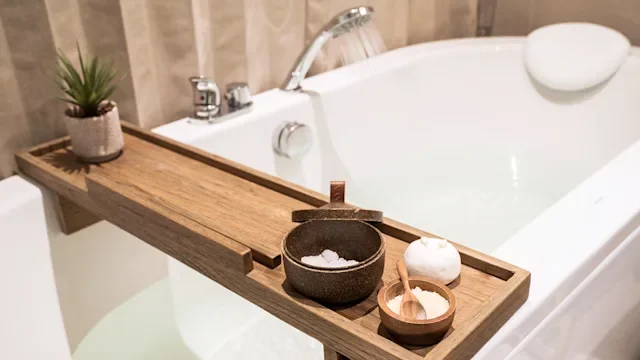
Take sitz baths. Sitz baths are shallow, warm water baths that you can use to soak the area around your bottom. This can help soothe the irritation from hemorrhoids.
Eat more fiber. Fiber can help with constipation, making it easier to pass stool without having to strain.
Use laxatives if necessary. If you’re constipated, taking laxatives can also help you soften and pass stool.
Stay hydrated. Getting enough fluid is important if you’re increasing your fiber or using laxatives. This will help keep your stool soft.
Avoid sitting for long periods of time. Sitting for long periods of time — especially on hard surfaces — can worsen hemorrhoids. This is especially true for hemorrhoids that are more external in position.
Avoid holding your stool in. This will also put increased pressure on the hemorrhoid, making it worse.
Stay active. Exercising regularly can help you pass stool more often and avoid constipation.
Take over-the-counter (OTC) topical treatments. These can help relieve pain and irritation caused by hemorrhoids. This includes Preparation H products, witch hazel used in Tucks pads, and hydrocortisone suppositories.
It’s also OK to not use any at-home treatments, especially if your hemorrhoid is small and not bothering you. It’ll likely go away on its own.
Do hemorrhoids go away on their own?
Sometimes, minor hemorrhoids go away on their own or with OTC at-home treatment. In some cases, larger hemorrhoids may not go away on their own. And they can cause more problems than just pain and discomfort. If they don’t go away on their own and worsen significantly, they can lead to complications, such as:
Anemia: Sometimes, the blood loss from hemorrhoids is severe enough to cause anemia or a low red blood cell count. This can lead to feelings of tiredness, dizziness, headaches, shortness of breath, or a fast heart rate. These symptoms can be a sign that you’re losing too much blood for your body to keep up.
Strangulation: This is when the blood supply to the hemorrhoid gets cut off. It can cause significant pain. And it can be dangerous because the tissue around the hemorrhoid can die. Blood clots may develop in the hemorrhoid.
Thrombosis: Thrombosed hemorrhoids are filled with clotted blood. They can burst and bleed, which can be painful. And you’ll need a procedure to remove the hemorrhoid. If this happens on external hemorrhoids, it can sometimes leave extra skin (skin tag).
But these complications are rare. A healthcare professional may need to do a procedure to stop any bleeding or remove the hemorrhoid.
When should you seek care for hemorrhoids?
You should see a healthcare professional for hemorrhoids if you experience:
Symptoms that last longer than 7 days
Extreme pain in or around the rectum
Significant amounts of bright red blood coming from your rectum
Feelings of lightheadedness or dizziness or any fainting episodes
Unintended weight loss
Fever
If you still have discomfort after trying at-home treatments, talk to a healthcare professional. You can discuss other treatment options that may improve your hemorrhoids and make going to the bathroom less stressful.
Frequently asked questions
Hemorrhoid flare-ups happen when increased pressure in the veins around the rectum causes them to swell. Common triggers include:
Straining during bowel movements
Chronic constipation or diarrhea
Sitting on the toilet for long periods
A low-fiber diet
Dehydration
Pregnancy can also trigger flare-ups due to the added pressure the uterus places on the rectal veins. Reducing these triggers can help prevent flare-ups from recurring.
In most cases, bleeding from a hemorrhoid isn’t life-threatening. Hemorrhoid bleeding typically occurs in small amounts (often a few drops on the toilet paper or into the toilet bowl). In very rare cases, prolonged or heavy bleeding can lead to anemia. But other conditions can cause rectal bleeding too. You should always seek medical attention if you notice rectal bleeding. This allows a healthcare professional to figure out the cause and best treatment for your symptoms.
Mucus discharge from hemorrhoids is most common with internal hemorrhoids that have prolapsed, or slipped outside the anus. The best way to stop the discharge is to treat the underlying hemorrhoid. Keeping the anal area clean and dry can also help manage discomfort from the discharge. If the discharge is persistent or accompanied by pain, bleeding, or a foul odor, it's worth seeing a healthcare professional for an exam.
Hemorrhoid flare-ups happen when increased pressure in the veins around the rectum causes them to swell. Common triggers include:
Straining during bowel movements
Chronic constipation or diarrhea
Sitting on the toilet for long periods
A low-fiber diet
Dehydration
Pregnancy can also trigger flare-ups due to the added pressure the uterus places on the rectal veins. Reducing these triggers can help prevent flare-ups from recurring.
In most cases, bleeding from a hemorrhoid isn’t life-threatening. Hemorrhoid bleeding typically occurs in small amounts (often a few drops on the toilet paper or into the toilet bowl). In very rare cases, prolonged or heavy bleeding can lead to anemia. But other conditions can cause rectal bleeding too. You should always seek medical attention if you notice rectal bleeding. This allows a healthcare professional to figure out the cause and best treatment for your symptoms.
Mucus discharge from hemorrhoids is most common with internal hemorrhoids that have prolapsed, or slipped outside the anus. The best way to stop the discharge is to treat the underlying hemorrhoid. Keeping the anal area clean and dry can also help manage discomfort from the discharge. If the discharge is persistent or accompanied by pain, bleeding, or a foul odor, it's worth seeing a healthcare professional for an exam.
The bottom line
Talking about hemorrhoids — or anything to do with your bottom — can feel embarrassing. The good news is that hemorrhoids tend to go away on their own, especially if they’re small. If they stick around, you can use at-home remedies to help relieve them in a few days or weeks. Work with a healthcare professional to figure out the right treatment if you don’t see any improvements to your symptoms.

Why trust our experts?




References
American Society of Colon and Rectal Surgeons. (n.d.). Hemorrhoids: Expanded information.
National Heart, Lung, and Blood Institute. (2022). What is anemia?
National Institute of Diabetes and Digestive and Kidney Diseases. (2016). Symptoms & causes of hemorrhoids.
Sandler, R. S., et al. (2019). Rethinking what we know about hemorrhoids. Clinical Gastroenterology and Hepatology.
Slauf, P., et al. (2014). Complications of hemorrhoids. Rozhledy v Chirurgii: Mesicnik Ceskoslovenske Chirurgicke Spolecnosti.
Sugerman, D. T. (2014). Hemorrhoids. Journal of the American Medical Association.