Key takeaways:
Diabetes devices have been helping people manage their condition for years. And they keep getting better in an effort to make life with diabetes easier.
Insulin pens, insulin pumps, and blood glucose (blood sugar) monitoring devices are the most common diabetes devices used today.
Additional diabetes devices are in development. A few examples include improved automated insulin delivery systems, better continuous glucose monitors, and smarter foot ulcer sensors.
Diabetes is pricey to manage. And it can take a toll on your health over time. Reports suggest that people living with diabetes spend roughly 2 times more on their healthcare compared with people without diabetes.
With these imbalances in mind, researchers are looking into ways to make managing diabetes simpler and more affordable. Digital health technologies are at the center of this effort. Many diabetes devices are already available, but others will likely pop up in the near future.
What types of diabetes devices are currently available?
Diabetes devices are designed to help make living with diabetes more convenient. Many devices are already available for you to use.
Glucometers
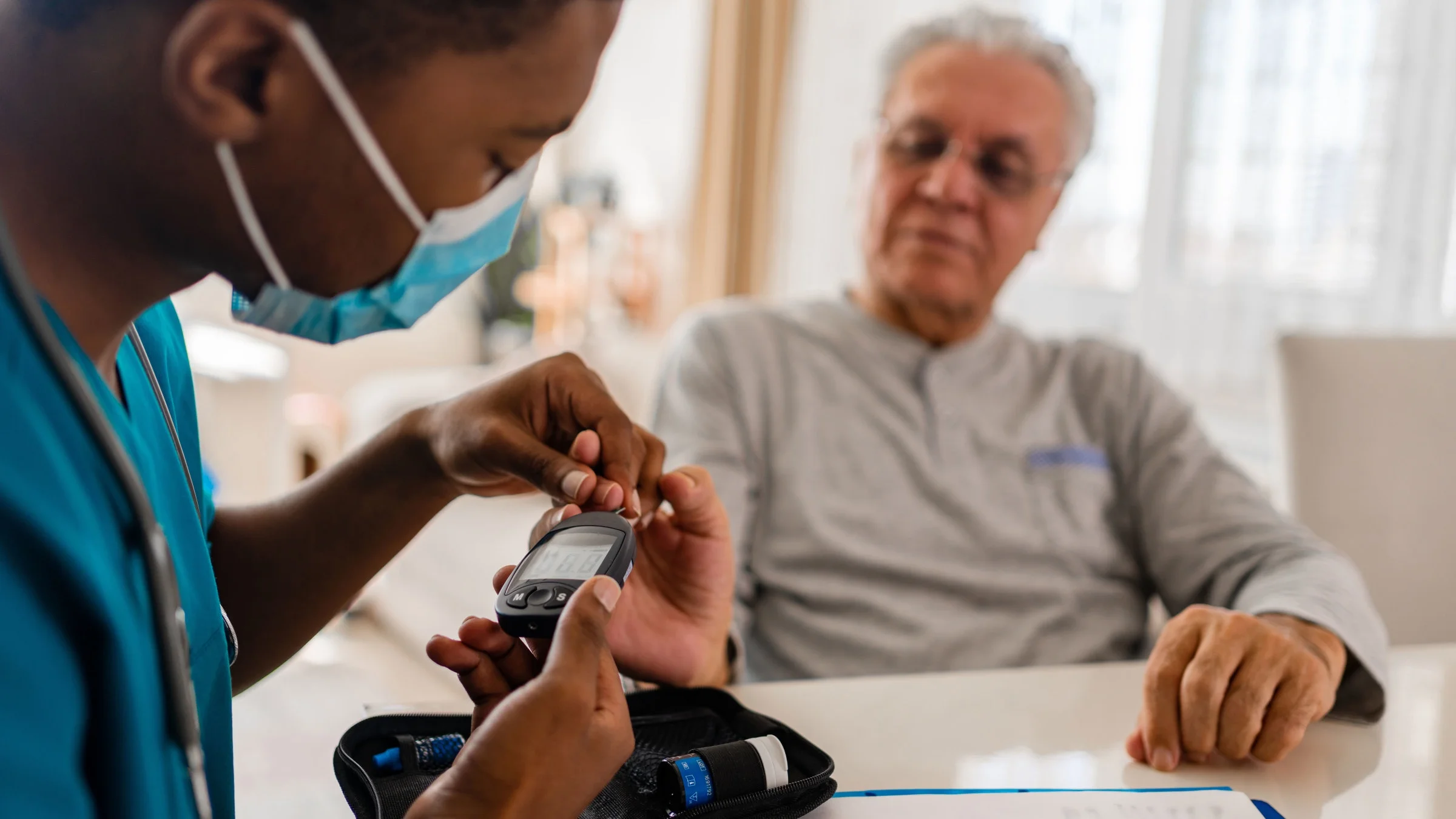
A blood glucose meter (glucometer) is a small device that you use to check your blood glucose (blood sugar) levels at a single moment. To use it, you prick your finger with a lancet to get a drop of blood. Then place the blood on a test strip that goes into the meter. In a few seconds, the glucometer measures the amount of sugar in the blood and shows the result on the screen.
Glucometers are useful for checking your blood sugar before and after meals. You can also use them when you have symptoms of high or low blood sugar or to track patterns over time.
Continuous glucose monitors
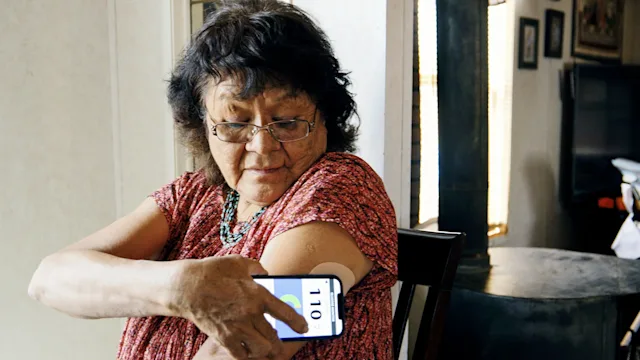
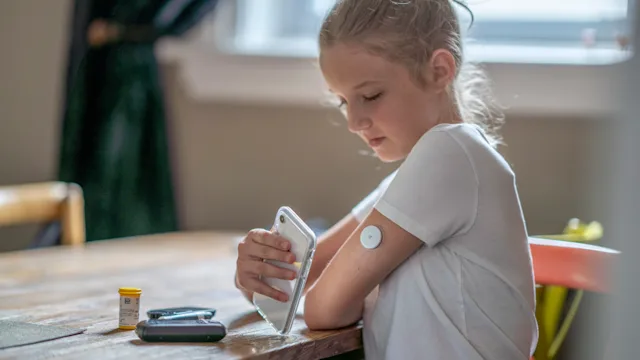
A continuous glucose monitor (CGM) is a small device that you wear; it tracks glucose levels around the clock. CGMs have a sensor that you place right under the skin, with a sticky patch that helps it stay in place. You usually apply it on your abdomen (belly) or the back of your arm using a small applicator. The sensor checks glucose levels in the fluid in your tissues. Then it sends updates to your receiver, smartphone, or insulin pump every few minutes. This way, you can track how your readings change over time.
Some CGMs also send alerts if your glucose gets too high or too low. They can better help you manage your meals, exercise, and insulin doses. They can also help reduce or eliminate the need for finger sticks.
Insulin pens
Insulin pens are an alternative to using an insulin syringe and vial. They’re a convenient and easy solution for injecting insulin.
Different types of insulin pens are available to help deliver a consistent amount of insulin with every dose. Some smart insulin pens (“connected insulin pens”) have sensors that connect them to a smartphone app. This can keep track of when, and how much, insulin you’ve injected.
Insulin pumps
An insulin pump is a wearable insulin delivery device. After it’s programmed to meet your needs, it delivers small amounts of insulin throughout the day. In some situations, though, you’ll need to tell the pump to give insulin. You may need to do this when you eat or if your blood sugar is out of range.
Some people with Type 2 diabetes use insulin pumps, but they’re more commonly used by people with Type 1 diabetes.
Smart insulin pens
Smart devices that can attach to insulin pens, such as Bigfoot Unity, are available too. They connect your insulin pen to an app that tracks your insulin usage.
Automated insulin delivery (AID) system
Automated insulin delivery (AID) systems are newer devices. They work by sensing changes in glucose (with a CGM) and adjusting the amount of insulin that’s given (with an insulin pump). This helps avoid blood sugar levels that are too high or low.
AID systems are sometimes referred to as an artificial pancreas or a bionic pancreas. There are three types of AID systems available. They differ based on how much work they do for you:
Open-loop systems are fully user controlled. This means you must check your blood sugar, decide on your insulin dosage, and make adjustments yourself. An example is a traditional insulin pump.
Closed-loop systems are fully hands-off (automated). The AID works on its own to manage your insulin without your input. The iLet Bionic Pancreas is an example of a closed-loop system.
Hybrid systems are partly user controlled. The AID might adjust your insulin, but you still need to enter certain things. This might include details about meals or changes in your daily activity. An example of a hybrid system is the Omnipod 5.
How do you choose the best diabetes monitoring device for your needs?
Choosing the best diabetes devices for you depends on your medications, comfort level, and preferences. When picking a diabetes device, you might want to think about:
How often you would want to check your blood sugar
If you want fewer finger pricks
Whether you’re comfortable wearing a device on your body
How visible you would want the device to be
Your comfort level using a smartphone app
Whether you prefer automatic insulin adjustments or you like to stay in control
These are just a few factors that can help you and your healthcare team decide on a device. Check out the ADA Consumer Guide to learn more about glucometers, CGMs, and other devices.
While CGMs are preferred glucose monitoring devices, they’re not available for everyone. Out-of-pocket cost and insurance coverage problems can make them unaffordable.
When it comes to insulin, pens and pumps are go-to choices. They are widely available and can help simplify insulin administration.
AID devices are relatively new to the market. AID devices have helped reduce the emotional burden of diabetes, but they’re still being improved by researchers. More on this below.
What are the biggest shortcomings of current diabetes devices?
Current diabetes devices are beneficial in many ways. But there’s still room for improvement. These are some common shortcomings among many diabetes devices.
Access and affordability: If you have health insurance, it may not cover your device. Or you may need a prior authorization to get it.
Data issues: Smart devices need to be able to connect to your smartphone. For example, some CGMs rely on a smartphone app to share data. This is a barrier if you don’t have a smartphone or high-speed internet.
Treatment delays: CGMs measure sugar in your body’s tissues, not blood. This creates a delay in treating high and low blood sugar.
Everyday life challenges: People living with diabetes face issues every day. Devices can lose their charge, stop working, or lose connection. Sites can also become bent or clogged, and a device’s tape could lose its adhesive.
Which diabetes devices may be cleared or authorized in the near future?
Today diabetes devices are focused on glucose monitoring and insulin management. But newer technologies are aiming to make this management process better and more convenient. Some of the top prospects are described below.
1. Automated insulin delivery (AID) system evolution
AID devices have become smarter and easier to use over time. For example, the iLet Bionic Pancreas requires only your body weight to get started. Once it’s ready, it automatically calculates and delivers all insulin doses for you. You don’t have to make any manual insulin adjustments or changes to the settings. You do have to tell the pump when you’re eating, though.
Researchers are still trying to make AID systems more hands-off. This way, they can handle most of the work for you. And when paired with faster-acting insulin, these AID devices can help keep blood sugar levels more stable.
2. Better CGM devices
Most CGM devices are worn on the arm, stomach, buttocks, or legs. They last 1 to 2 weeks, depending on the device. But some of the newer CGM devices can last much longer.
Longer-lasting sensors mean fewer changes and more convenience for the people who use them. One example is the Senseonics Eversense E3. It’s implanted under the skin and lasts for up to 6 months. What’s more, the Senseonics Eversense 365 is the first CGM in the U.S. that can be worn for up to a full year.
Some companies are now developing needle-less CGM devices that can be worn on the eye or as an ear clip. There are also smartwatches in the works, but these devices are in the early stages of development.
There’s a push for CGM devices that take less effort to wear and last longer per use.
3. Smarter insulin pens
More insulin pens are being developed that have smart components built in or added on. They aim to make tracking insulin easier and more convenient.
One newer device is the Mallya. It’s a smart cap for insulin pens that clips onto certain insulin pens. This makes them smart devices without needing a special pen. The Mallya device automatically records your dose and the date and time it was administered. It also syncs data in real time to your phone app. This allows you and your healthcare team to monitor your insulin use remotely.
The Mallya device stands out because it works with both insulin pens and glucagon-like peptide-1 (GLP-1) receptor agonist pens; many other smart caps do not. But it doesn’t have the ability to connect to a CGM or suggest how much insulin to use. So you might not prefer it if you need help calculating your insulin doses or would like feedback from a CGM.
The Mallya device was cleared by the FDA in December 2022. But it is not available for purchase in the U.S. yet.
4. Oral insulin
Researchers have been working on insulin that can be taken by mouth. These efforts have been unsuccessful so far, but research is still underway.
One company, Oramed, is working on an oral insulin capsule. The company announced in January 2023 that its phase 3 clinical study did not meet its main goal. Yet Oramed found a group of participants who responded well to the product. As a result, Oramed plans to restart a phase 3 study in the U.S. under different conditions.
5. Insulin patches
Smart insulin patches are in the early stages of development. These wearable skin patches aim to painlessly deliver insulin into your body.
A few insulin patches, such as V-Go and CeQur Simplicity, are already available. Current insulin patches are devices that look similar to an insulin pump, but they work a bit differently. They deliver fast-acting insulin for meals and to manage high blood sugar levels without injections.
More insulin patches may be available in the future. Upcoming patches may be even more simple. They could function in a similar way to products such as nicotine patches.
6. Foot ulcer sensors
People with diabetes may develop nerve and blood vessel problems that can affect foot health. Daily fluctuations in blood sugar levels can contribute to pain, numbness, and circulation issues. This can lead to slow healing, foot wounds, and infection.
Smart sensors are available that can detect foot wounds before they become severe. Some are built into a mat you stand on, and others even come as smart socks. But research is ongoing, and new technologies continue to emerge. The development of smart insoles in your shoes, such as the Orpyx Sensory Insole system, is one example.
7. Digital therapeutics for diabetes management
Digital therapeutics include smartphone apps that help manage health conditions.
When it comes to diabetes, these apps can track glucose and medications and help with daily decision-making. Some AID systems even allow insulin to be programmed and given through an app. This is a convenient option when an insulin pump is tucked under a dress or multiple layers of clothing, for example.
In the future, a healthcare professional may recommend a diabetes app in addition to your medications and supplies. Health conditions such as ADHD have treatment options that use this strategy, and diabetes is on track to follow.
Frequently asked questions
CGMs can check your glucose without the need to prick your finger. Instead, they use a small sensor that goes under the skin. They’re often placed on your arm or abdomen, and they measure the sugar in the fluid around your tissues. You might need to prick your finger once in a while to double-check your CGM readings, though.
Glucometers are usually the most affordable option without insurance. They cost less than CGMs and don’t require a prescription. You can find many low-cost options over the counter or online. A glucometer might be a good option if you don’t need to track your blood sugar all the time. For many people, they’re a good balance between cost and control.
No, smartwatches can’t check your blood sugar on their own. But some of them can connect to a CGM. This makes it easier to see your blood sugar levels without pulling your phone out. The smartwatch doesn’t do the measuring — it only shares the information. Some companies are working on smartwatches that could measure your blood sugar directly in the future.
CGMs can check your glucose without the need to prick your finger. Instead, they use a small sensor that goes under the skin. They’re often placed on your arm or abdomen, and they measure the sugar in the fluid around your tissues. You might need to prick your finger once in a while to double-check your CGM readings, though.
Glucometers are usually the most affordable option without insurance. They cost less than CGMs and don’t require a prescription. You can find many low-cost options over the counter or online. A glucometer might be a good option if you don’t need to track your blood sugar all the time. For many people, they’re a good balance between cost and control.
No, smartwatches can’t check your blood sugar on their own. But some of them can connect to a CGM. This makes it easier to see your blood sugar levels without pulling your phone out. The smartwatch doesn’t do the measuring — it only shares the information. Some companies are working on smartwatches that could measure your blood sugar directly in the future.
The bottom line
Diabetes devices help simplify the process of managing diabetes. Continuous glucose monitors (CGMs), glucometers, and insulin pens are some of the most common devices. But researchers are making devices that aim to make diabetes management simpler and more accessible. In the future, we’ll likely see improved automated insulin delivery and CGM devices, new technology for managing diabetes complications, and more.

Why trust our experts?




References
American Diabetes Association. (n.d.). Insulin pens.
American Diabetes Association. (n.d.). Insulin pumps: Relief and choice.
American Diabetes Association. (n.d.). What is a smart insulin pen?
American Diabetes Association. (2023). New American Diabetes Association report finds annual costs of diabetes to be $412.9 Billion.
American Diabetes Association Consumer Guide. (n.d.). CGMs.
American Diabetes Association Consumer Guide. (n.d.). Meters.
American Diabetes Association Consumer Guide. (n.d.). Products.
American Diabetes Association Professional Practice Committee. (2022). 7. Diabetes technology: Standards of medical care in diabetes—2022. Diabetes Care.
Association of Diabetes Care & Education Specialists. (n.d.). iLet Bionic Pancreas.
Bigfoot Biomedical. (n.d.). Bigfoot Unity diabetes management system.
Biocorp. (2022). Biocorp obtains 510(k) FDA clearance for Mallya.
CeQur Simplicity. (n.d.). Finally! A mealtime insulin patch designed to keep up with your life..
Chatterjee, S., et al. (2020). Oral insulin: An update. Minerva Endocrinology.
ClinicalTrials.gov. (2025). A phase 3 study to evaluate the efficacy and safety of ORMD-0801 in subjects with Type 2 diabetes mellitus. National Library of Medicine.
Elsherif, M., et al. (2022). Wearable smart contact lenses for continual glucose monitoring: a review. Frontiers in Medicine.
Eversense. (n.d.). Introducing Eversense 365.
GlucoTrack. (2022). GlucoTrack, Inc. provides development update on its Gen 2 non-invasive glucose monitor. GlobeNewswire.
Kovatchev, B. (2019). A century of diabetes technology: Signals, models, and artificial pancreas control. Trends in Endocrinology & Metabolism.
Mallya. (n.d.). Mallya turns your injector pen into a smart device!
Najafi, B., et al. (2021). Harnessing digital health technologies to remotely manage diabetic foot syndrome: A narrative review. Medicina.
National Institute of Diabetes and Digestive and Kidney Diseases. (2023). Continuous glucose monitoring. National Institutes of Health.
Oramed Pharmaceuticals. (2022). Oramed reaches 50% enrollment in its second phase 3 oral insulin trial. PR Newswire.
Orpyx Medical Technologies. (n.d.). The future of diabetic foot care is simple.
Podimetrics. (n.d.). Prevent diabetes complications one step at a time..
Ramakrishnan, P., et al. (2021). Changing face of healthcare: Digital therapeutics in the management of diabetes. Current Medical Research and Opinion.
Senseonics. (n.d.). Introducing the Eversense E3 CGM system.
Siren. (n.d.). The next step in foot care.
Sun, M.-T., et al. (2021). Pros and cons of continuous glucose monitoring in the intensive care unit. World Journal of Clinical Cases.
U.S. Food and Drug Administration. (2024). Blood glucose monitoring devices.
V-Go. (n.d.). Simplify with V-Go.