Key takeaways:
After you get your vaccine, you’ll still need to wear a mask when you travel.
Although the risk of spreading COVID-19 is much lower after you’ve been vaccinated, it doesn’t go away completely.
While the COVID-19 vaccines make travel much safer, it could be some time before we can travel normally again.
The COVID-19 pandemic kept us close to home last year. Many of us are feeling the pang of missing loved ones who live in other places, and the idea of escaping to an exotic vacation destination has never sounded better. Now that safe and effective vaccines against COVID-19 are available for all adults in the U.S., the itch to get away from home might be stronger than ever.
Traveling is always risky because it exposes us to large numbers of people in airports, hotels, restaurants, and public spaces. Many of the people we encounter in these places are also travelers, carrying with them germs from all corners of the world. During a worldwide pandemic like the one caused by COVID-19, the risk of getting sick while traveling is especially high.
The COVID-19 vaccines will continue to be pivotal in getting our pre-pandemic lives back. But does that mean we can all start traveling again? Keep reading to find out what the experts are saying about traveling after vaccination.
Search and compare options
Does getting the COVID-19 vaccine mean I’m safe to travel?
Getting vaccinated makes travel much safer, but the risks are not gone.
If you do travel, be sure to wear your mask and keep your distance from people as much as possible. Remember that no vaccine is 100% effective. Although data from the clinical trials suggests that the available COVID-19 vaccines work extremely well, they aren’t perfect. Some people will still get sick even though they’ve gotten the vaccine. There is still so much COVID-19 in the world, and your chance of being exposed to it when traveling is still very high.
Also, new variants of COVID-19 are emerging in a number of places around the world and in the U.S. These new strains are slightly different from the one used to make the vaccines. So far, the vaccines seem to be working fairly well against these mutated viruses. But until we can stop COVID-19 from spreading, new strains will keep popping up. People passing through busy travel centers with other travelers risk being exposed to these new strains.
Can I still spread COVID-19 after getting a vaccine?
Although data suggest that vaccines reduce the transmission COVID-19, being vaccinated doesn’t stop the spread completely. That said, there’s not enough information to say for sure. It’s possible a vaccinated person can pick up, carry, and spread the virus that causes COVID-19 to others.
This means that while your vaccine should keep you from getting severe symptoms, there’s a chance you could still pass the virus from person to person when you travel. Even worse, it’s possible you’d have no idea it was happening.
Is it safe to travel again?
Deciding whether or not you’re ready to travel again is a personal decision. COVID-19 isn’t gone — it might never go away completely. But there are restrictions in place that will help reduce your risk of catching COVID-19 during travel.
If you’re traveling within the U.S., keep in mind:
Although being vaccinated against COVID-19 is not required for travel, it is strongly recommended.
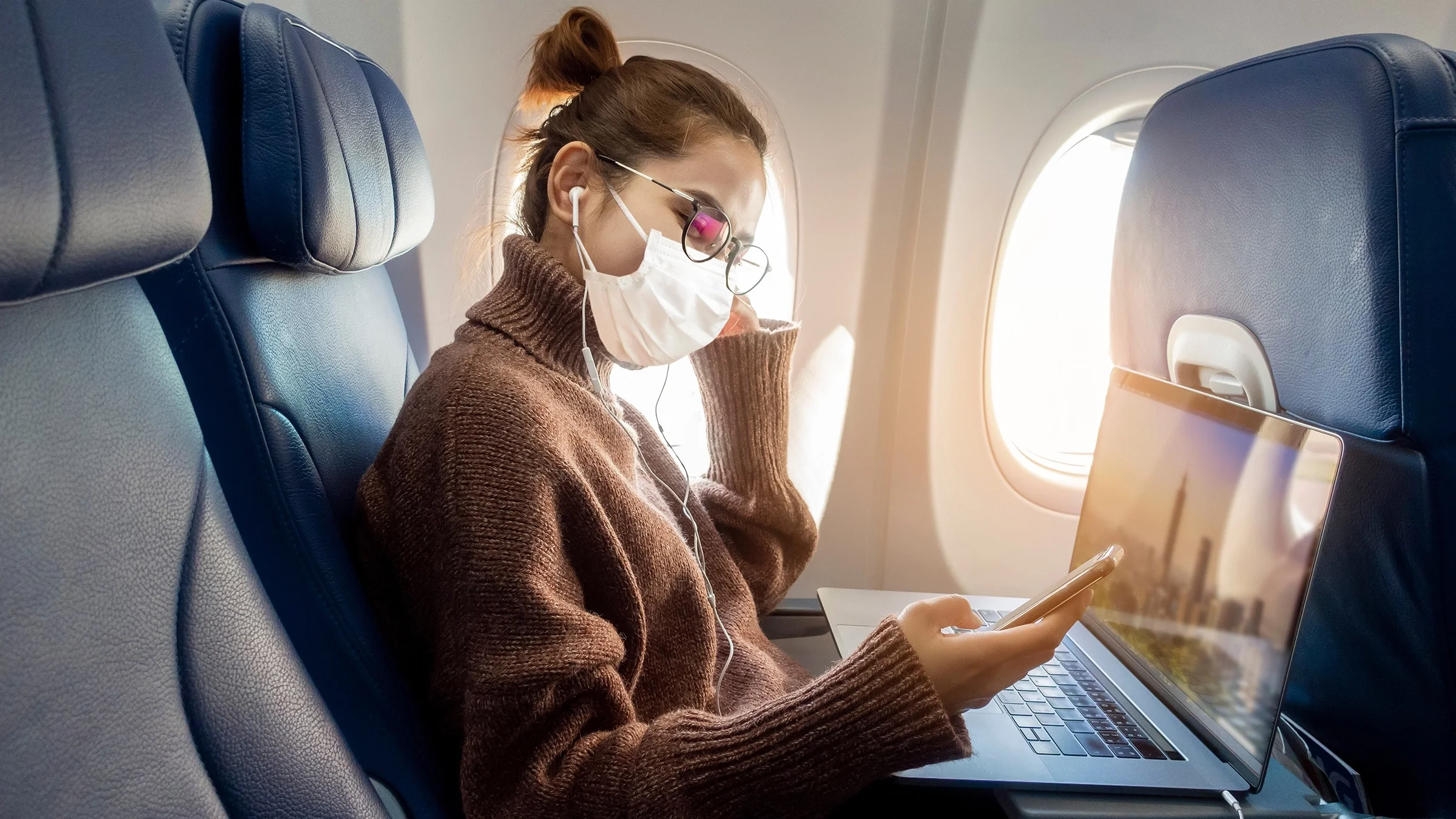
You’ll need to wear a mask that covers your mouth and nose while using public transportation, including on airplanes.
You should not travel if you are sick, or if you’ve been in close contact with someone who is.
If you’re waiting for COVID-19 test results, don’t travel until you’ve gotten the results back and you know they are negative.
If you aren’t fully vaccinated against COVID-19, you’ll want to get tested both before and after your trip.
For international travel, take a minute to review the CDC Travel Health Notices for the country or countries you will be visiting. In addition:
It’s a good idea to check out the COVID-19 situation for areas you will be visiting.
Each country you enter might have rules of its own, including quarantine, vaccine, or testing requirements.
Everyone entering the U.S. must present a negative COVID-19 test. This test must have been taken within the past 1 day.
Foreign nationals entering the U.S. need to present proof that they are fully vaccinated.
Is it safe to travel after just one COVID-19 shot?
The Pfizer-BioNTech and Moderna vaccines require 2 doses, a primer dose and a booster dose. Until you’ve had both doses, you aren’t fully protected by the vaccine. In the clinical trials, getting a single dose of the Pfizer-BioNTech vaccine lowered participants’ chances of catching COVID-19 by about 52% — but the effectiveness reached 95% after the second dose.
The Johnson & Johnson vaccine only requires one dose. But it’s best to wait awhile after your shot before traveling: Protection begins at 14 days after vaccination, but it’s even stronger at 28 days.
How long do I have to wait after getting the COVID-19 vaccine before I can travel?
The COVID-19 vaccines take time to reach their full effectiveness. You are not considered fully vaccinated until at least 2 weeks after getting the shot(s). To be as safe as possible, you’ll want to wait at least a couple weeks after getting vaccinated before you travel.
Do I still need to get tested for COVID-19 when I arrive in the U.S.?
Currently, anyone flying into the U.S. from another country is required to have a recent COVID-19 test. The test can’t be more than 1 day old, and you’ll need to show proof of your results in order to board the plane. Right now, this rule applies to everyone, whether you’ve had the COVID-19 vaccine or not.
Will I need to show proof of vaccination in order to board a plane?
You are not required to be vaccinated in order to travel right now. This might change in the future as more people get vaccinated.
Some airlines are talking about requiring proof of vaccination eventually. But keep in mind that airlines are owned by private companies, and those companies are based in different countries, so the laws that govern them are not all the same. Private companies and foreign governments are allowed to make — and change — their own rules. You’ll need to follow the rules of your airline, whether you have been vaccinated or not.
If being vaccinated does become a requirement to fly, airlines will put specific rules in place for how to handle the paperwork. In the U.S., people who get the COVID-19 vaccine receive a paper card that shows the dates a vaccine was received. Other countries might choose to manage things differently. A variety of apps are being developed to help streamline the vaccine verification process.
To be on the safe side, save all the paperwork you receive when you get vaccinated against COVID-19. Several days before you travel, check with your airline to make sure you have the documents you need.
Do I still have to follow travel restrictions after getting the COVID-19 vaccine?
Yes. Although your risk of catching COVID-19 is much lower after you’ve been vaccinated, you could still get sick. And you could still carry the virus to others. Until we know more, continue to follow federal travel recommendations.
And remember, certain airlines and airports might have their own rules for travelers. There could also be different rules at various train stations, rest stops, and travel centers. All of these rules still apply to you, even if you’ve been vaccinated.
Follow general guidelines like wearing a mask, social distancing, and washing your hands often when you travel to protect yourself and those around you. The more everyone does these things, the more normal they feel.
Will I still need to quarantine after traveling if I’ve gotten the COVID-19 vaccine?
No. You do not need to self-quarantine after traveling if you’ve been vaccinated.
What about children too young to get the vaccine?
COVID-19 vaccines are now available and recommended for everyone over the age of 5.
If you plan to travel with children younger than that, remember they can pick up the virus during travel and carry it to others at your destination. Protect yourself, your children, and others around you by following masking, social distancing, and quarantine guidelines.
The bottom line
While we are all looking forward to being able to travel again, getting the vaccine isn’t a quick ticket to safety. Risks remain for everyone while the amount of COVID-19 spreading around the world is high.
If you’ve had the vaccine and you need to travel, you can do so safely within the U.S. Traveling internationally will require some homework on your part and a negative COVID-19 test to return to the U.S. If you don’t need to travel just yet, the safest course is probably to wait just a little bit longer.

Why trust our experts?



References
Centers for Disease Control and Prevention. (2021). Science brief: COVID-19 vaccines and vaccination.
Centers for Disease Control and Prevention. (2022). COVID data tracker.
Centers for Disease Control and Prevention. (2022). COVID-19 travel recommendations.
Centers for Disease Control and Prevention. (2022). Domestic travel during COVID-19.
Centers for Disease Control and Prevention. (2022). How to protect yourself & others.
Centers for Disease Control and Prevention. (2022). Non-U.S. citizen, non-U.S. immigrants: Travel to and from the United States.
Centers for Disease Control and Prevention. (2022). Requirement for proof of negative COVID-19 test or documentation of recovery from COVID-19.
Centers for Disease Control and Prevention. (2022). Stay up to date with your vaccines.
Centers for Disease Control and Prevention. (2022). Travel.
Centers for Disease Control and Prevention. (2022). What you need to know about variants.
McGregor, G. (2020). Will you need a COVID-19 vaccine to fly? One airline says yes. Fortune.
Polack, F. P., et al. (2020). Safety and efficacy of the BNT162b2 mRNA Covid-19 vaccine. The New England Journal of Medicine.
Singer, N. (2021). Vaccinated? Show us your app. The New York Times.
Travel.State.Gov. (n.d.). Travel advisories.
World Health Organization. (2022). WHO coronavirus (COVID-19) dashboard.