Key takeaways:
It’s likely that the virus that causes COVID-19 will continue to mutate.
The spread of new coronavirus variants (caused by mutations) could lead to a huge increase in COVID-19 cases. Fortunately, current COVID-19 vaccines appear to still be effective against these new variants.
Though it’s too early to know for sure, annual COVID-19 vaccines could be a reality in the future — especially if the virus mutates from year to year like the flu.
Coronavirus continues to cause thousands of COVID-19 hospitalizations and deaths around the world. Even though COVID-19 vaccination is underway in many countries, experts are concerned about the spread of several new variants of the virus.
As these new variants spread, you may wonder: Will the current COVID-19 vaccines still work? If the virus continues to mutate, will I need to get an annual vaccine? And in the meantime, how can I protect myself against these contagious new variants?
With all this in mind, we’ve put together some information about virus mutations, what to know about the new coronavirus variants, and what the future might hold for COVID-19 vaccination.
Search and compare options
Is the coronavirus mutating?
Yes. Viruses naturally mutate — it’s what they do. Any time a virus replicates in your body, there’s a chance that small errors can occur in its genetic code. These changes are called mutations. Mutations can lead to new virus variants: viruses that are very similar to the original, but with a few identifiable differences.
Sometimes these mutations are small and barely noticeable, and the variant might look and act a lot like the original virus. But other times, mutations are more significant and can change how a virus behaves. For example, mutations can weaken a virus and even cause it to die out. On the other hand, mutations can give a virus an evolutionary boost — making it easier for the virus to spread or to cause serious illness.
The virus that causes COVID-19 (called SARS-CoV-2) has already mutated many times during the past year. Several of these mutations haven’t been particularly noticeable. Other mutations have been more dramatic. For example, experts think a mutation early in the pandemic may have helped the virus spread more easily around the world.
Recent variants
In particular, the Centers for Disease Control and Prevention (CDC) is keeping a close eye on three new COVID-19 variants. These variants are worrisome because they spread more easily and quickly, which could lead to more cases of COVID-19. The three variants are:
B.1.1.7 variant (United Kingdom): This variant was first detected in September 2020 and has spread widely in London and other parts of the United Kingdom. It has also been found in many other countries, including the United States. Experts in the United Kingdom are also concerned that the B.1.1.7 variant may be more fatal. So far, both the Pfizer and Moderna vaccines seem to be effective against this variant.
1.351 variant (South Africa): This variant was originally detected in South Africa in October 2020. There have been cases of the 1.351 variant found in other countries, but so far, it has not been found in the United States. The Pfizer and Moderna vaccines are slightly less effective against this variant.
P.1 variant (Brazil): This variant first emerged in Brazil as early as July 2020. According to the CDC, the P.1 variant has additional mutations that may make it less susceptible to the current COVID-19 vaccines — but at this point, there’s no evidence that this is true. So far, the United States only has one case of P.1.
Will the coronavirus that causes COVID-19 become more dangerous as it mutates?
We don’t know. Unfortunately, there’s no way to predict for sure how a virus will mutate. As new variants keep popping up, scientists, healthcare professionals, and government agencies will work together to consider:
Does the new variant cause more severe illness or deaths?
Are vaccines, masks, and other protections still effective?
Does the new variant spread more easily?
These questions can help experts to evaluate whether a new variant is dangerous. It’s possible that future coronavirus mutations could be weaker and die out more quickly. It’s also possible that mutations could make the coronavirus stronger, more resistant to vaccines, and harder to fight.
If the coronavirus mutates, will that mean it will require annual vaccination like the flu?
It’s possible, but too early to know for sure — especially since we don’t know how quickly the coronavirus will continue to mutate. If it mutates very quickly, the current COVID-19 vaccines could become less effective, leading to an immediate need for updated vaccines.
An annual COVID-19 vaccine could also be necessary in the future if the coronavirus changes a lot from year to year, just like the flu. With the flu shot, experts make predictions early in the year about what variants will be circulating during flu season in the fall — and then create a flu vaccine that matches those predictions. If needed, it’s possible that the same system could work for coronavirus.
Will the current COVID-19 vaccines from Pfizer and Moderna protect me against new variants of the coronavirus?
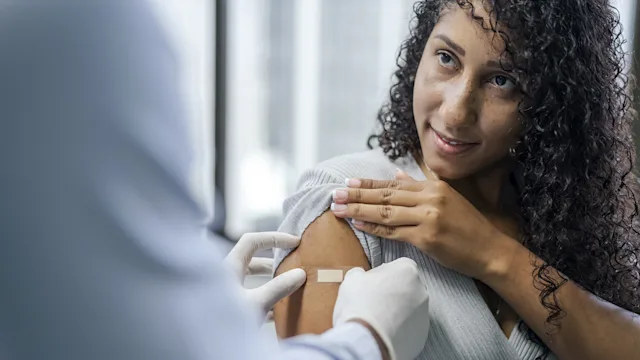
So far, current COVID-19 vaccines seem to be effective against the new variants. And because the current COVID-19 vaccines appear to work very well (with over 90% protection after the second dose), you can still count on them to offer some protection — even for variants (like the one detected in South Africa) where they may be slightly less effective.
What is the best way to protect myself and others from new strains of the COVID-19 virus?
According to the CDC, none of the new coronavirus mutations seem to increase the risk of severe illness or death from COVID-19. But there is concern that some of the new variants may be more contagious than the original virus. For example, the B.1.1.7 variant responsible for the recent surges in the United Kingdom seems to spread 50% more easily than other SARS-CoV-2 variants.
A more contagious variant of COVID-19 could cause large spikes in hospitalizations and deaths. There’s also concern that these new (possibly more infectious) variants could make it easier to get COVID-19 a second time — even if you were previously immune.
Fortunately, when it comes to slowing the spread, the same strategies still work. Continue to protect yourself, your community, and your loved ones by:
Getting vaccinated (once you are eligible)
Wearing a high-quality mask (or double masking) in public settings
Staying at least 6 feet away from people who are not part of your household
Avoiding crowds
Avoiding poorly ventilated spaces
Washing your hands often
Covering your coughs and sneezes
Following your community health guidelines (e.g., stay-at-home orders)
Cleaning and disinfecting frequently touched surfaces
Monitoring your health daily
Keep in mind that there are also new travel restrictions for non-U.S. citizens attempting to enter the United States. This ban blocks some travelers from the United Kingdom, Europe, Brazil, and South Africa from entering the United States, in the hopes of slowing down the spread of new coronavirus variants. The CDC will also require all travelers coming to the United States to have a negative coronavirus test before flying.
The bottom line

Why trust our experts?



There’s still a lot to learn when it comes to COVID-19 vaccination — especially when it comes to keeping up with virus mutations. Though hopefully the current COVID-19 vaccines will protect us for years, or even decades, the vaccines will need to evolve with the virus. In the meantime, vaccination, masks, and social distancing are still our best defenses in the fight against COVID-19.