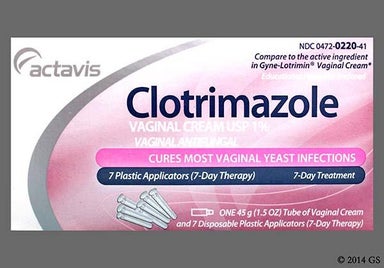
clotrimazole non-prescription
Clotrimazole is an antifungal cream that's placed inside the vagina or onto the surrounding skin. It's used to treat vaginal yeast infections. This medication also helps relieve related symptoms, like itching, burning, and discomfort. Clotrimazole vaginal cream comes in 3-day and 7-day treatment courses, both of which are available over the counter as a lower-cost generic medication. Possible side effects of this vaginal cream include vaginal irritation, itching, and burning.


What is Clotrimazole?
What is Clotrimazole used for?
- Vaginal yeast infections
- Itching and irritation caused by a vaginal yeast infection
How Clotrimazole works
Clotrimazole is an antifungal medication. It works by damaging the protective covering around fungal (yeast) cells so that they can't survive. The medication also slows down fungal growth. This helps treat vaginal yeast infections and relieve related symptoms.
Drug facts
| Common Brands | Gyne-Lotrimin |
|---|---|
| Drug Class | Antifungal |
| Controlled Substance Classification | Not a controlled medication |
| Generic Status | Lower-cost generic available |
| Availability | Over-the-counter |

Side effects of Clotrimazole
The following side effects may get better over time as your body gets used to the medication. Let your healthcare provider know immediately if you continue to experience these symptoms or if they worsen over time.
Common Side Effects
- Burning feeling in the vagina or in the area around the opening of the vagina (less than 10%)
Less Common Side Effects
- Skin irritation or itching
- Pain, redness, or swelling
The following Clotrimazole side effects have also been reported
Side effects that you should report to your care team as soon as possible:
- Allergic reactions—skin rash, itching, hives, swelling of the face, lips, tongue, or throat
- Unusual vaginal discharge, itching, or odor
Side effects that usually do not require medical attention (report these to your care team if they continue or are bothersome):
- Vaginal irritation at application site

Get your GoodRx coupon

Pros and cons of Clotrimazole
Pros
- Can treat most vaginal yeast infections in 3 or 7 days, depending on the strength of the cream you have
- Only need to use once a day (for treating vaginal yeast infection)
- Available over the counter as a lower-cost generic
Cons
- Can leak out after inserting into the vagina, which can be messy or cause discomfort
- Can cause vaginal burning or irritation
- Not recommended to have vaginal sex during treatment

Pharmacist tips for Clotrimazole

- Only use clotrimazole vaginal cream on the inside of the vagina or on the surface of the surrounding skin. Contact a Poison Control Center (1-800-222-1222) if someone accidentally swallows clotrimazole.
- Apply clotrimazole inside the vagina once a day at bedtime. Using it at bedtime helps lessen the amount of leakage since you'll be lying down. It can be helpful to wear a thin underwear liner after you insert clotrimazole into your vagina to protect your clothing from leakage.
- Use clotrimazole vaginal cream for the full 3 or 7 days, depending on which treatment course you have, even if you start feeling better. This makes sure your yeast infection is completely treated.
- Avoid using other vaginal products while you're using clotrimazole. Tampons can absorb some of the medication. Clotrimazole can also sometimes damage condoms and diaphragms and cause them to work less well.
- It isn't recommended to have vaginal sex while you're using clotrimazole. Having a vaginal yeast infection can make sex painful, and it's even possible to pass a yeast infection to your sexual partner.
- Contact your gynecologist or primary care provider if your symptoms don't get better after 3 days of treatment. Also call them if you're still having vaginal itching, irritation, burning, or discharge after 7 days of treatment with clotrimazole. There might be another medical condition that's causing your symptoms.
- Stop using clotrimazole and get medical attention if you have a rash, fever, chills, stomach pain, nausea, vomiting or if you notice a foul-smelling discharge from your vagina. You'll probably need to get examined so you can get the most appropriate care.
- Talk to your gynecologist or primary care provider if you have vaginal yeast infections often or if you have vaginal symptoms like itching and discomfort for the first time. They might recommend a different treatment for you instead of clotrimazole.
- Check the expiration date on the tube of clotrimazole vaginal cream. Don't use the medication if it's past the expiration date since it might not work as well for your vaginal yeast infection.
Tips on how to use clotrimazole vaginal cream:
- Attach the open end of the applicator to the tip of the tube of cream. Gently squeeze the tube until the applicator is full or is filled to the marked line with medication.
- Get into a comfortable position right before you insert the applicator into your vagina. Lie down on your back with your knees bent. You can also stand with your feet apart and knees bent.
- Gently insert the open end of the applicator as far as it will comfortably go into your vagina. Then, push down on the plunger to get the medication into your vagina. Remove the applicator, and throw it away or wash it with soap and warm water if it's reusable.
- Wash your hands after each time you use clotrimazole vaginal cream.
- You can squeeze a small amount of clotrimazole onto your finger and spread it on the irritated skin around your vagina. Apply once or twice daily for up to 7 days to help with itching and irritation in the area.

Risks and warnings for Clotrimazole
Clotrimazole can cause some serious health issues. This risk may be even higher for certain groups. If this worries you, talk to your doctor or pharmacist about other options.
Might not be appropriate for undiagnosed vaginal symptoms
Don't use clotrimazole if you've never been diagnosed with a vaginal yeast infection by a healthcare professional before and you're having vaginal itching and discomfort for the first time. Check with your gynecologist or primary care provider first so they can make sure your symptoms are caused by a yeast infection and that this medication is appropriate for you to use.
Contact a healthcare professional for frequent or severe vaginal symptoms
- Risk factors: Previous exposure to the human immunodeficiency virus (HIV)
You should speak with your gynecologist or primary care provider before you use clotrimazole if you have frequent vaginal yeast infections (e.g., once every month, 3 infections in 6 months). Also contact them if you have symptoms like fever, chills, nausea, vomiting, lower back or stomach pain, or foul-smelling vaginal discharge in addition to your vaginal symptoms. Your gynecologist or primary care provider can find out whether you have a more serious medical condition that could be causing your infections or symptoms.

Clotrimazole dosage
 Bottle of topical solution
| Dosage | Quantity | Price as low as | Price per unit |
|---|---|---|---|
| 10ml of 1% | 1 bottle | $18.42 | $18.42 |

Typical dosage for Clotrimazole
People age 12 years and older:
-
Treatment of a vaginal yeast infection
- Clotrimazole 1%: Insert one applicatorful (50 mg) into the vagina once daily at bedtime for 7 days in a row.
- Clotrimazole 2%: Insert one applicatorful (100 mg) into the vagina once daily at bedtime for 3 days in a row.
-
Relief of itching or irritation caused by a vaginal yeast infection
- Clotrimazole 1% and 2%: Place a small amount of cream onto your fingertip. Apply the cream onto the skin on the outside of the vagina twice daily for up to 7 days as needed.
Children under 12 years old: Check with your child’s pediatrician.

How much does Clotrimazole cost?
$6.70

Clotrimazole contraindications
Contraindications are specific health conditions or situations in which a person should not take a medication due to safety concerns. If you have any of the following conditions or if any of the following apply to you, let your healthcare provider know because Clotrimazole will not be safe for you to take.
- Never been diagnosed with a vaginal yeast infection before

What are alternatives to Clotrimazole?

Clotrimazole images