Key takeaways:
Using a continuous glucose monitor (CGM) without diabetes is a personal choice — but most experts don’t recommend it.
Some CGMs are now available over the counter (OTC), including Dexcom Stelo and Abbott Lingo, for adults without diabetes.
CGMs may increase awareness of how food and activity affect glucose levels. But there’s no strong evidence that they improve health outcomes in people without diabetes.
CGM data can be difficult to interpret and may lead to unnecessary anxiety or confusion in otherwise healthy people.
Save on related medications
In recent years, continuous glucose monitoring (CGM) use has surged in popularity — even among people without diabetes. With newer over-the-counter (OTC) devices like Dexcom Stelo and Abbott Lingo, it’s now easier than ever to try one without a prescription.
These wearable sensors promise real-time insight into how your body responds to food, exercise, and sleep. But do they actually improve your health?
So far, most experts say the answer is no.
“In general, in people without diabetes who feel well and have no metabolic disease, using a CGM doesn’t add clinical value,” said Minisha Sood, MD, an endocrinologist.
She’s not alone. Of the four endocrinologists interviewed for this article, none recommend CGMs for people without diabetes. Here’s why.
What is a continuous glucose monitor (CGM)?
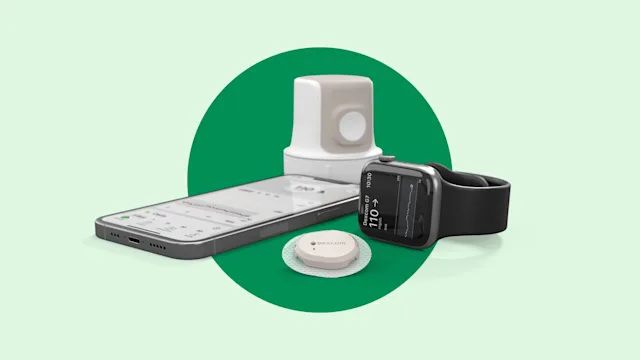
A CGM is a wearable medical device or “biosensor.” It measures, shares, and records glucose (sugar) levels throughout the day and night.
It includes:
A small sensor you insert under the skin
A transmitter that sends real-time glucose readings to an approved device
A receiving device (like a smartphone app) that stores and displays glucose data
CGMs have proven benefits in helping people with diabetes, such as:
Tracking glucose trends
Adjusting medications
Preventing dangerous highs and lows
But they’re increasingly being marketed as wellness tools for people without diabetes.
For most people, a CGM isn’t necessary. Their body can regulate glucose levels after meals and maintain energy needs between them.
For others, “seeing” their real-time glucose can create more awareness of the impact of lifestyle and behaviors on glucose levels. In other words, using a CGM may help encourage healthier habits like regular physical activity, nutritious eating, and optimized sleep.

Read more like this
Explore these related articles, suggested for readers like you.




How does a CGM work?
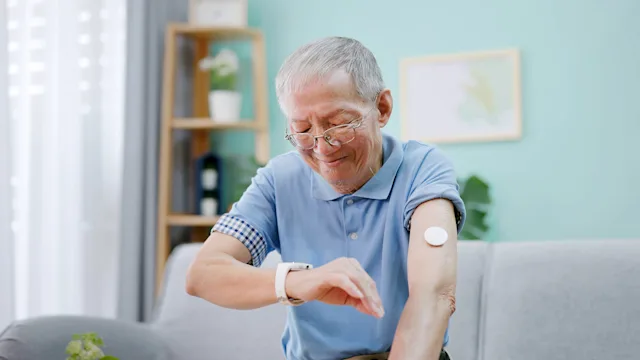
You insert the tiny sensor into the skin with an “auto applicator.” After insertion, the sensor measures glucose levels in the fluid under your skin and sends updates at regular intervals:
Every 1 minute (Abbott Lingo)
Every 15 minutes (Dexcom Stelo)
Because the sensor measures glucose levels in the tissues, and not in the blood, this means:
Readings lag slightly behind blood glucose levels
Accuracy can vary, especially when glucose is changing quickly
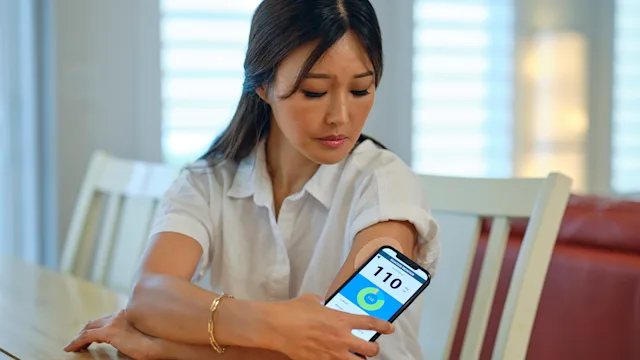
The device sends data to your smartphone, where you can see trends, graphs, and patterns over time.
Most sensors need to be replaced every 10 to 15 days.
What are the limitations of a CGM?
It’s important to know what a CGM can’t do. CGMs provide a lot of data — but not always clear answers. CGMs also don’t offer medical advice.
For people without diabetes, there are several key limitations to be aware of:
There are no agreed “normal” targets: Normal glucose values vary from person to person in people without diabetes.
Data is hard to interpret: It's not yet clear to healthcare professionals what CGM data means in people without diabetes. Short-term spikes may be normal, and they don’t mean something is wrong.
To understand what your own glucose data means for you, you’ll need to share your results with a healthcare professional. But even then, they might not be able to clearly translate the data into meaningful next steps for your health.
How is a CGM different from a glucose meter?
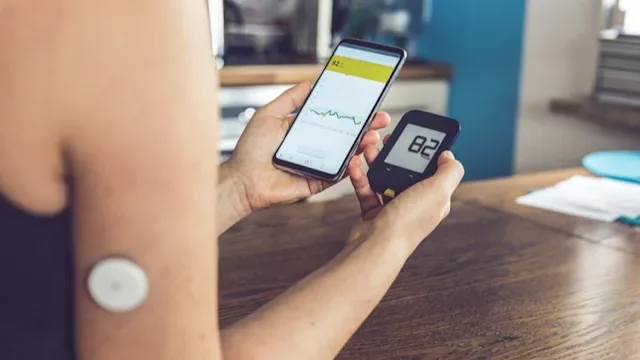
A CGM is different from a glucose meter (glucometer). CGMs offer glucose trends over time from the fluid under the skin. A glucometer measures your blood glucose at a single point in time using a finger prick. This means glucometers provide a limited amount of information. But the information they provide is more accurate, especially when glucose levels are changing rapidly — as they might in a person with diabetes.
For people without diabetes, neither CGMs nor glucose meters are routinely needed.
Can you get a CGM over the counter if you don’t have diabetes?
Yes, some CGMs are now available without a prescription — whether you have diabetes or not.
OTC devices like Dexcom Stelo and Abbott Lingo are intended for adults age 18 and up.
Because CGMs are less accurate at low glucose levels and don’t include alerts for dangerously high or low glucose levels, they aren’t recommended for people who:
Use insulin
Are at risk for low blood sugar (hypoglycemia)
For these people, Dexcom G7 is the preferred device.
Can a CGM improve your health if you don’t have diabetes?
For Farah Khan, MD, also an endocrinologist, the answer is usually no: “For most people without diabetes, there’s no clinical indication for the use of CGMs,” she said.
And that’s because if you’re healthy, there’s no strong evidence that CGMs improve long-term health outcomes in people without diabetes, said Sanjai Sinha, MD.
“The evidence for CGM use in people who don’t have diabetes is growing, but it’s not there yet,” Sinha said. This includes people who are trying to lose weight or are taking diabetes medications to lose weight.
CGMs have become increasingly popular among athletes and others seeking to “optimize” their health. The hope is that CGM devices may help people better understand the impact of lifestyle changes on their glucose health, which in turn would shape healthier choices.
There’s some early evidence this may play a role. Researchers have described CGMs as a form of biofeedback — giving people immediate insight into how food, activity, stress, and sleep affect glucose levels. It’s possible that this awareness may help guide behavior change.
CGMs may have potential in the future, but there are still major limitations. For example, CGM data in people without diabetes doesn’t always align well with standard markers like hemoglobin A1C (HbA1c or A1C). And this makes it difficult to interpret what the numbers actually mean.
In fact, there are some potential risks to having too much data about your glucose levels if you don’t have diabetes. If you’re healthy and your glucose levels are in a good range, “more information isn’t always a good thing,” said Khan.
That’s echoed by a third endocrinologist, Sonal Chaudhry, MD. She points to a risk of “information overload and potential anxiety” in healthy people who use CGMs. “To a user, the fluctuations in glucose levels can look significant,” she said. “But so long as glucose levels are within range, it’s expected to have glucose fluctuations after meals.”
Not only that, but differences between devices can affect accuracy and consistency. Chaudhry added: “CGMs are also not very accurate when glucose levels are low or low-normal. This risks causing people unnecessary alarm about falsely low glucose levels, also called hypoglycemia.”
More consistency across devices is needed before findings can be broadly applied.
Can a CGM diagnose or prevent diabetes?
There’s growing interest in whether CGMs may help detect and prevent diabetes. In theory, knowing your CGM trends could help people:
Identify patterns over time
Make lifestyle changes earlier
Detect subtle changes in glucose regulation
But so far, there are no clinical trials showing that CGMs prevent diabetes or reverse prediabetes.
Researchers are exploring whether CGM data may play a role in earlier detection of diabetes. Some studies suggest that certain CGM patterns — like time spent above range (over 140 mg/dL) — may help to predict people with a higher risk of diabetes.
These findings are promising, but they’re still early. CGMs aren’t currently validated or recommended as diagnostic tools.
To diagnose diabetes or prediabetes, you need a blood test like:
A1C
Fasting glucose
Oral glucose tolerance test
Frequently asked questions
Yes. CGMs are now available OTC without a prescription. Devices like Dexcom Stelo and Abbott Lingo can be purchased directly by adults age 18 and over who:
Don’t use insulin
Aren’t at risk for low blood sugar (hypoglycemia)
These OTC CGMs are marketed as wellness tools. They don’t include safety alerts for dangerously high or low glucose levels.
There are no formal medical requirements for OTC CGMs. Most adults can buy one without a prescription — so long as they don’t use insulin and don’t run a risk of low blood glucose levels.
OTC CGMs typically cost about $80 to $100 per month. Costs vary depending on the device and whether or not you choose to sign up to a subscription service or not. They’re usually not covered by insurance since they’re not considered medically necessary.
Dexcom Stelo costs about $89 per month with a subscription (or $83 per month with a 3-month plan). Abbott Lingo runs about $83 per month with a similar subscription.
You can also buy shorter supplies without a subscription — usually around $49 for 2 weeks or $89 to $99 for a full month.
Yes. CGMs are now available OTC without a prescription. Devices like Dexcom Stelo and Abbott Lingo can be purchased directly by adults age 18 and over who:
Don’t use insulin
Aren’t at risk for low blood sugar (hypoglycemia)
These OTC CGMs are marketed as wellness tools. They don’t include safety alerts for dangerously high or low glucose levels.
There are no formal medical requirements for OTC CGMs. Most adults can buy one without a prescription — so long as they don’t use insulin and don’t run a risk of low blood glucose levels.
OTC CGMs typically cost about $80 to $100 per month. Costs vary depending on the device and whether or not you choose to sign up to a subscription service or not. They’re usually not covered by insurance since they’re not considered medically necessary.
Dexcom Stelo costs about $89 per month with a subscription (or $83 per month with a 3-month plan). Abbott Lingo runs about $83 per month with a similar subscription.
You can also buy shorter supplies without a subscription — usually around $49 for 2 weeks or $89 to $99 for a full month.
The bottom line
Continuous glucose monitors (CGMs) have become popular among people without diabetes. With the arrival of Dexcom’s FDA-cleared Stelo, CGMs will be available to all people without a prescription.
The theory is that CGMs may help people without diabetes shape healthier lifestyle choices. But there’s simply not enough evidence to support this.

Why trust our experts?



References
Browne, G., et al. (2023). Personalized nutrition programs are making people feel weird about food. WIRED.
Ehrhardt, N., et al. (2020). Continuous glucose monitoring as a behavior modification tool. Clinical Diabetes.
Klonoff, D. C., et al. (2023). Use of continuous glucose monitors by people without diabetes: An idea whose time has come? Journal of Diabetes Science and Technology.
Klupa, T., et al. (2023). Expanding the role of continuous glucose monitoring in modern diabetes care beyond type 1 disease. Diabetes Therapy.
Mader, J. K., et al. (2025). The use of continuous glucose monitoring to diagnose stage 2 type 1 diabetes. Journal of Diabetes Science and Technology.
Monostra, M. (2025). CGM may be beneficial for people without diabetes, but more research needed. Healio.
Schraer, R. (2024). Doctors question science behind blood sugar diet trend. BBC.
Spartano, N. L., et al. (2025). Expert clinical interpretation of continuous glucose monitor reports from individuals without diabetes. Journal of Diabetes Science and Technology.