


7 Statin Alternatives You Can Take to Help Lower Your Cholesterol
Statins may not be safe and effective for all people with high cholesterol. Some statin alternatives, like fibrates, may be able to help. Review your options here.
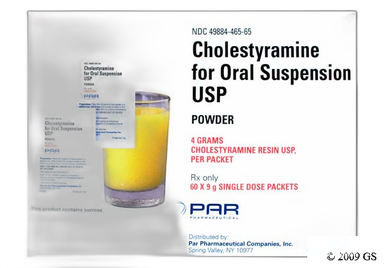
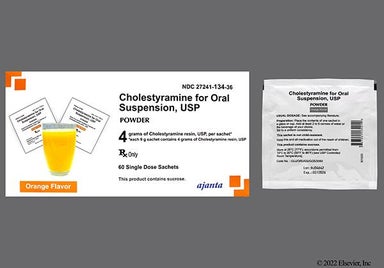
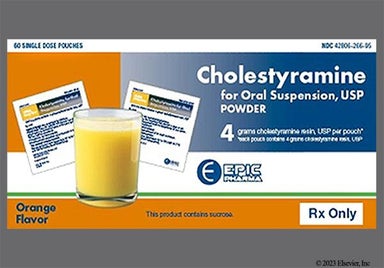
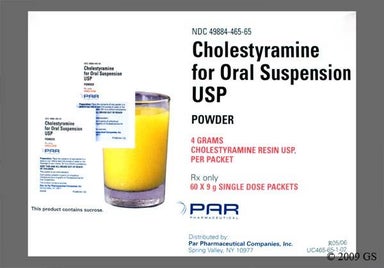
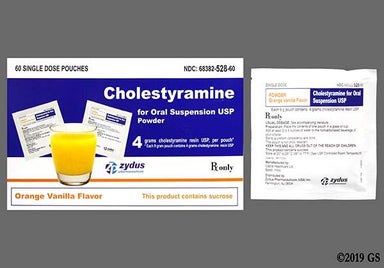
Cholestyramine is a bile acid sequestrant used to treat adults with high cholesterol and itching caused by bile duct problems. It comes as a powder in packets or a can that you mix with liquid to make an oral suspension before taking it. You take a dose by mouth 1 to 6 times a day, depending on your condition. The most common side effect is constipation.

Cholestyramine is a bile acid sequestrant. It works by attaching to bile acids in your gut and removing them from your body.
Because of this, your body uses more cholesterol to make new bile acids, which helps lower your cholesterol levels. It also reduces the buildup of bile acids in your skin, which can help relieve itching.
| Common Brands | Prevalite |
|---|---|
| Drug Class | Bile acid sequestrant |
| Controlled Substance Classification | Not a controlled medication |
| Generic Status | Lower-cost generic available |
| Availability | Prescription only |

The following side effects may get better over time as your body gets used to the medication. Let your healthcare provider know immediately if you continue to experience these symptoms or if they worsen over time.
Contact your healthcare provider immediately if you experience any of the following.
In some animal studies, cholestyramine was found to cause tumors. It is not known whether cholestyramine causes tumors in humans.
Along with its needed effects, a medicine may cause some unwanted effects. Although not all of these side effects may occur, if they do occur they may need medical attention.
Check with your doctor immediately if any of the following side effects occur:
Check with your doctor as soon as possible if any of the following side effects occur:
More common
Rare
Loss of weight (sudden)
Some side effects may occur that usually do not need medical attention. These side effects may go away during treatment as your body adjusts to the medicine. Also, your health care professional may be able to tell you about ways to prevent or reduce some of these side effects. Check with your health care professional if any of the following side effects continue or are bothersome or if you have any questions about them:
Other side effects not listed may also occur in some patients. If you notice any other effects, check with your healthcare professional.
Call your doctor for medical advice about side effects. You may report side effects to the FDA at 1-800-FDA-1088.



How to prepare:

Cholestyramine can cause some serious health issues. This risk may be even higher for certain groups. If this worries you, talk to your doctor or pharmacist about other options.
Taking cholestyramine for a long time can raise your risk of bleeding because it lowers vitamin K levels, which is an important vitamin that helps stop bleeding. Get medical help if you are throwing up blood, have blood in your urine, or you experience black, tarry stools, or bleeding gums. You might need to be treated with vitamin K supplementation.
Very rarely, cholestyramine can affect acid levels in the body. This risk is higher in children, smaller individuals, or people taking higher doses. It can also be more likely if you have kidney problems, are dehydrated, or take certain medications like spironolactone. Talk to your prescriber if you have concerns or notice symptoms like tiredness, confusion, or fast breathing.
Cholestyramine can cause or worsen constipation. Your prescriber will usually recommend you start on a low dose and slowly increase it to help lower this risk.
To help prevent constipation, drink plenty of fluids and eat more fiber. Your prescriber might also recommend a stool softener if needed. If constipation gets worse, or if the medication isn’t working well, your prescriber could adjust your dose or consider a different treatment.
Cholestyramine can affect how well your body absorbs other medications. It can bind to certain medications in your gut and make them work less well. Because of this, take your other medications at least 1 hour before or 4 to 6 hours after cholestyramine.
This medication can also affect how your body absorbs vitamins A, D, E, and K. If you use it long term, your prescriber might recommend vitamin supplements.
Tell your care team if you have phenylketonuria (PKU), a condition where your body can’t break down phenylalanine. The “light” forms of cholestyramine are often sweetened with aspartame, which contains phenylalanine and can be harmful for people with PKU. Regular versions usually don’t contain aspartame. Always check the label or ask your pharmacist which version you have.

 Can of powder
| Dosage | Quantity | Price as low as | Price per unit |
|---|---|---|---|
| 378g of 4g/dose | 1 can | $29.89 | $29.89 |
| 348.6g of 4g/dose | 1 can | $20.71 | $20.71 |
| 368.76g of 4g/dose | 1 can | $29.27 | $29.27 |
| 239.4g of 4g/dose | 1 can | $32.93 | $32.93 |
 Carton
| Dosage | Quantity | Price as low as | Price per unit |
|---|---|---|---|
| 60 packets of 9g | 1 carton | $46.75 | $46.75 |
| 60 packets of 8.3g | 1 carton | $46.75 | $46.75 |
 Packet
| Dosage | Quantity | Price as low as | Price per unit |
|---|---|---|---|
| 9g of 4g/dose | 30 packets | $27.90 | $0.93 |
The typical starting dose is 1 pouch or 1 scoopful by mouth once or twice a day with a meal.
Your prescriber might raise the dose up to 2 to 4 pouches or scoopfuls a day divided into two doses, depending on how you're responding to the medication.
The maximum daily dose is 6 pouches or scoopfuls.

Although certain medicines should not be used together at all, in other cases two different medicines may be used together even if an interaction might occur. In these cases, your doctor may want to change the dose, or other precautions may be necessary. When you are taking this medicine, it is especially important that your healthcare professional know if you are taking any of the medicines listed below. The following interactions have been selected on the basis of their potential significance and are not necessarily all-inclusive.
Using this medicine with any of the following medicines is usually not recommended, but may be required in some cases. If both medicines are prescribed together, your doctor may change the dose or how often you use one or both of the medicines.
Using this medicine with any of the following medicines may cause an increased risk of certain side effects, but using both drugs may be the best treatment for you. If both medicines are prescribed together, your doctor may change the dose or how often you use one or both of the medicines.


Contraindications are specific health conditions or situations in which a person should not take a medication due to safety concerns. If you have any of the following conditions or if any of the following apply to you, let your healthcare provider know because Cholestyramine will not be safe for you to take.






Prescription savings
Stop paying too much for your prescriptions. Compare prices, get pharmacy coupons, and save up to 80%. Find expert answers to your health questions so you can make the best decisions for yourself and your family.
Health conditions
Medications & treatment
Access & affordability
 Our monthly healthcare membership can help you save thousands on your prescription costs.
Resources

While there aren't specific foods that directly interact with how Cholestyramine work, you should try to limit foods that are high in cholesterol. These include fried foods, pizza, and full-fat dairy. It’s best to follow a heart-healthy diet with more fruits, vegetables, whole grains, and lean proteins. Talk to your prescriber or dietitian if you’re unsure what to eat.
It depends on why you're taking Cholestyramine. It might start to lower cholesterol levels after a few weeks, while itching from bile duct problems can improve in about a week. Your prescriber will adjust your dose over time based on how well it’s working and how you tolerate it. Talk to your prescriber if you’re concerned about how long this medication is taking to work.
The best time to take Cholestyramine is before or during meals. Be sure to take your other medications at least 1 hour before or 4 to 6 hours after Cholestyramine to avoid absorption problems. If taking it with meals doesn’t work for your schedule or other medications, talk to your prescriber for guidance.
Cholestyramine isn't FDA-approved to treat diarrhea. But it can be prescribed off-label for diarrhea from irritable bowel syndrome (IBS). This is because some types of diarrhea are caused by too much bile acid in your gut. By lowering bile acid levels, Cholestyramine can help improve these symptoms.
You shouldn’t stop taking Cholestyramine unless you talk to your prescriber first. If you stop it on your own, your cholesterol could go back up or your itching could return. But you should stop taking it and get medical help right away if you have serious side effects, such as unusual bleeding, black or bloody stools, or signs of an allergic reaction like rash, swelling, or trouble breathing.
You can eat right after taking Cholestyramine, since it’s often recommended to take it before or with meals. If you have questions about timing with your meals, your prescriber or pharmacist can help you set a schedule that works best for you.
Both Cholestyramine and colestipol (Colestid) are bile acid sequestrants used to treat high cholesterol. But Cholestyramine can also help treat itching caused by too much bile acid from a blockage. They also come in different forms. Cholestyramine is only available as a powder for oral suspension, whereas colestipol (Colestid) comes as tablets and granules for suspension. Talk to your care team if you have questions about comparing the two.
No, Cholestyramine is only available by a prescription from a healthcare professional.
