Stalevo is a combination medication that treats Parkinson's disease (PD) in adults. It contains carbidopa and levodopa, which help raise dopamine levels in the brain to improve PD symptoms. It also has entacapone, which works as a COMT inhibitor to help the effects last longer. Stalevo helps lessen "off" time (when movement symptoms come back as the medication wears off). Side effects include involuntary movements, nausea, and diarrhea.
Levodopa is a dopamine replacement. Levodopa travels into the brain where it turns into dopamine. When there's more dopamine in the brain, PD symptoms lessen.
Carbidopa is a dopa decarboxylase inhibitor, and entacapone is a catechol-O-methyltransferase (COMT) inhibitor. Dopa decarboxylase and COMT are proteins in the body that break down levodopa before it reaches the brain. By blocking these proteins, more levodopa can get to the brain and turn into dopamine. It helps both levodopa and dopamine reach and stay at higher levels in the brain. This helps relieve PD symptoms.
The following side effects may get better over time as your body gets used to the medication. Let your healthcare provider know immediately if you continue to experience these symptoms or if they worsen over time.
Contact your healthcare provider immediately if you experience any of the following.
Falling asleep suddenly or feeling very sleepy
Hallucinations: seeing things that aren't there, hearing sounds that aren't real, feeling unreal sensations
Abnormal thinking or behavior: confusion; trouble sleeping; paranoia; delusions; aggression; agitation; strong urges to gamble, shop, or eat
Severe muscle damage (rhabdomyolysis): muscle aches, soreness, cramping, dark-colored urine
Low vitamin B6: depression, confusion, swollen or sore tongue, cracked corners of your mouth, skin irritation, numbness or tingling in the hands or feet, seizure
Depression
Suicidal thoughts or behavior
Withdrawal symptoms after treatment changes (e.g., stopping suddenly): very high fevers, sweating, confusion, irregular pulse, muscle stiffness, changes in breathing, changes in blood pressure
When do Stalevo possible side effects begin and end?
Time passed since treatment started:
HHOURS
DDAYS
WWEEKS
MMONTHS
Risk of diarrhea
If a line continues to the right, you'll likely keep experiencing this side effect once it starts.
The following Stalevo side effects have also been reported
Along with its needed effects, a medicine may cause some unwanted effects. Although not all of these side effects may occur, if they do occur they may need medical attention.
Check with your doctor immediately if any of the following side effects occur:
Some side effects may occur that usually do not need medical attention. These side effects may go away during treatment as your body adjusts to the medicine. Also, your health care professional may be able to tell you about ways to prevent or reduce some of these side effects. Check with your health care professional if any of the following side effects continue or are bothersome or if you have any questions about them:
Can make you very sleepy and cause you to fall asleep all of a sudden
Can make the color of your saliva, sweat, and urine darker
Pharmacist tips for Stalevo
Take Stalevo with or without food. Avoid taking the medication with a high-fat, high-calorie, or high-protein meal. Examples include avocados, cheese, and peanut butter. These foods can slow the medication from getting absorbed into the body by about 2 hours.
Only take 1 Stalevo tablet when it's time for you to take the medication. All tablet strengths of Stalevo contain 200 mg of entacapone. Taking more than 1 Stalevo tablet at once can raise your risk of side effects.
Swallow the Stalevo tablet whole. Don't cut, crush, or chew them. If you have trouble swallowing pills whole, tell your prescriber so they can find other options for you.
Stalevo can make you very sleepy and even cause you to fall asleep suddenly, even if you don't feel tired. Don't drive or do anything that needs your focus until you know how the medication affects you.
Stalevo can cause or worsen uncontrolled movements of your body. These involuntary movements are called dyskinesia. It happen sooner and at lower dosages than with carbidopa/levodopa-only medications (like Sinemet). Let your prescriber know if you have uncontrolled movements that bother you a lot.
Stalevo can cause nausea, vomiting, or diarrhea in some people. Make sure to drink plenty of fluids to prevent dehydration if you have these side effects during treatment. Talk to a healthcare professional if they don't get better. They can check whether there's something else going on.
Let your care team know if you feel numbness, tingling, or confusion while taking Stalevo. Also tell them if you notice your tongue is getting sore or red, or if you see unusual cracks at the corners of your mouth. These might be signs of low vitamin B6, which could happen with this medication. Your care team can check your levels with a blood test and suggest a vitamin B6 supplement if needed.
Stalevo can change the color of your saliva, sweat, and urine. These bodily fluids can look darker, even red, brown, or black. It might look strange or scary, but it's harmless. Just be careful with your clothing because it can stain.
Ask your prescriber or pharmacist before taking iron supplements or multivitamins with iron. Iron can cause less Stalevo to get absorbed into your body. This can make Stalevo work less well to relieve your PD symptoms.
Risks and warnings for Stalevo
Stalevo can cause some serious health issues. This risk may be even higher for certain groups. If this worries you, talk to your doctor or pharmacist about other options.
Sleepiness or falling asleep during activities
Risk factors: History of drowsiness | History of sleep problems | Taking sedatives or medications that make you drowsy
Some people taking Stalevo have fallen asleep out of nowhere. This has happened even when they didn't feel tired beforehand. It can happen during activities like talking or eating. In some cases, people have fallen asleep while driving. It's sometimes led to accidents.
Avoid driving or doing things that need your full attention until you know how Stalevo affects you. This is especially important if you often feel sleepy or have suddenly fallen asleep before. Also avoid taking medications that make you sleepy while taking Stalevo. They can make you even sleepier.
Tell your prescriber know if you feel very sleepy during the daytime while taking Stalevo. Also let them know if you fall asleep during activities that you need to be alert for. Your prescriber can help decide if it's safe for you to keep taking the medication.
Low blood pressure and fainting
Risk factors: History of low blood pressure
Some people who take Stalevo can have low blood pressure. It can cause a drop in blood pressure when you stand from a sitting or lying down position. Low blood pressure can lead to dizziness, lightheadedness, and sometimes fainting.
To lower your risk of falling, get up slowly when you stand. Tell your prescriber if your blood pressure is lower than usual or if you feel dizzy while taking Stalevo.
Risk of depression and suicidal behavior
Risk factors: History of mental health conditions
Stalevo can cause depression with or without suicidal behavior. Get medical help right away if you or the people around you notice that you have signs of depression or thoughts of hurting yourself while taking this medication.
Hallucinations and changes in behavior and thoughts
Some people taking medications like Stalevo have had hallucinations. Others can also have feelings of uneasiness or distress. Tell your prescriber if you or your loved ones notice you're having hallucinations while you're taking Stalevo. Also let them know about any unusual behaviors or unusual thoughts.
Difficulty controlling impulsive behavior
Parkinson's medications that raise dopamine levels, like Stalevo, can cause impulsive behavior. These behaviors can include strong sexual urges and gambling urges. They can also be urges to spend a lot of money and binge eating. Urges can be hard to control.
Tell your prescriber if these behaviors negatively affect your life while taking Stalevo. You might not notice these urges. So, your prescriber might ask about them at your next visit.
High fevers and confusion with treatment changes
Although rare, starting Stalevo, suddenly lowering the dose suddenly, or stopping it too fast can cause high fever and confusion. It can be life-threatening if these symptoms happen along with muscle stiffness, irregular pulse, rapid breathing, or changes in blood pressure.
Don't stop taking Stalevo or lower your dose without talking to your prescriber first. They can tell you how to do this safely.
Diarrhea and inflamed colon (colitis)
The entacapone in Stalevo can cause people to have diarrhea. In studies, some had mild or moderate diarrhea. Rarely, people had severe diarrhea. People started to have diarrhea in the first few months of treatment. But it can sometimes start as early as the first week.
Keep in mind that diarrhea can be a sign of inflammation in the colon (colitis). Diarrhea in this case can be moderate or severe with watery, non-bloody stool. You might also have stomach pain.
Tell your care team if you have any diarrhea or other related symptoms while taking Stalevo. Most of the time, diarrhea and colitis get better or go away after stopping the medication.
Severe muscle damage (rhabdomyolysis)
Some people who took Stalevo had severe muscle damage called rhabdomyolysis, which can be serious. Tell your prescriber right away if you have muscle aches, soreness, cramping, or a fever while you're taking Stalevo. These can be signs of serious muscle damage.
Low vitamin B6 can cause a rash, a swollen tongue, or numbness and tingling in your hands and feet. In serious cases, it can lead to depression, confusion, or even seizures. These seizures might not get better with usual anti-seizure medications. And they might only improve when given extra vitamin B6.
Your care team will check your vitamin levels with blood tests before you start Stalevo. They'll also check again periodically during treatment. Tell your care team if you notice symptoms of low vitamin B6. These include a sore tongue, cracked corners of your mouth, or numbness and tingling. Your care team might suggest a vitamin B6 supplement to keep your levels up.
It's also harmful to take Stalevo with nonselective monoamine oxidase inhibitors (MAOIs). Don't take Stalevo with nonselective MAOIs, like phenelzine (Nardil) and tranylcypromine (Parnate). Note that some Parkinson's medications like rasagiline (Azilect) and selegiline are selective MAO-B inhibitors. It's okay to take these Parkinson's medications with Stalevo.
Share a list of all your medications with your care team. They can check for interactions and make sure you're safe.
Risk of stomach bleeding in people who've had a stomach ulcer
Let your prescriber know if you've had a stomach ulcer before. This is because Stalevo might raise your risk of stomach bleeding. Get medical help right away if you have severe stomach pain, vomit or cough up blood, or notice black stools that look like tar. These can be signs of stomach bleeding.
Stalevo dosage
The average cost for 360 tablets of 50mg/200mg/200mg of Stalevo is $130.26 with a free GoodRx coupon. This is 88.64% off the average retail price of $1,147.07.
Stalevo may interact with certain medications or supplements. Always let your doctor and pharmacist know about any other medications or supplements (including prescribed and over-the-counter medications, vitamins, and dietary or herbal supplements) that you are currently taking. The list below does not include all possible drug interactions with Stalevo. Please note that only the generic name of each medication is listed below.
Although certain medicines should not be used together at all, in other cases two different medicines may be used together even if an interaction might occur. In these cases, your doctor may want to change the dose, or other precautions may be necessary. When you are taking this medicine, it is especially important that your healthcare professional know if you are taking any of the medicines listed below. The following interactions have been selected on the basis of their potential significance and are not necessarily all-inclusive.
Using this medicine with any of the following medicines is not recommended. Your doctor may decide not to treat you with this medication or change some of the other medicines you take.
Using this medicine with any of the following medicines is usually not recommended, but may be required in some cases. If both medicines are prescribed together, your doctor may change the dose or how often you use one or both of the medicines.
Using this medicine with any of the following medicines may cause an increased risk of certain side effects, but using both drugs may be the best treatment for you. If both medicines are prescribed together, your doctor may change the dose or how often you use one or both of the medicines.
Contraindications are specific health conditions or situations in which a person should not take a medication due to safety concerns. If you have any of the following conditions or if any of the following apply to you, let your healthcare provider know because Stalevo will not be safe for you to take.
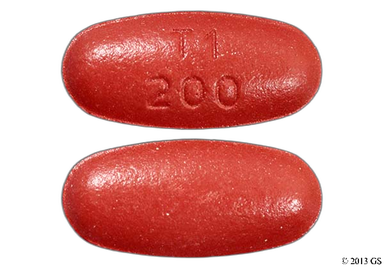
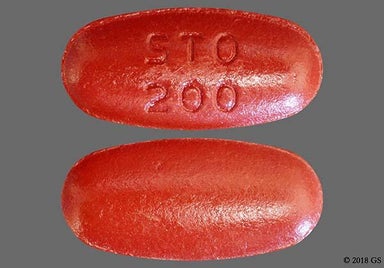
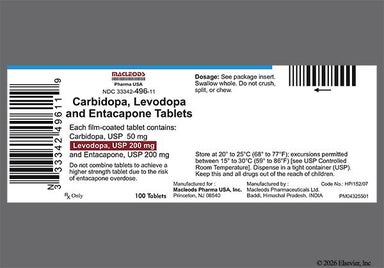
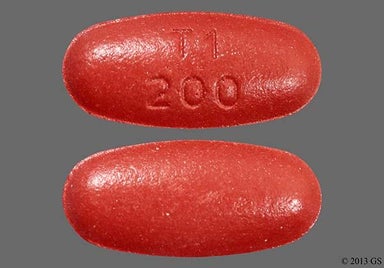
This medicine is Red-Brown, Oval Tablet Imprinted With "Sto 200".Red-brown Oval STO 200 - Carbidopa/Levodopa/Entacapone 50mg-200mg-200mg TabletThis medicine is Red-Brown, Oval Tablet Imprinted With "Lce 200".Red-brown Oval LCE 200 - Carbidopa/Levodopa/Entacapone 50mg-200mg-200mg TabletThis medicine is Brown, Oval Tablet Imprinted With "M 70".Brown Oval M 70 - Carbidopa/Levodopa/Entacapone 50mg-200mg-200mg TabletThis medicine is Red-Brown, Oval Tablet Imprinted With "T1 200".Red-brown Oval T1 200 - Carbidopa/Levodopa/Entacapone 50mg-200mg-200mg TabletThis medicine is Brown, Red, Oval Tablet Imprinted With "L 533".Brown, Red Oval L 533 - Carbidopa/Levodopa/Entacapone 50mg-200mg-200mg Tablet
GoodRx Health has strict sourcing policies and relies on primary sources such as medical organizations, governmental agencies, academic institutions, and peer-reviewed scientific journals. Learn more about how we ensure our content is accurate, thorough, and unbiased by reading our editorial guidelines.
Prescription savings
Stop paying too much for your prescriptions. Compare prices, get pharmacy coupons, and save up to 80%.
No, don't crush the Stalevo tablets. You should swallow the table whole. Ask your prescriber about your options if you have trouble swallowing pills whole.
No, you shouldn't cut Stalevo tablets in half. The tablets don't have a score line (or an indented line down the middle) to help guide you to cut them evenly. It can be hard to cut an unscored tablet. You can also hurt yourself and also take the wrong dose. Swallow Stalevo tablets whole. If you have trouble swallowing pills whole, tell your prescriber. They can discuss other options with you.
It can be different for each person. But it typically takes Stalevo about 30 minutes to 1 hour to start working. It's important that you take Stalevo as prescribed so you can get the most relief from the medication. Talk to your prescriber if you have concerns about how fast Stalevo is working to help with your Parkinson's symptoms.
You'll usually need to take Stalevo a few times each day to help control your Parkinson's symptoms. Your prescriber will work with you to come up with a dosing schedule that works best for you. Follow their instructions carefully. And don't take your doses too close together or too far apart. Taking your doses at the same times each day can help keep the levels of medication stable in your body. This will help Stalevo work the best it can to relieve your Parkinson's symptoms.
Stalevo and Sinemet both help treat symptoms of Parkinson's disease. Stalevo contains carbidopa, levodopa, and entacapone. But Sinemet has carbidopa and levodopa only. The addition of entacapone in Stalevo helps levodopa reach and stay at higher levels in the brain. This can help lessen how much "off" time you have. This is when your symptoms come back as levodopa wears off in your body. Talk to your prescriber about other differences between the two medications.
Stalevo and Rytary both have carbidopa and levodopa to help with Parkinson's symptoms. But Stalevo also contains entacapone. Stalevo and Rytary work in different ways to help lessen "off" time. This is the time when your symptoms come back as the effects of levodopa wear off. Rytary is an extended-release capsule. It slowly releases medication into the body so it lasts longer. On the other hand, the entacapone in Stalevo helps the levodopa get into the brain better and stay at high levels longer. Talk to your prescriber to learn more about the differences between these medications.