Key takeaways:
An EpiPen contains epinephrine, a lifesaving medication that can treat a severe allergic reaction called anaphylaxis. It’s available as a brand-name and generic medication.
On average, a package of 2 brand-name EpiPen auto-injectors can cost around $714.70 without insurance. The price of the generic version costs about $345.21 for the same quantity.
Where you live, the pharmacy you use, and whether you fill the brand-name or generic version can affect your out-of-pocket EpiPen costs.
There are ways to save on EpiPens. GoodRx coupons, copay savings cards, and patient assistance programs are a few examples. GoodRx can help make your prescription more affordable.
Save on related medications
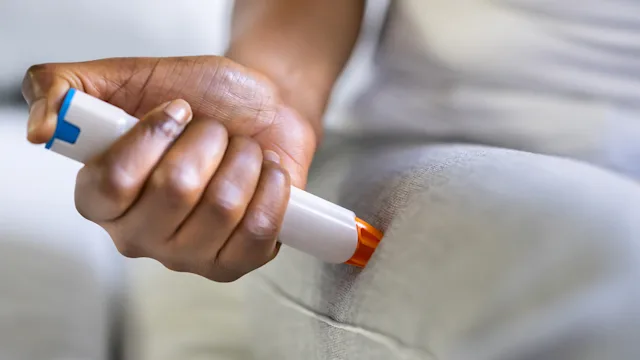
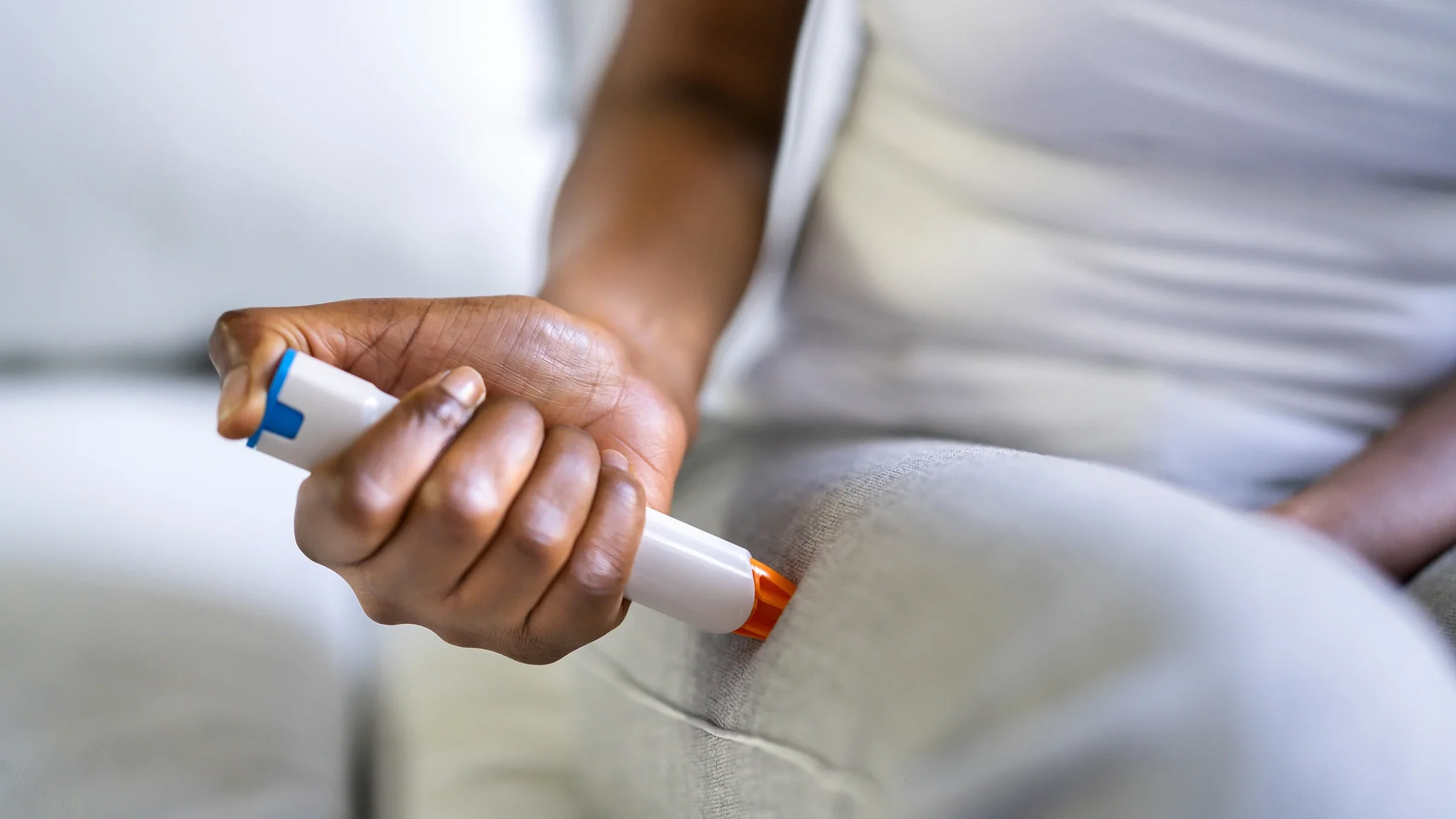
A simple bee sting or a peanut can cause a fatal allergic reaction called anaphylaxis. Fortunately, the symptoms of this reaction can be treated in most cases by a shot to the leg with an epinephrine auto-injector.
But one of the most popular auto-injectors, EpiPen (epinephrine), can cost upward of $600 for a package of two without insurance. To save money, you can ask a healthcare professional about the generic version of EpiPen, which costs less. But you can also save by using a GoodRx coupon, a copay savings card, or a patient assistance program.
How much does an EpiPen cost without insurance?
Without insurance, the average retail cost of brand-name EpiPen is $714.70 per carton (contains 2 auto-injectors). The average price of the generic version is $345.21 for the same quantity. EpiPen and its generic are meant for people who weigh at least 66 lbs (30 kg).
Without insurance, the average retail cost of brand-name EpiPen Jr is $716.32 per carton (contains 2 auto-injectors). The average price of the generic version is $337.32 for the same quantity. EpiPen Jr and its generic are meant for people who weigh 33 lbs (15 kg) to less than 66 lbs.
Which factors affect the cost of EpiPens?
Several factors affect the cost of EpiPens. Some factors can raise the price, while others may lower it.
Brand vs. generic availability
Getting generic medications when they’re available is the best way to save money on prescriptions. This can help lower costs without sacrificing quality.
EpiPen and EpiPen Jr have generic versions (epinephrine auto-injectors). If you fill the generic, your costs will likely be lower than if you fill the brand name.
Dose
The price of EpiPen and its generic may be slightly different from that of EpiPen Jr and its generic. For instance, EpiPen costs around $714.70 per carton. The same amount of EpiPen Jr costs about $716.32.
Location
You may pay more or less for EpiPens depending on where you live. GoodRx research has found that people pay different prices for prescriptions in different areas of the U.S. For example, people living in Milwaukee tend to pay overall more than people living in Denver.
Pharmacy
Pharmacies may charge different prices for prescription medications — even in the same location. GoodRx can help you compare EpiPen cash prices at pharmacies in your area. If one pharmacy offers lower prices than others, ask your prescriber to send your prescription there. If your prescription is already at a pharmacy, you can ask the pharmacy where you want to fill the prescription to transfer it.
Insurance coverage and discounts
Using insurance (if you have it) or applying discounts can help lower the price of EpiPens. But keep in mind that insurance copays and coinsurance can change. Your plan could also charge an annual deductible. So EpiPen costs may be higher until you meet your deductible.
Review your plan’s summary of benefits and coverage and formulary (list of covered medications). This can help you determine if your plan covers EpiPens and what you can expect to pay for it. If you’re unsure, you can also call the member services phone number on your prescription insurance card.
What to do if EpiPens aren’t covered by your insurance
If your insurance doesn’t cover EpiPens, try these options:
Ask your pharmacist if they’re filling the generic version of EpiPen. If not, ask your prescriber to write your prescription for generic epinephrine auto-injectors.
Use GoodRx or check to see if you qualify for a patient assistance program (more on these below).
Ask your insurance company to make a formulary exception and cover EpiPens. If your request is denied, you have the right to file an appeal to challenge the decision.
During the next open enrollment period, compare plans to see if another one offers better coverage for EpiPens.
Ask your prescriber about alternatives
If you’re seeking an EpiPen alternative to help you save money, your prescriber can help you determine the best options. Some alternative epinephrine products to consider include:
A healthcare professional must write a new prescription for any alternative you’re considering. And you’ll need to check with your insurance provider about whether the alternative is covered.
How to save on EpiPens
If you’re looking for ways to save on EpiPens, here are four options to consider.
1. Use a GoodRx coupon
A GoodRx coupon could help you save over 50% on generic versions of EpiPen or EpiPen Jr without insurance. With GoodRx, the price of generic EpiPen may be as low as $175.90 per carton in your area. And generic EpiPen Jr may cost as low as $262.45 per carton.
Here’s how to get a coupon:
Go to www.goodrx.com, or open the GoodRx app on your mobile device.
Type “EpiPen (generic)” or “EpiPen Jr (generic)” in the search bar.
Click “Start saving,” or tap or click return.
Select the correct dose and quantity, along with your location.
Choose to get your coupon by text or email, or print it out.
If possible, show the coupon at the pharmacy before they start filling your prescription to avoid delays in processing.
Keep in mind: GoodRx savings may vary by pharmacy and the state you live in. The GoodRx website and app can help you compare prices in your area.
2. See if you qualify for a copay savings card
If you have commercial insurance, you may be eligible to save with a manufacturer copay savings card. You can use this card for brand-name EpiPen or its generic.
With this card, you could save up to $300 per prescription of brand-name EpiPen products. And you could save up to $40 per prescription for the generic versions. The card can be applied to prescriptions of up to 3 EpiPen or EpiPen Jr cartons (6 auto-injectors). The card can be used to save on up to three cartons per calendar year.
To qualify for the copay savings card, you must:
Have commercial insurance
Not be enrolled in a government-funded insurance plan, such as Medicare or Medicaid
Be at least age 18 (parents and legal guardians over age 18 can obtain a card for their child)
Live in the U.S. (except California or Massachusetts) or a U.S. territory
If you’re uninsured, you’re unable to use this copay savings card. Those who do qualify can download the card online. For questions, call 1-800-657-7613.
3. Check if you’re eligible for a patient assistance program
If you’re uninsured or underinsured, you may be able to access generic epinephrine auto-injectors for free through the manufacturer’s patient assistance program.
To be eligible for the epinephrine auto-injector patient assistance program, you must:
Meet certain financial requirements and be able to submit proof of income
Be uninsured or have no prescription insurance
Have a prescription for epinephrine auto-injector from a U.S.-licensed healthcare professional for an FDA-approved use
Live in the U.S. or a U.S. territory
You can check your eligibility and download an online application form to print out. Your prescriber will need to complete parts of the form, so you should also talk to them.
If you have questions about the application or program, call 1-888-417-5782 for help.
4. Tap into your HSA, FSA, or HRA
Consider using a health savings account (HSA), a flexible spending account (FSA), or a health reimbursement arrangement (HRA) to purchase EpiPens. These accounts let you use pretax dollars for copays, coinsurances, and other qualified medical expenses. They help you reduce spending through tax savings.
Just be sure to review your account’s rules regarding expiration dates. FSA dollars typically have an expiration date. But HSA funds roll over and can be saved for later. HRA dollars may or may not expire, depending on your account.
Frequently asked questions
You can buy an EpiPen at a community pharmacy, similar to how you purchase other prescription medications. Depending on your insurance plan, you may also be able to use a mail-order pharmacy to fill your prescription.
Every Medicare Part D plan covers different medications. Some may cover brand-name EpiPens. Others may not. But if your plan doesn’t cover brand-name EpiPens, they’ll likely cover the generic version or another epinephrine product, such as Auvi-Q or neffy.
Yes, EpiPen is a prescription-only medication. So you’ll need to speak with a licensed healthcare professional if you need an EpiPen. But there are many telehealth options that let you meet virtually with a prescriber without having to be seen in person.
You can buy an EpiPen at a community pharmacy, similar to how you purchase other prescription medications. Depending on your insurance plan, you may also be able to use a mail-order pharmacy to fill your prescription.
Every Medicare Part D plan covers different medications. Some may cover brand-name EpiPens. Others may not. But if your plan doesn’t cover brand-name EpiPens, they’ll likely cover the generic version or another epinephrine product, such as Auvi-Q or neffy.
Yes, EpiPen is a prescription-only medication. So you’ll need to speak with a licensed healthcare professional if you need an EpiPen. But there are many telehealth options that let you meet virtually with a prescriber without having to be seen in person.
The bottom line
Without insurance, the average cost of brand-name EpiPen (epinephrine) is $714.70 per carton. The average price for the same quantity of the generic version is about $345.21. Factors that affect EpiPen’s cost include whether you fill the brand-name or generic, where you live, and which pharmacy you use.
You can use a GoodRx coupon to save on generic EpiPens. Other ways to save include copay savings cards and patient assistance programs.

Why trust our experts?



References
Amneal Pharmaceuticals of New York. (2026). Epinephrine injection [package insert]. DailyMed.
Medicare.gov. (n.d.). How do drug plans work? U.S. Centers for Medicare & Medicaid Services.
Viatris. (n.d.). EpiPen (epinephrine injection, USP) and epinephrine injection, USP auto-injector savings card.
Viatris. (2026). Viatris patient assistance program (U.S.).
Viatris Specialty. (2023). Epinephrine injection [package insert]. DailyMed.