Key takeaways:
You can experience changes in taste and smell after a COVID-19 infection. But this is less common than it used to be.
Changes in smell can include a complete loss of smell (anosmia), distorted smell (parosmia), and smelling things that aren’t there (phantosmia).
Parosmia can be very difficult to live with, but treatments like intranasal steroid sprays and smell training can help.
Your sense of smell is deeply tied to memory. Just a whiff of a familiar scent can bring memories of happy times. But for some, those smells no longer bring back memories. Instead, once-wonderful smells can cause them to gag. This condition, known as parosmia, is a change or distortion of normal smell. It’s one of the types of smell changes that people can experience after a COVID-19 illness and other medical conditions.
In most cases, changes in smell go away within a few weeks without treatment. But for some, the symptoms last much longer. And when smell changes drag on, it can make daily life distressing. Here’s what to know about how COVID can affect your sense of smell.
What is parosmia?
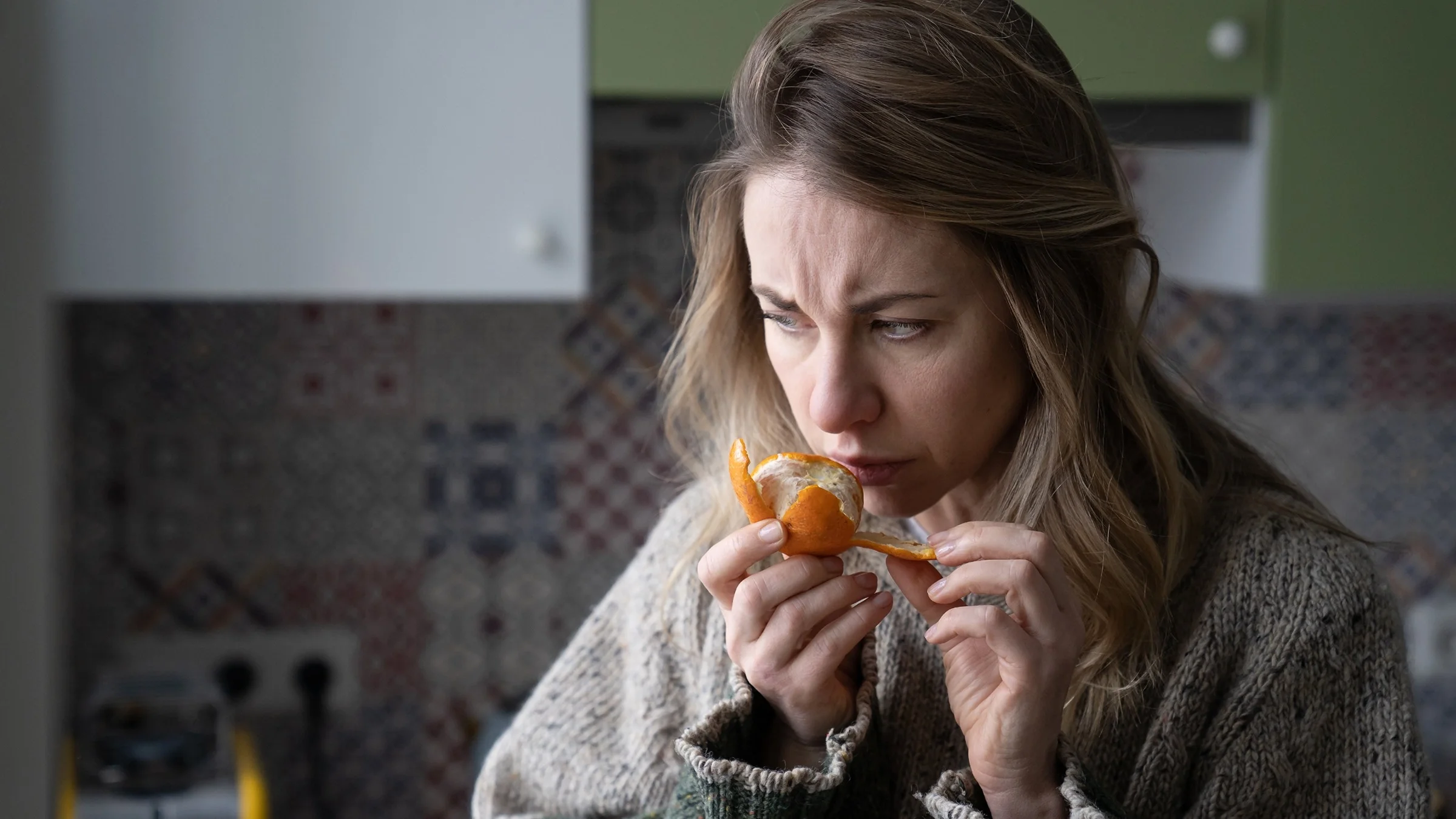
Parosmia is a medical condition that causes a distorted sense of smell. This can show up in different ways. People with parosmia can experience:
Smell distortion: Things that once smelled good can now smell horrible.
Trouble identifying smells: You have difficulty distinguishing or identifying certain smells.
Phantosmia: You’re detecting smells that aren’t there, like smoke.
Altered taste: Foods may taste bad or different than normal.
Search and compare options
Parosmia is a type of olfactory dysfunction, a group of conditions that affect the sense of smell. People with parosmia often experience other types of olfactory dysfunction at the same time. The most common changes include:
Anosmia: a total loss of smell
Hyposmia: a partial loss of smell
How common is parosmia after COVID-19 and other viral infections?
Changes in smell (and taste) were very common during and after early in the pandemic. Almost half of people who got sick with early COVID variants reported a change in their sense of smell or taste. But recent studies suggest that Omicron variants are much less likely to cause olfactory dysfunction. Now, only about 4% of people develop an olfactory dysfunction, like parosmia, after COVID infection.
What are the symptoms of COVID parosmia?
People with COVID-related parosmia describe changes to their everyday smells. Things that once smelled good or neutral now smell like:
Raw sewage
Something rancid
Sweet, sickly, or sour
Rotten eggs
Trash
Parosmia can make it very hard to enjoy food and drinks, because the altered smells can cause nausea and revulsion. Some people even report being disgusted by their own body odor or the smell of their spouse or children.

COVID-19 isn’t the only thing that causes loss of smell. Take a look at other conditions that cause parosmia.
What’s it like to live with parosmia? One person shares their experience with GoodRx.
Loss of smell can affect nutrition. Here’s how to eat when you can’t taste.
These unpleasant experiences can lead to:
Trouble eating
Weight loss and poor nutrition
Social isolation
Mood changes, including depression and anxiety
Parosmia symptoms can start as early as 1 week after the start of COVID symptoms or as late as weeks or months after the initial infection. Parosmia symptoms can last for months, even after full recovery from a COVID illness.
Why does COVID-19 cause parosmia?
Scientists are still trying to understand how the COVID virus triggers parosmia and other types of olfactory dysfunction. But here are some reasons why it might happen.
Nasal congestion
COVID can cause rhinitis — or inflammation of the nasal passages. This causes classic cold symptoms like stuffiness and congestion. Many people notice changes in their ability to smell when they have nasal symptoms. The smell changes go away as nasal symptoms resolve.
Nerve damage
Olfactory dysfunction can happen even without nasal congestion. Research suggests that COVID infection can damage the nerves responsible for smell. This damage explains the loss of smell early in a COVID infection.
There’s also evidence that the COVID virus damages the cells that support the smelling nerves. Researchers think this may explain why the COVID virus can affect smell over several months, long after recovery from COVID.
Brain processing changes
The COVID virus may have further-reaching effects, too. The virus seems to affect the structure of the brain’s smell center. This may explain how smell changes can last longer in some people.
Parosmia as a recovery sign
Parosmia can also be a sign of recovery. Damaged smell pathways take time to heal. Healing nerve fibers may not work normally as they regrow. And this may cause distorted and phantom smells. So parosmia may be a signal that the olfactory system is working its way back to baseline.
How long does parosmia last?
Complete loss of taste and smell doesn’t usually last long with a COVID infection. Three out of 4 people regain their senses within 30 days. But some people can develop parosmia as they recover from complete or partial loss of smell.
Parosmia tends to last longer than other forms of olfactory dysfunction. But symptoms seem to fade over time. In studies, 9 out of 10 people started seeing improvement within 4 to 8 weeks.
What else can cause parosmia besides COVID-19?
Changes in your ability to smell can happen with many viral infections, including the common cold. Most people can relate to losing their sense of smell and taste while they have a stuffy nose.
Many other medical conditions can cause parosmia, including:
Common cold viruses
Influenza virus
Seasonal allergies
Nasal polyps
Smoking and vape products
Head trauma
Parkinson’s disease
Alzheimer’s disease
Vitamin deficiencies
Environmental exposures like solvents, metal dust, and fumes
Medications that can trigger parosmia
Certain medications can also trigger parosmia. These include:
Allergy medications: loratadine and fluticasone
Antibiotics: amoxicillin and azithromycin
Blood pressure medications: lisinopril and metoprolol
Cholesterol medications: atorvastatin and pravastatin
Reflux medications: omeprazole and ranitidine
How is parosmia diagnosed?
Your healthcare team can diagnose parosmia and other olfactory disorders by talking with you about your symptoms. They may also use tools like Sniff Sticks. This test kit includes different scents that can help pinpoint your symptoms. Your team may also order other tests if they think another medical condition could be causing — or contributing — to your symptoms.
What’s the treatment for parosmia?
There’s no cure for parosmia, but there are treatments that may help. Olfactory training seems to be the best way to improve your sense of smell or get rid of bad smells in your nose.
Olfactory (smell) training
Olfactory training can help get rid of bad smells in your nose. And it can be done naturally, without prescriptions.
Olfactory training involves repeatedly smelling certain odors. This process is proven to improve the sense of smell in people with smell problems after viral infections.
You can do olfactory training at home over several months. It takes time, but there aren’t any risks and it has good results.
Here’s how to get started with olfactory training:
Get four scents: The most common scents are eucalyptus, citronella (lemon), eugenol (clove), and phenylethyl alcohol (rose). You can buy these scents as part of a scent-training kit. Or you can make your own by soaking cotton balls in essential oils and putting them inside small, airtight jars.
Smell each scent twice a day: The best times are in the morning, before breakfast, and in the evening, before bed.
Sniff each scent for 15 to 30 seconds: Focus while you’re smelling. Take short, gentle sniffs and try to focus on your memory of the smell.
Be patient: It can take weeks to months to notice an improvement. Experts recommend doing this twice daily for 24 weeks. But some studies show that certain people may need to continue practicing longer and with different scents.
Medications that treat parosmia
There are no medications that treat parosmia specifically — though scientists have studied several. There’s some evidence that inhaled steroid sprays (intranasal corticosteroids) may help with the loss of smell, depending on what caused the parosmia. But there’s not a lot of evidence that these sprays help speed up recovery if smell changes were caused by a COVID illness.
A small study of 85 people suggests that gabapentin may help with parosmia symptoms.
There’s some evidence that palmitoylethanolamide with luteolin (PEA-LUT) supplements may also help speed up recovery when used with olfactory training. But more research is needed on these and other therapies before they can be recommended for treatment of olfactory dysfunction.
How to manage living with parosmia
Parosmia isn’t life-threatening, but it can affect day-to-day life. It can make eating and drinking difficult. And it can affect relationships and social interactions.
Your sense of smell is closely linked to the parts of your brain that process emotions and memory. So, it can be distressing if you can’t pick up familiar scents anymore.
Here are some ways to manage common side effects from changes in your ability to smell:
Focus on food textures and temperatures. If you can’t smell, or if you only experience bad smells, it can be hard to eat as you normally would. Instead of focusing on flavor, try mixing foods of different textures or temperatures.
Put safety measures in place. Sense of smell is important for detecting harmful odors, like gas or smoke. Make sure your home’s smoke alarms and carbon monoxide detectors are working. Also, keep your space well-ventilated while using cleaning products. Check sell-by dates to prevent eating spoiled food.
Seek out support groups or therapy. Problems with the sense of smell are often linked to mood changes and a higher risk of depression. Online support groups offer a way to talk with other people going through the same problem. You may also benefit from therapy or medication to treat depression. Talk with a healthcare professional about any issues with smell and mood — it’s an important issue that deserves attention.
Resources for parosmia
For more tips on how to manage living with an altered sense of smell, check out the following resources:
The National Smell and Taste Center, which connects people to care centers and clinical trials on olfactory dysfunction
The Smell Podcast, a podcast that explores stories, news, and current research on smell and taste disorders
The Smell and Taste Association of North America, which connects people to helpful resources.
Monell Center, which aims to advance research on olfactory dysfunction.
Frequently asked questions
Changes in your sense of smell can be a sign that your olfactory nerve is damaged. This can include a partial or total loss of smell or distorted sense of smell. Olfactory nerve damage can be temporary or permanent. It’s important to figure out what’s causing your symptoms. Your healthcare team can help you pinpoint the cause of your symptoms and offer advice on treatment options.
Phantosmia and parosmia are both types of olfactory dysfunction. Phantosmia — or phantom smells — is a condition in which people smell things that aren’t really there. Parosmia — or distorted smell — is a condition in which people perceive a smell differently than they normally do. For example, a pleasant smell may be perceived as a rotten or rancid smell.
Foods don’t cause parosmia. But certain smells may heighten a distorted sense of smell. These food triggers can vary from person to person. Stronger smells, such as cooking meat, onions, garlic, and coffee, are common triggers.
It’s not clear who is at the highest risk for developing parosmia from COVID-19, medication, or other illnesses. But you may be at higher risk for developing parosmia from a COVID illness if you already have a medical condition or take a medication that can affect your sense of smell.
There’s no evidence that stress directly causes parosmia. But parosmia can cause stress because it affects your ability to eat and engage in social situations.
Changes in your sense of smell can be a sign that your olfactory nerve is damaged. This can include a partial or total loss of smell or distorted sense of smell. Olfactory nerve damage can be temporary or permanent. It’s important to figure out what’s causing your symptoms. Your healthcare team can help you pinpoint the cause of your symptoms and offer advice on treatment options.
Phantosmia and parosmia are both types of olfactory dysfunction. Phantosmia — or phantom smells — is a condition in which people smell things that aren’t really there. Parosmia — or distorted smell — is a condition in which people perceive a smell differently than they normally do. For example, a pleasant smell may be perceived as a rotten or rancid smell.
Foods don’t cause parosmia. But certain smells may heighten a distorted sense of smell. These food triggers can vary from person to person. Stronger smells, such as cooking meat, onions, garlic, and coffee, are common triggers.
It’s not clear who is at the highest risk for developing parosmia from COVID-19, medication, or other illnesses. But you may be at higher risk for developing parosmia from a COVID illness if you already have a medical condition or take a medication that can affect your sense of smell.
There’s no evidence that stress directly causes parosmia. But parosmia can cause stress because it affects your ability to eat and engage in social situations.
The bottom line
Olfactory dysfunction, like loss of smell and distorted smells (parosmia), can affect your daily life. COVID infection can cause olfactory dysfunction. Smell changes from COVID can last from weeks to months, but most people recover completely. Olfactory training is the best treatment option available. You can do this yourself at home over several months.

Why trust our experts?



References
Altundag, A., et al. (2015). Modified olfactory training in patients with postinfectious olfactory loss. The Laryngoscope.
Boscolo-Rizzo, P., et al. (2020). Evolution of altered sense of smell or taste in patients with mildly symptomatic COVID-19. JAMA Otolaryngology—Head & Neck Surgery.
Bousquet, C., et al. (2022). Phantom smells: a prevalent COVID-19 symptom that progressively sets in. European Archives of Oto-Rhino-Laryngology.
Chen B., et al. (2021). Symptoms of depression in patients with chemosensory disorders. Practica Oto-Rhino-Laryngologica.
Damm, M., et al. (2013). Olfactory training is helpful in postinfectious olfactory loss: a randomized, controlled, multicenter study. The Laryngoscope.
Di Stadio, A., et al. (2023). Treatment of COVID-19 olfactory dysfunction with olfactory training, palmitoylethanolamide with luteolin, or combined therapy: a blinded controlled multicenter randomized trial. European Archives of Oto-Rhino-Laryngology.
Kelly, C. E. (2022). Parosmia and altered taste in patients recovering from Covid 19. Clinical Nutrition Open Science.
Khani, E., et al. (2021). Potential pharmacologic treatments for COVID-19 smell and taste loss: A comprehensive review. European Journal of Pharmacology.
Konstantinidis, I., et al. (2016). Long term effects of olfactory training in patients with post-infectious olfactory loss. Rhinology.
Lerner, D. K., et al. (2021). Clinical features of parosmia associated with COVID‐19 infection. The Laryngoscope.
Liu, Z. Y., et al. (2023). Post-viral olfactory loss and parosmia. The BMJ.
National Institute on Deafness and Other Communication Disorders. (2023). Smell disorders. National Institutes of Health.
Pena Garcia, J. A., et al. (2022). Gabapentin improves parosmia after COVID‐19 infection. International Forum of Allergy & Rhinology.
Rashid, R. A., et al. (2021). Parosmia due to COVID-19 disease: A 268 case series. Indian Journal of Otolaryngology and Head & Neck Surgery.
Rumeau, C., et al. (2016). How to assess olfactory performance with the Sniffin’ Sticks test®. European Annals of Otorhinolaryngology, Head and Neck Diseases.
Savard, D. J., et al. (2023). Smell and taste disorders in primary care. American Family Physician.
Spinato, G., et al. (2020). Alterations in smell or taste in mildly symptomatic outpatients with SARS-CoV-2 infection. JAMA.
Tan, B. K. J., et al. (2022). Prognosis and persistence of smell and taste dysfunction in patients with COVID-19: meta-analysis with parametric cure modelling of recovery curves. The BMJ.
von Bartheld, C. S., et al. (2023). Prevalence of olfactory dysfunction with the omicron variant of SARS-CoV-2: A systematic review and meta-analysis. Cells.
Walker, A., et al. (2022). Parosmia—a common consequence of COVID-19. The BMJ.
Whitcroft, K. L., et al. (2020). Olfactory dysfunction in COVID-19: Diagnosis and management. JAMA.
Zazhytska, M., et al. (2022). Non-cell-autonomous disruption of nuclear architecture as a potential cause of COVID-19-induced anosmia. Cell.