Aqneursa
Aqneursa (levacetylleucine) is an amino acid derivative used to treat the neurological symptoms of Niemann-Pick Disease type C (NPC), such as difficulty walking and speaking. Aqneursa (levacetylleucine) comes as a powder packet that can be dissolved in water, orange juice, or almond milk. This medication is taken by mouth 2-3 times a day, as directed by your healthcare team. Common side effects include upper respiratory infections, stomach pain, and difficulty swallowing.


What is Aqneursa (levacetylleucine)?
What is Aqneursa (levacetylleucine) used for?
- Neurological symptoms (e.g., speech and movement problems) of Niemann-Pick disease type C (NPC) in adults and children who weigh 15 kg or more
How Aqneursa (levacetylleucine) works
Niemann-Pick Disease type C (NPC) is a genetic condition that’s caused by the body not being able to properly move and store cholesterol and other fats inside the body. Typically, cells have the ability to break down fats. But people with NPC have faulty proteins that prevent this process from happening. This leads to fats building up in various parts of the body, including the brain.
Aqneursa (levacetylleucine) is an amino acid derivative. Amino acids make up proteins that help your body with important functions. Sometimes, amino acids can be chemically changed in labs to help treat certain medical conditions. Aqneursa (levacetylleucine) is made up of an amino acid that’s been changed to help the cells make more energy. It’s thought that when cells have more energy, they’re better able to process the fat buildup. And this might help ease some symptoms of NPC.
Drug facts
| Common Brands | Aqneursa |
|---|---|
| Drug Class | Modified amino acid |
| Controlled Substance Classification | Not a controlled medication |
| Generic Status | No lower-cost generic available |
| Availability | Prescription only |

Side effects of Aqneursa (levacetylleucine)
The following side effects may get better over time as your body gets used to the medication. Let your healthcare provider know immediately if you continue to experience these symptoms or if they worsen over time.
Common Side Effects
- Upper respiratory infection (17%)
- Stomach pain (7%)
- Difficulty swallowing (7%)
- Vomiting (7%)
Less Common Side Effects
- Worsening of rosacea
The following Aqneursa (levacetylleucine) side effects have also been reported
Side effects that you should report to your care team as soon as possible:
- Allergic reactions—skin rash, itching, hives, swelling of the face, lips, tongue, or throat
Side effects that usually do not require medical attention (report these to your care team if they continue or are bothersome):

Get your GoodRx coupon

Pros and cons of Aqneursa (levacetylleucine)
Pros
- Comes in a dissolvable, flavored powder form; might be easier to take than pills
- Medication can be stored at room temperature
- Can be taken with or without food
Cons
- Needs to be taken 2-3 times a day
- Has to be prepared by mixing before taking
- May raise risk of upper respiratory infections

Pharmacist tips for Aqneursa (levacetylleucine)

- It’s important to take Aqneursa (levacetylleucine) as directed by your healthcare team. But if you miss a dose, skip that dose and take your next dose as scheduled. Don’t take 2 doses at the same time to make up for the missed dose.
- Taking Aqneursa (levacetylleucine) might raise your risk for catching upper respiratory infections, like the common cold. You can protect yourself from getting sick by washing your hands before eating or wearing a mask when you’re in large crowds. If you experience symptoms like fever, cough, or nasal congestion that aren't improving after a week, contact your healthcare professional.
- Some people who took Aqneursa (levacetylleucine) had difficulty swallowing, which might be a worsening symptom of NPC. Talk with your healthcare team right away if you aren’t able to properly swallow food or your medication. Depending on how severe your symptoms are, your care team might ask you to consider getting a gastronomy tube (G-tube) to lower your risk for choking.
- Your platelet levels may drop while taking Aqneursa (levacetylleucine). If this happens, you can be at increased risk of bleeding, especially if you experience any falls or other hard contact. If you have bruises that aren't healing or bleeding that’s difficult to stop, contact your healthcare team.
- Your healthcare team determines your dose of Aqneursa (levacetylleucine) based on your weight. If you experience any changes in body weight, let your care team know so they can see if they need to make adjustments to your dose.
- Aqneursa (levacetylleucine) might cause harm to unborn babies. If you're able to become pregnant, you're recommended to use effective birth control during treatment and at least a week after your last dose.
More tips for taking AQNEURSA
- You need to mix and dissolve Aqneursa (levacetylleucine) into an oral suspension before taking it. Don’t take the powder directly from the packet.
- When you’re ready to take Aqneursa (levacetylleucine), mix each packet into 40 ml of water, orange juice, or almond milk. Stir this solution into a suspension right before you drink it.
- If you need to take more than 1 packet of Aqneursa (levacetylleucine) for your dose, repeat the directions again to mix the medication. Don’t mix multiple packets together at the same time.
- Don’t mix Aqneursa (levacetylleucine) with hot liquids. Doing so might affect how the medication works.
- Once mixed, you should swallow Aqneursa (levacetylleucine) within 30 minutes. After this time, you need to throw the mixture away.

Risks and warnings for Aqneursa (levacetylleucine)
Aqneursa (levacetylleucine) can cause some serious health issues. This risk may be even higher for certain groups. If this worries you, talk to your doctor or pharmacist about other options.
Harm to unborn babies
- Risk factors: Being pregnant
Aqneursa (levacetylleucine) might cause harm to unborn babies. While this medication hasn’t been studied in human pregnancies, animal studies showed that Aqneursa (levacetylleucine) can cause miscarriage and developmental issues during pregnancy.
If you are able to get pregnant, your healthcare team will ask you to take a pregnancy test before starting Aqneursa (levacetylleucine). Because of the possible risk of harm, they’ll recommend that you use effective birth control during treatment and for at least a week after your last dose. If you’re pregnant or planning to become pregnant, discuss with your healthcare team about the risks and benefits of taking this medication during pregnancy.

Aqneursa (levacetylleucine) dosage
 Carton
| Dosage | Quantity | Price as low as | Price per unit |
|---|---|---|---|
| 28 packets of 1g | 4 cartons | $59,756.64 | $14,939.16 |

How much does Aqneursa (levacetylleucine) cost?
$59,756.64

What are alternatives to Aqneursa (levacetylleucine)?

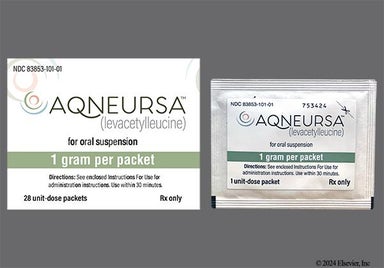
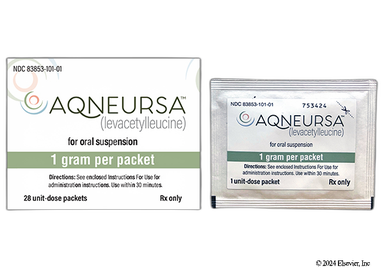
Aqneursa (levacetylleucine) images