Amondys 45
Amondys 45 (casimersen) is an injectable medication that's used for a rare, genetic condition called Duchenne Muscular Dystrophy (DMD). It was approved by the FDA through its Accelerated Approval Program. Amondys 45 (casimersen) is given as an intravenous (IV) infusion by a healthcare provider. It's only available at specialty or hospital pharmacies, so your child’s provider will help set that up for you.


What is Amondys 45 (casimersen)?
What is Amondys 45 (casimersen) used for?
- Treatment of Duchenne Muscular Dystrophy (DMD) in certain people with a specific genetic mutation
How Amondys 45 (casimersen) works
Amondys 45 (casimersen) is an antisense oligonucleotide. It attaches to exon 45, a part of the gene that makes dystrophin. Dystrophin is a protein that keeps muscle cells intact and strong. In people with DMD, this protein is missing because of a mutation in exon 45. Amondys 45 (casimersen) works by exon skipping, meaning it cuts out exon 45 and its mutation from the finished protein. This helps to make a shorter but more functional dystrophin, which potentially provides strength to muscles and relief from symptoms of DMD.
Drug facts
| Common Brands | Amondys 45 |
|---|---|
| Drug Class | Antisense oligonucleotide |
| Controlled Substance Classification | Not a controlled medication |
| Generic Status | No lower-cost generic available |
| Availability | Prescription only |

Side effects of Amondys 45 (casimersen)
The following side effects may get better over time as your body gets used to the medication. Let your healthcare provider know immediately if you continue to experience these symptoms or if they worsen over time.
Common Side Effects
- Upper respiratory tract infections (e.g., sore throat, runny or stuffy nose, pain with swallowing; 65%)
- Cough (33%)
- Fever (33%)
- Headache (32%)
- Joint pain (21%)
- Throat and mouth pain (21%)
Less Common Side Effects
- Ear pain
- Ear infection (ear pain, hearing loss)
- Nausea
- Dizziness
- Light-headedness
- Pain after injury
The following Amondys 45 (casimersen) side effects have also been reported
Side effects that you should report to your care team as soon as possible:
- Allergic reactions—skin rash, itching, hives, swelling of the face, lips, tongue, or throat
- Kidney injury—decrease in the amount of urine, swelling of the ankles, hands, or feet
Side effects that usually do not require medical attention (report these to your care team if they continue or are bothersome):
- Cough
- Fever
- Headache
- Joint pain
- Runny or stuffy nose
- Sore throat

Pros and cons of Amondys 45 (casimersen)
Pros
- Can help some people with DMD who never had a treatment option before
- Only needs to be injected once a week so it's convenient for parents with a busy schedule
- Doesn't interact with other medications or supplements
Cons
- Only available as a brand medication, so it might be expensive
- More likely to cause severe kidney problems
- Requires IV access, so it's not as convenient as taking a pill

Pharmacist tips for Amondys 45 (casimersen)

- It takes about 35 minutes to 1 hour to give the full dose of Amondys 45 (casimersen). Most commonly, your child will receive this medication at an infusion center or a provider's office. In some cases, it can be given at home by a home health nurse.
- It's best to get your Amondys 45 (casimersen) injection around the same day every week. If you miss an infusion, talk with your provider right away about rescheduling your appointment.
- If you have pain around the injection site after receiving Amondys 45 (casimersen), let your provider know. They might suggest using a topical cream on the area before injection to ease the pain and discomfort from the needle.
- Make sure your child gets routine blood and urine tests done on time while they are receiving Amondys 45 (casimersen). This is because this medication can cause kidney problems which can possibly be detected in these tests. By getting regular tests done, you and your child’s provider can continue to make sure this medication is safe for them.
- Tell your provider if your child experiences any changes in weight while receiving Amondys 45 (casimersen) because the dose might need to be changed.

Risks and warnings for Amondys 45 (casimersen)
Amondys 45 (casimersen) can cause some serious health issues. This risk may be even higher for certain groups. If this worries you, talk to your doctor or pharmacist about other options.
Kidney problems
- Risk factor: History of kidney problems
Studies showed that some animals that received Amondys 45 (casimersen) developed serious kidney problems. While animal studies aren’t always representative of what happens in humans, people who received medications similar to Amondys 45 (casimersen) have also reported to have kidney problems that can be life-threatening.
You’ll need to get blood and urine tests done before you start treatment and while you receive Amondys 45 (casimersen) so your provider can check your kidney health. Please also talk with your provider if you or your child has face swelling, is urinating less than usual, or has brown urine while receiving Amondys 45 (casimersen) injections. These can be signs and symptoms of severe kidney problems.

Amondys 45 (casimersen) dosage
Typical dosage for Amondys 45 (casimersen)
Amondys 45 (casimersen) is an intravenous (IV) infusion that is administered by a healthcare provider. The dose depends on your weight and your provider will determine the appropriate dose for you each time.
In general, the typical dose is 30 mg/kg once a week injected into a vein.

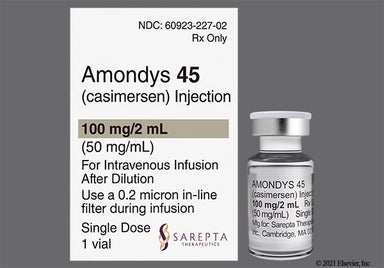
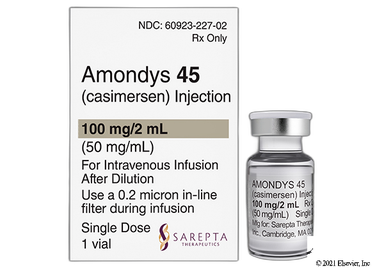
Amondys 45 (casimersen) images