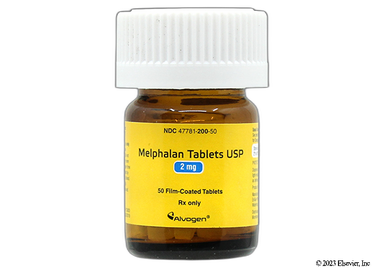
melphalan
Melphalan (Alkeran) is an anticancer medication used to improve the quality of life (palliative care) for people with multiple myeloma or ovarian cancer. It’s a convenient pill that’s taken by mouth. This medication can also be given as an infusion into the vein (IV) for people with multiple myeloma. Melphalan (Alkeran) can raise your risk for serious infections and bleeding, so your provider will check your blood work closely.


What is Melphalan (Alkeran)?
What is Melphalan (Alkeran) used for?
- Multiple myeloma - tablet and IV form
- Ovarian cancer - tablet form only
How Melphalan (Alkeran) works
Melphalan (Alkeran) is a type of anticancer medication called an alkylating agent. It works by damaging the cancer cells’ genetic material, leading to cell death.
Drug facts
| Common Brands | Alkeran |
|---|---|
| Drug Class | Alkylating agent |
| Controlled Substance Classification | Not a controlled medication |
| Generic Status | Lower-cost generic available |
| Availability | Prescription only |

Side effects of Melphalan (Alkeran)
The following side effects may get better over time as your body gets used to the medication. Let your healthcare provider know immediately if you continue to experience these symptoms or if they worsen over time.
Common Side Effects
- Low blood cell counts
- Nausea
- Vomiting
- Diarrhea
- Mouth ulcers
Less Common Side Effects
- Liver problems
- Rash
Melphalan (Alkeran) serious side effects
Contact your healthcare provider immediately if you experience any of the following.
- Serious infections: repeated fevers, chills, cough, trouble breathing, severe diarrhea, vomiting, painful or frequent urination
- Serious bleeds: bleeding or bruising that doesn’t stop or go away, large amount of bleeding, blood in the urine, throwing up blood, bloody or black and tarry stool
- Allergic reactions: throat tightness, trouble breathing, cough, itching or hives, flushing, swelling, chest pain, fast heartbeat, dizziness, fainting
The following Melphalan (Alkeran) side effects have also been reported
Along with its needed effects, a medicine may cause some unwanted effects. Although not all of these side effects may occur, if they do occur they may need medical attention.
Check with your doctor or nurse immediately if any of the following side effects occur:
More common
chills
cough or hoarseness
lower back or side pain
painful or difficult urination
shortness of breath
sores, ulcers, or white spots on the lips or in the mouth
swollen glands
unusual bleeding or bruising
unusual tiredness or weakness
Incidence not known
Abdominal or stomach pain
absent, missed, or irregular menstrual periods
back or leg pains
bleeding gums
bloated abdomen or stomach
blurred vision
clay-colored stools
confusion
dark urine
difficult or labored breathing
difficulty with swallowing
dizziness, faintness, or lightheadedness when getting up suddenly from a lying or sitting position
fast, pounding, or irregular heartbeat or pulse
general body swelling
headache
indigestion
light-colored stools
loss of appetite
noisy breathing
nosebleeds
pain and fullness in right upper abdomen or stomach
pale skin
puffiness or swelling of the eyelids or around the eyes, face, lips, or tongue
reddening of the skin, especially around the ears
sweating
swelling of eyes, face, hands, ankles, feet, or lower legs
tightness in the chest
unpleasant breath odor
unusual lumps or masses
vomiting of blood
weight gain or loss
yellow eyes or skin
Some side effects may occur that usually do not need medical attention. These side effects may go away during treatment as your body adjusts to the medicine. Also, your health care professional may be able to tell you about ways to prevent or reduce some of these side effects. Check with your health care professional if any of the following side effects continue or are bothersome or if you have any questions about them:
Incidence not known
Blue-green to black skin discoloration
hair loss or thinning of the hair
pain, redness, soreness, or sloughing of the skin at the injection site
sores, welting, or blisters
Other side effects not listed may also occur in some patients. If you notice any other effects, check with your healthcare professional.
Call your doctor for medical advice about side effects. You may report side effects to the FDA at 1-800-FDA-1088.

Get your GoodRx coupon

Pros and cons of Melphalan (Alkeran)
Pros
- Available as a pill that you take by mouth
- Can be given IV for people with multiple myeloma who have trouble swallowing tablets
Cons
- Can raise your risk for infections, bleeding, or bruising
- Need to get blood work often during treatment
- Can affect your ability to have children in the future

Pharmacist tips for Melphalan (Alkeran)

- Follow your provider’s instructions on which days to take melphalan (Alkeran) during each treatment cycle. It’s important to take this medication exactly as directed to make sure it’s as safe for you as possible.
- You’ll need to get blood work done regularly during melphalan (Alkeran) treatment. Follow the lab schedule your provider gives you. This is so your provider can keep track of your blood cell counts. Melphalan (Alkeran) can lower your blood cell counts and put you at risk for bleeding or developing infections. Tell your care team if you develop a fever.
- Keep the melphalan (Alkeran) tablets in the refrigerator at 36°F to 46°F (2°C to 8°C). Keep the tablets in the original bottle or amber bottle to protect them from light.
- Before getting any vaccinations, let your healthcare provider or pharmacist know you’re taking melphalan (Alkeran). They can make sure it's safe for you to get the vaccine. Melphalan (Alkeran) can lower your immune system, which can affect how your body reacts to certain vaccines.
- If you’re a woman who can have children, speak with your provider about ways to avoid becoming pregnant while taking melphalan (Alkeran). Let your provider know right away if you or your partner becomes pregnant during treatment. This medication can harm an unborn baby.
- Ask your healthcare provider or pharmacist about the best way to handle and dispose of the melphalan (Alkeran) tablets. This medication can be hazardous to people who handle or come into contact with them.

Risks and warnings for Melphalan (Alkeran)
Melphalan (Alkeran) can cause some serious health issues. This risk may be even higher for certain groups. If this worries you, talk to your doctor or pharmacist about other options.
Must be given by a trained healthcare provider
 Melphalan (Alkeran) must be given by or under the supervision of a healthcare provider who's trained in caring for people taking chemotherapy medications. You must receive treatment at a clinic, hospital, or care facility that’s able to closely check for side effects and give you proper medical care, if needed.
Low blood cell counts
- Risk factors: Already having low blood cell counts from previous radiation or chemotherapy
Melphalan (Alkeran) can cause your red blood cell, white blood cell, and platelet counts to drop. When the number of these cells are lower than normal, you’re at risk of developing anemia, infections, and bleeding or bruising. In some cases, your blood cell counts might be low for a while. This is because your chemotherapy medications can weaken your bone marrow and affect its ability to make new blood cells like normal.
 Your provider will closely check your blood counts through routine lab work when you’re taking melphalan (Alkeran). Let your provider know as soon as possible if you experience extreme tiredness, rapid breathing, fevers, chills, or bleeding and bruising that doesn’t stop or go away.
Risk for developing other cancers
Although rare, it’s possible that you can develop other types of cancers, such as blood cancers (e.g., leukemias), when you take melphalan (Alkeran). Talk to your provider if you’re concerned about your risk for other cancers.
Allergic reactions
While rare, melphalan (Alkeran) can cause allergic reactions, which can be serious. These reactions can happen after several courses of treatment or if you’ve had a reaction after receiving melphalan (Alkeran) infusion into your vein in the past. Contact your provider or get medical help right away if you experience any throat tightness, trouble breathing, hives or rashes, swelling of the arms or legs (edema), fast heartbeat, or dizziness.
Harm to unborn baby and effects on fertility
Based on findings from animal studies, melphalan (Alkeran) can harm an unborn baby. If you’re a woman who can have children, you should avoid becoming pregnant while taking this medication. Let your provider know right away if you or your partner becomes pregnant during treatment.
Melphalan (Alkeran) might also affect your ability to have a baby. If you or your partner are thinking about having a child in the future, talk to your provider about your different options before starting melphalan (Alkeran), such as sperm banking or egg freezing.

Melphalan (Alkeran) dosage
 Tablet
| Dosage | Quantity | Price as low as | Price per unit |
|---|---|---|---|
| 2mg | 30 tablets | $278.59 | $9.29 |

Interactions between Melphalan (Alkeran) and other drugs
Although certain medicines should not be used together at all, in other cases two different medicines may be used together even if an interaction might occur. In these cases, your doctor may want to change the dose, or other precautions may be necessary. When you are receiving this medicine, it is especially important that your healthcare professional know if you are taking any of the medicines listed below. The following interactions have been selected on the basis of their potential significance and are not necessarily all-inclusive.
Using this medicine with any of the following medicines is not recommended. Your doctor may decide not to treat you with this medication or change some of the other medicines you take.
- Measles Virus Vaccine, Live
- Mumps Virus Vaccine, Live
- Rotavirus Vaccine, Live
- Rubella Virus Vaccine, Live
- Varicella Virus Vaccine, Live
- Zoster Vaccine, Live
Using this medicine with any of the following medicines is usually not recommended, but may be required in some cases. If both medicines are prescribed together, your doctor may change the dose or how often you use one or both of the medicines.
- Adenovirus Vaccine
- Bacillus of Calmette and Guerin Vaccine, Live
- Cholera Vaccine, Live
- Dengue Tetravalent Vaccine, Live
- Influenza Virus Vaccine, Live
- Poliovirus Vaccine, Live
- Smallpox Vaccine
- Typhoid Vaccine, Live
- Yellow Fever Vaccine
Using this medicine with any of the following medicines may cause an increased risk of certain side effects, but using both drugs may be the best treatment for you. If both medicines are prescribed together, your doctor may change the dose or how often you use one or both of the medicines.
- Buthionine Sulfoximine
- Nalidixic Acid



