


How Long Can You Take Oral Decongestants Like Sudafed?
Taking oral decongestants long term can increase your risk of side effects. Here’s what healthcare experts recommend for how long it’s safe to take decongestants.
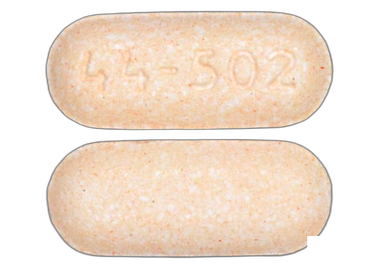
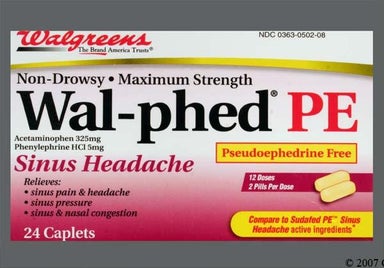
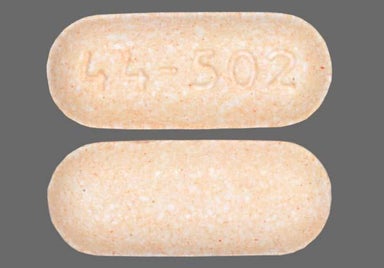
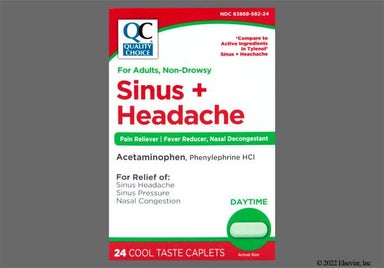
Sudafed PE Pressure and Pain is an over-the-counter, brand-name product containing two active ingredients: acetaminophen (an analgesic that relieves pain) and phenylephrine (a decongestant that clears the sinuses). This combination medication is also available as lower-cost generics and under other brand names, such as Tylenol Sinus Plus Headache. In general, it's used to relieve symptoms from allergies and the common cold, such as pain and nasal and sinus congestion. This medication can also lower fevers. The caplets are taken by mouth every 4 hours as needed. Side effects aren't common but can include headache and dizziness.

Sudafed PE Pressure and Pain (acetaminophen / phenylephrine) is a combination of two medications that work together to relieve symptoms caused by allergies and the common cold.
| Common Brands | Sudafed PE Pressure Plus Pain, Tylenol Sinus Plus Headache |
|---|---|
| Drug Class | Analgesic / Decongestant |
| Controlled Substance Classification | Not a controlled medication |
| Generic Status | Lower-cost generic available |
| Availability | Over-the-counter |

The following side effects may get better over time as your body gets used to the medication. Let your healthcare provider know immediately if you continue to experience these symptoms or if they worsen over time.
Contact your healthcare provider immediately if you experience any of the following.




Sudafed PE Pressure and Pain (acetaminophen / phenylephrine) can cause some serious health issues. This risk may be even higher for certain groups. If this worries you, talk to your doctor or pharmacist about other options.
 Taking too much acetaminophen can lead to permanent and life-threatening liver damage. For healthy adults, the maximum amount of acetaminophen is typically 4 grams in a 24-hour period. But it can be lower depending on your primary care provider's instructions and your risk for liver damage. For children, ask a pediatrician.
 Speak to your primary care provider before you take Sudafed PE Pressure and Pain (acetaminophen / phenylephrine) if you have liver problems since it can cause further damage to your liver. Avoid drinking alcohol while you're taking this medication.
Call your primary care provider right away if you have signs of liver problems, such as dark urine, feeling tired, upset stomach or stomach pain, or yellowing of skin or whites of the eyes.
There are many other over-the-counter products that contain the same or similar ingredients as Sudafed PE Pressure and Pain (acetaminophen / phenylephrine). In addition, some prescription pain medications have acetaminophen in them.
Taking more than one product containing the same or similar ingredients raises the risk that you might accidentally take too much medication. This can lead to serious side effects, including liver damage, skin reactions, and high blood pressure. Get medical help right away or contact a poison control center at 1-800-222-1222 if you think you or your loved one has accidentally taken too much medication.
To prevent accidentally taking too much medication, tell your care team about the medications you take before you start Sudafed PE Pressure and Pain (acetaminophen / phenylephrine). Also read package labels carefully; ask your pharmacist if you're not sure whether a product has acetaminophen or a decongestant in it. In addition, it's recommended to keep track of how much acetaminophen you're taking throughout the day.
Make sure your primary care provider knows about all the medical conditions you have or have had in the past before you start taking Sudafed PE Pressure and Pain (acetaminophen / phenylephrine). It's important to check that Sudafed PE Pressure and Pain (acetaminophen / phenylephrine) is safe for you to take because it's possible for the medication to worsen certain medical conditions and cause serious side effects.
Although rare, Sudafed PE Pressure and Pain (acetaminophen / phenylephrine) can cause serious skin reactions, such as rash, blisters, skin reddening, or skin peeling. Stop taking the medication and get medical attention right away if you notice unusual changes in your skin.

 Tablet
| Dosage | Quantity | Price as low as | Price per unit |
|---|---|---|---|
| 325mg/5mg | 56 tablets | $12.21 | $0.22 |


Contraindications are specific health conditions or situations in which a person should not take a medication due to safety concerns. If you have any of the following conditions or if any of the following apply to you, let your healthcare provider know because Sudafed PE Pressure and Pain (acetaminophen / phenylephrine) will not be safe for you to take.


Prescription savings
Stop paying too much for your prescriptions. Compare prices, get pharmacy coupons, and save up to 80%. Find expert answers to your health questions so you can make the best decisions for yourself and your family.
Health conditions
Medications & treatment
Access & affordability
Medication discounts


Sudafed PE Pressure And Pain doesn't make you sleepy. In fact, the medication might keep you awake. This is because it contains phenylephrine, which can sometimes cause trouble sleeping as a side effect. Contact your primary care provider to discuss better options for you if taking Sudafed PE Pressure And Pain interrupts your sleep and it's affecting your daily activities.
Adults and children ages 12 years and older can take 2 caplets of Sudafed PE Pressure And Pain as often as every 4 hours, but no more than 10 caplets per day. Don't take more Sudafed PE Pressure And Pain than what's recommended to relieve your symptoms. Otherwise, you're at risk of taking too much acetaminophen or too much phenylephrine, which can be serious and even life-threatening. It's possible that your primary care provider might recommend a different dose than what's recommended by the manufacturer. If so, make sure to follow your healthcare provider's instructions.
The decongestant effects of phenylephrine and the pain-relieving effects of acetaminophen last for about 4 hours. This is why Sudafed PE Pressure And Pain is typically taken every 4 hours to relieve symptoms.
Yes, it's generally safe to take cetirizine (Zyrtec) — or any other antihistamine — with Sudafed PE Pressure And Pain. Antihistamines and Sudafed PE Pressure And Pain don't interact with each other. In fact, antihistamines can be helpful for cold and allergy symptoms that Sudafed PE Pressure And Pain doesn't treat, such as itchy, watery eyes; sneezing; or runny nose. Keep in mind that antihistamines have certain risks and side effects, such as sleepiness, dizziness, and trouble with urination. Ask your primary care provider or pharmacist whether it's safe for you to take an antihistamine with Sudafed PE Pressure And Pain.
Sudafed PE Pressure And Pain is generally safe as long as it's taken as recommended by the manufacturer or your healthcare professional. Taking too much Sudafed PE Pressure And Pain can cause serious side effects, like high blood pressure or fast heart beat and liver problems. In addition, be sure to talk to your primary care provider before you start taking Sudafed PE Pressure And Pain if you have medical problems like high blood pressure, thyroid problems, diabetes, or liver problems because the medication can sometimes worsen these conditions. Your primary care provider can check that Sudafed PE Pressure And Pain is safe for you to take.
Although rare, it's possible for Sudafed PE Pressure And Pain to make your blood pressure go up. This is because the medication contains phenylephrine, which can raise your blood pressure as a possible side effect. Talk to a healthcare professional before you take Sudafed PE Pressure And Pain if you have heart problems or high blood pressure to make sure it's safe for you to take.
Talk to a healthcare professional before you take Sudafed PE Pressure And Pain if you're pregnant. This combination medication contains acetaminophen and phenylephrine. While acetaminophen is generally safe to take while pregnant, phenylephrine might not be. Speak with your obstetrician-gynecologist (OB-GYN) about the risks and benefits of taking Sudafed PE Pressure And Pain during pregnancy.
Don't take Sudafed PE Pressure And Pain until you've talked to a healthcare professional first if you're breastfeeding. This combination medication contains acetaminophen and phenylephrine. Acetaminophen is considered safe, but phenylephrine might lower your milk supply. Speak with your baby's primary care provider the risks and benefits of breastfeeding while you're taking Sudafed PE Pressure And Pain.
